As Artificial Intelligence (AI) becomes increasingly embedded into the fabric of everyday individual, organizational, and societal life, the issue is not whether leaders should make a binary choice of whether to use it or not, or figuring out what policy to guide its use.
This two-volume set CCIS 2858-2859 constitutes the refereed proceedings of the 5th International Conference on Intelligent Systems and Pattern Recognition, ISPR 2025, held in Hammamet, Tunisia, during September 25–27, 2025.
This book equips readers with the conceptual and practical knowledge they need to put into practice the design, development, and management of the next generation multiple access / non-orthogonal multiple access (NGMA/NOMA)-based network systems.
This book equips readers with the conceptual and practical knowledge they need to put into practice the design, development, and management of the next generation multiple access / non-orthogonal multiple access (NGMA/NOMA)-based network systems.
This volume gathers cutting-edge research in geographic information science and remote sensing technology, comprehensively exploring the latest developments and methods in the field.
"e;AI at Edge: Transforming Edge Networks with Computational Intelligence"e; explores how artificial intelligence enhances the efficiency and capabilities of edge computing.
This book constitutes the refereed proceedings of the 14th International Conference on Model and Data Engineering, MEDI 2025, held in Cairo, Egypt, during November 2–4, 2025.
This edited collection addresses Artificial Intelligence in literacy education, exploring the challenges, opportunities, and pedagogical applications of the use of large language models in the education field.
This proceedings book brings together selected peer-reviewed papers presented at the First Edition of the International Network on Green Digital Innovation and Business (INDIB’26), held in Marrakech, Morocco, on January 30, 2026.
This book provides a comprehensive overview of edge computing technologies, architectures and applications designed for efficient and high-speed data processing within local areas.
This proceedings book brings together selected peer-reviewed papers presented at the First Edition of the International Network on Green Digital Innovation and Business (INDIB’26), held in Marrakech, Morocco, on January 30, 2026.
This book provides a comprehensive overview of edge computing technologies, architectures and applications designed for efficient and high-speed data processing within local areas.
This volume presents selected peer-reviewed contributions from the XX International Multi-disciplinary Congress on Science and Technology (ESPE CIT 2025), held on-site at the Universidad de las Fuerzas Armadas ESPE from August 11 to 15, 2025.
This volume presents selected peer-reviewed contributions from the XX International Multi-disciplinary Congress on Science and Technology (ESPE CIT 2025), held on-site at the Universidad de las Fuerzas Armadas ESPE from August 11 to 15, 2025.
This volume presents selected, peer-reviewed contributions from the 12th International Congress of the European Union for Systemics (UES–EUS 2025), exploring the socio-ecological, epistemological, and governance implications of artificial intelligence across architectural, urban, and territorial systems.
This three-volume set CCIS 3019-3021 constitutes the proceedings of the 21st International Conference on Information Processing and Management of Uncertainty in Knowledge-Based Systems, IPMU 2026, held in Rome, Italy, during June 15-19, 2026.
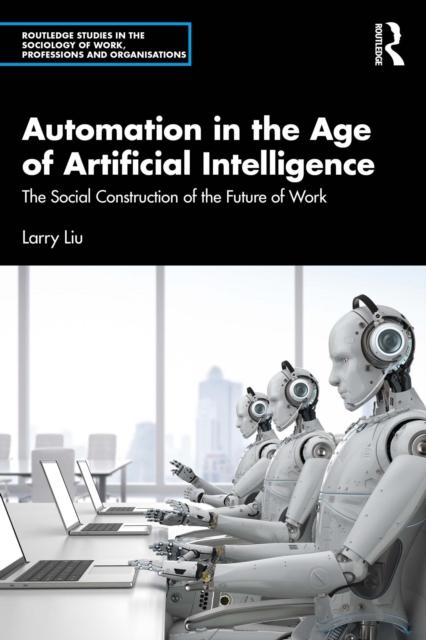
Automation in the Age of Artificial Intelligence draws on historical and contemporary debates to examine the future of work in the age of artificial intelligence.
This book constitutes the proceedings of the 22nd European Workshop on Performance Engineering, EPEW 2026, held in Grimstad, Norway, during June 24–26, 2026.
Examining how artificial intelligence and cognitive automation reshape dispositions towards attention, learning and public life, this book offers a critical framework to counter technocratic drift and to rethink agency and democratic responsibility in an increasingly automated world.
"e;AI at Edge: Transforming Edge Networks with Computational Intelligence"e; explores how artificial intelligence enhances the efficiency and capabilities of edge computing.
This book explores the foundational principles and emerging advancements shaping modern computing, bridging theory and practice across technologies, transforming today’s world.
This book constitutes the refereed proceedings of the 14th International Conference on Model and Data Engineering, MEDI 2025, held in Cairo, Egypt, during November 2–4, 2025.
This volume presents selected, peer-reviewed contributions from the 12th International Congress of the European Union for Systemics (UES–EUS 2025), exploring the socio-ecological, epistemological, and governance implications of artificial intelligence across architectural, urban, and territorial systems.
This book constitutes the proceedings of the 14th International Symposium on Foundations of Information and Knowledge Systems, FoIKS 2026, which took place in Hanover, Germany, during March 2026.
This book constitutes the proceedings of the 14th International Symposium on Foundations of Information and Knowledge Systems, FoIKS 2026, which took place in Hanover, Germany, during March 2026.
As artificial intelligence reshapes the global media landscape, AI-assisted journalism and media: opportunities and challenges provides a timely and comprehensive analysis of this technological revolution.
This book explores the foundational principles and emerging advancements shaping modern computing, bridging theory and practice across technologies, transforming today’s world.
This book explores a different pragmatic approach to algorithmic complexity rooted or motivated by the theoretical foundations of algorithmic probability and explores the relaxation of necessary and sufficient conditions in the pursuit of numerical applicability, with some of these approaches entailing greater risks than others in exchange for greater relevance and applicability.
AI as Anti-Corruption Technology intends to answer the questions: What drives and what hinders public organisations to experiment with Artificial Intelligence (AI) to tackle corruption?
Artificial Intelligence and Data Science in Healthcare Applications provides a thorough in-depth examination of how AI and data science are transforming predictive analytics and outlier detection in every industry.
This textbook reimagines control systems instruction by integrating theoretical precision with practical understanding through carefully crafted real-world analogies, extensive worked examples, and hands-on reinforcement.