The interplay between computability and randomness has been an active area of research in recent years, reflected by ample funding in the USA, numerous workshops, and publications on the subject.
The mathematical genius Alan Turing, now well known for his crucial wartime role in breaking the ENIGMA code, was the first to conceive of the fundamental principle of the modern computer-the idea of controlling a computing machine's operations by means of a program of coded instructions, stored in the machine's 'memory'.
The interplay between computability and randomness has been an active area of research in recent years, reflected by ample funding in the USA, numerous workshops, and publications on the subject.
This is the first text explaining how to use the bulk synchronous parallel (BSP) model and the freely available BSPlib communication library in parallel algorithm design and parallel programming.
In the last few years, courses on parallel computation have been developed and offered in many institutions in the UK, Europe and US as a recognition of the growing significance of this topic in mathematics and computer science.
The five-volume set LNCS 11536, 11537, 11538, 11539 and 11540 constitutes the proceedings of the 19th International Conference on Computational Science, ICCS 2019, held in Faro, Portugal, in June 2019.
At a critical point in human history, this book presents proven ways to gain the skills needed to develop sustainable IT practices and set yourself apart as a progressive technology leaderKey FeaturesExecute a sustainable IT strategy with proven methods and real-world use casesProgress as a sustainable IT advocate and set yourself apart from other senior IT leadersIncrease your chances of receiving executive buy-in on your sustainable IT strategyBook DescriptionWe are at a critical point in human history.
The Art of Cyber Defense: From Risk Assessment to Threat Intelligence offers a comprehensive exploration of cybersecurity principles, strategies, and technologies essential for safeguarding digital assets and mitigating evolving cyber threats.
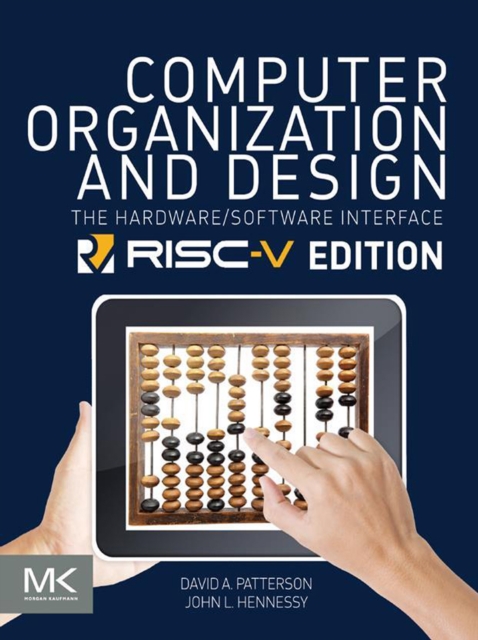
Computer Organization and Design RISC-V Edition: The Hardware Software Interface, Second Edition, the award-winning textbook from Patterson and Hennessy that is used by more than 40,000 students per year, continues to present the most comprehensive and readable introduction to this core computer science topic.
Computer Organization and Design: The Hardware/Software Interface, Sixth Edition, the leading, award-winning textbook from Patterson and Hennessy used by more than 40,000 students per year, continues to present the most comprehensive and readable introduction to this core computer science topic.
The newest addition to the Harris and Harris family of Digital Design and Computer Architecture books, this RISC-V Edition covers the fundamentals of digital logic design and reinforces logic concepts through the design of a RISC-V microprocessor.
Thinking Machines: Machine Learning and Its Hardware Implementation covers the theory and application of machine learning, neuromorphic computing and neural networks.
The second edition of this comprehensive handbook of computer and information security provides the most complete view of computer security and privacy available.
This book contains the revised selected papers of 4 workshops held in conjunction with the International Conference on High Performance Computing, Networking, Storage and Analysis (SC) in November 2017 in Denver, CO, USA, and in November 2018 in Dallas, TX, USA: the 6th and 7th International Workshop on Extreme-Scale Programming Tools, ESPT 2017 and ESPT 2018, and the 4th and 5th International Workshop on Visual Performance Analysis, VPA 2017 and VPA 2018.
This edited book focuses on concepts and their applications using the theory of conceptual spaces, one of today's most central tracks of cognitive science discourse.
This book is intended for senior undergraduate and graduate students as well as practicing engineers who are involved in design and analysis of radio frequency (RF) circuits.
How a computational framework can account for the successes and failures of human cognitionAt the heart of human intelligence rests a fundamental puzzle: How are we incredibly smart and stupid at the same time?
A comprehensive guide to help you understand the principles of Reactive and asynchronous programming and its benefitsKey FeaturesExplore the advantages of Reactive programmingUse concurrency and parallelism in RxPY to build powerful reactive applicationsDeploy and scale your reactive applications using DockerBook DescriptionReactive programming is central to many concurrent systems, but it's famous for its steep learning curve, which makes most developers feel like they're hitting a wall.
Create distributed applications with clever design patterns to solve complex problems
Key Features
Set up and run distributed algorithms on a cluster using Dask and PySpark
Master skills to accurately implement concurrency in your code
Gain practical experience of Python design patterns with real-world examples
Book Description
This Learning Path shows you how to leverage the power of both native and third-party Python libraries for building robust and responsive applications.
A comprehensive guide with practical instructions for learning data structures, low-level programming, high-performance computing, networking and IoT to help you understand the latest standards in C programming such as C11 and C18Key FeaturesTackle various challenges in C programming by making the most of its latest featuresUnderstand the workings of arrays, strings, functions, pointers, advanced data structures, and algorithmsBecome well-versed with process synchronization during multitasking and server-client process communicationBook DescriptionUsed in everything from microcontrollers to operating systems, C is a popular programming language among developers because of its flexibility and versatility.
Hardware Security: A Hands-On Learning Approach provides a broad, comprehensive and practical overview of hardware security that encompasses all levels of the electronic hardware infrastructure.
The new RISC-V Edition of Computer Organization and Design features the RISC-V open source instruction set architecture, the first open source architecture designed to be used in modern computing environments such as cloud computing, mobile devices, and other embedded systems.
Programming Massively Parallel Processors: A Hands-on Approach, Third Edition shows both student and professional alike the basic concepts of parallel programming and GPU architecture, exploring, in detail, various techniques for constructing parallel programs.
Creativity in Computing and DataFlow Supercomputing, the latest release in the Advances in Computers series published since 1960, presents detailed coverage of innovations in computer hardware, software, theory, design, and applications.
Computer Architecture: A Quantitative Approach, Sixth Edition has been considered essential reading by instructors, students and practitioners of computer design for over 20 years.
Computers as Components: Principles of Embedded Computing System Design, Fourth Edition, continues to focus on foundational content in embedded systems technology and design while introducing new content on security and safety, the design of Internet-of-Things devices and systems, and wireless communications standards like Bluetooth(R) and ZigBee(R).
Smart Sensors Networks: Communication Technologies and Intelligent Applications explores the latest sensor and sensor networks techniques and applications, showing how networked wireless sensors are used to monitor and gather intelligence from our surrounding environment.
Intel Xeon Phi Processor High Performance Programming is an all-in-one source of information for programming the Second-Generation Intel Xeon Phi product family also called Knights Landing.
Advances in Computers carries on a tradition of excellence, presenting detailed coverage of innovations in computer hardware, software, theory, design, and applications.
Advances in Computers, an ongoing series since 1960, presents detailed coverage of innovations in computer hardware, software, theory, design, and applications.
Advances in Computers, the latest volume in the series published since 1960, presents detailed coverage of innovations in computer hardware, software, theory, design, and applications.
GPU programming in MATLAB is intended for scientists, engineers, or students who develop or maintain applications in MATLAB and would like to accelerate their codes using GPU programming without losing the many benefits of MATLAB.
An Introduction to Parallel Programming, Second Edition presents a tried-and-true tutorial approach that shows students how to develop effective parallel programs with MPI, Pthreads and OpenMP.
Pervasive Computing: Next Generation Platforms for Intelligent Data Collection presents current advances and state-of-the-art work on methods, techniques, and algorithms designed to support pervasive collection of data under ubiquitous networks of devices able to intelligently collaborate towards common goals.
Service computing is a cross-disciplinary field that covers science and technology, and represents a promising direction for distributed computing and software development methodologies.
Architecting High Performing, Scalable and Available Enterprise Web Applications provides in-depth insights into techniques for achieving desired scalability, availability and performance quality goals for enterprise web applications.