Give customers, clients, and coworkers easier access to your organization's information and servicesThe e-business environment is a tangle of disconnected and often incompatible data sources and applications.
Intel Xeon Phi Processor High Performance Programming is an all-in-one source of information for programming the Second-Generation Intel Xeon Phi product family also called Knights Landing.
Authors Jim Jeffers and James Reinders spent two years helping educate customers about the prototype and pre-production hardware before Intel introduced the first Intel Xeon Phi coprocessor.
This textbook, now in its sixth edition, continues to be straightforward and easy-to-read, presenting the principles of PLCs while not tying itself to one manufacturer or another.
The new ARM Edition of Computer Organization and Design features a subset of the ARMv8-A architecture, which is used to present the fundamentals of hardware technologies, assembly language, computer arithmetic, pipelining, memory hierarchies, and I/O.
System engineering (SE) using models (MBSE) is currently in vogue in the community of SE practitioners, whether they are analysts, architects, developers or testers.
Computer Architecture: A Quantitative Approach, Sixth Edition has been considered essential reading by instructors, students and practitioners of computer design for over 20 years.
Pervasive Computing: Next Generation Platforms for Intelligent Data Collection presents current advances and state-of-the-art work on methods, techniques, and algorithms designed to support pervasive collection of data under ubiquitous networks of devices able to intelligently collaborate towards common goals.
This invaluable guide addresses the Why, What, and How of enterprise cloud adoption, leveraging a clear framework and proven best practices from Microsoft's own experience.
As classic digital computers are about to reach their physical and architectural boundaries, interest in unconventional approaches to computing, such as quantum and analog computers, is rapidly increasing.
UNDERSTANDING INFRASTRUCTURE EDGE COMPUTING A comprehensive review of the key emerging technologies that will directly impact areas of computer technology over the next five yearsInfrastructure edge computing is the model of data center and network infrastructure deployment which distributes a large number of physically small data centers around an area to deliver better performance and to enable new economical applications.
UNDERSTANDING INFRASTRUCTURE EDGE COMPUTING A comprehensive review of the key emerging technologies that will directly impact areas of computer technology over the next five yearsInfrastructure edge computing is the model of data center and network infrastructure deployment which distributes a large number of physically small data centers around an area to deliver better performance and to enable new economical applications.
Smart Sensors Networks: Communication Technologies and Intelligent Applications explores the latest sensor and sensor networks techniques and applications, showing how networked wireless sensors are used to monitor and gather intelligence from our surrounding environment.
GPU Computing Gems Emerald Edition offers practical techniques in parallel computing using graphics processing units (GPUs) to enhance scientific research.
Heterogeneous Computing with OpenCL, Second Edition teaches OpenCL and parallel programming for complex systems that may include a variety of device architectures: multi-core CPUs, GPUs, and fully-integrated Accelerated Processing Units (APUs) such as AMD Fusion technology.
Digital Design and Computer Architecture, Second Edition, takes a unique and modern approach to digital design, introducing the reader to the fundamentals of digital logic and then showing step by step how to build a MIPS microprocessor in both Verilog and VHDL.
Networks-on-Chip: From Implementations to Programming Paradigms provides a thorough and bottom-up exploration of the whole NoC design space in a coherent and uniform fashion, from low-level router, buffer and topology implementations, to routing and flow control schemes, to co-optimizations of NoC and high-level programming paradigms.
Hardware Security: A Hands-On Learning Approach provides a broad, comprehensive and practical overview of hardware security that encompasses all levels of the electronic hardware infrastructure.
As the number of processor cores and IP blocks integrated on a single chip is steadily growing, a systematic approach to design the communication infrastructure becomes necessary.
Hugo de Man Professor Katholieke Universiteit Leuven Senior Research Fellow IMEC The steady evolution of hardware, software and communications technology is rapidly transforming the PC- and dot.
Dynamic Reconfiguration: Architectures and Algorithms offers a comprehensive treatment of dynamically reconfigurable computer architectures and algorithms for them.
Replication Techniques in Distributed Systems organizes and surveys the spectrum of replication protocols and systems that achieve high availability by replicating entities in failure-prone distributed computing environments.
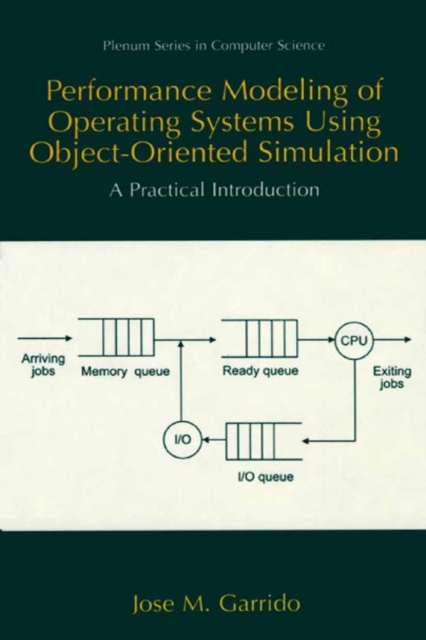
This book introduces the fundamental concepts and practical simulation te- niques for modeling different aspects of operating systems to study their g- eral behavior and their performance.
High Performance Computing Systems and Applications contains the fully refereed papers from the 13th Annual Symposium on High Performance Computing, held in Kingston, Canada, in June 1999.
High Performance Data Mining: Scaling Algorithms, Applications and Systems brings together in one place important contributions and up-to-date research results in this fast moving area.
FORTE 2001, formerly FORTE/PSTV conference, is a combined conference of FORTE (Formal Description Techniques for Distributed Systems and Communication Protocols) and PSTV (Protocol Specification, Testing and Verification) conferences.
Distributed applications are a necessity in most central application sectors of the contemporary information society, including e-commerce, e-banking, e-learning, e-health, telecommunication and transportation.
Active networking is an exciting new paradigm in digital networking that has the potential to revolutionize the manner in which communication takes place.
Master identity solutions and strategies and prepare to achieve Microsoft Identity and Access Administrator SC-300 certificationPurchase of this book unlocks access to web-based exam prep resources such as mock exams, flashcards, and exam tipsKey FeaturesGain invaluable insights into SC-300 certification content from industry expertsStrengthen your foundations and master all crucial concepts required for exam successRigorous mock exams reflect the real exam environment, boosting your confidence and readinessPurchase of this book unlocks access to web-based exam prep resources including mock exams, flashcards, exam tipsBook DescriptionSC-300 exam content has undergone significant changes, and this second edition aligns with the revised exam objectives.
Discover how project Reactor enhances the reactive programming paradigm and allows you to build scalable asynchronous applicationsKey FeaturesUse reactive APIs, Flux, and Mono to implement reactive extensionsCreate concurrent applications without the complexity of Java's concurrent APIUnderstand techniques to implement event-driven and reactive applicationsBook DescriptionReactor is an implementation of the Java 9 Reactive Streams specification, an API for asynchronous data processing.
This book describes how a computer works and explains how the various hardware components are organized and interconnected to provide a platform upon which programs can be executed.
Successful management teams can identify the cost and return derived from the implementation of new technology, and they can properly apply the technology toward gaining a competitive advantage.
As spoken natural language dialog systems technology continues to make great strides, numerous issues regarding dialog processing still need to be resolved.
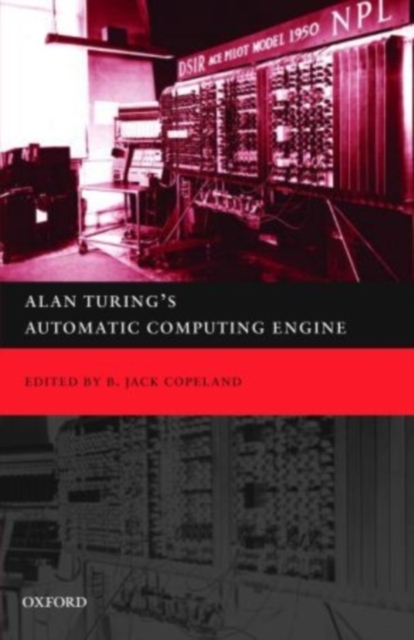
The mathematical genius Alan Turing, now well known for his crucial wartime role in breaking the ENIGMA code, was the first to conceive of the fundamental principle of the modern computer-the idea of controlling a computing machine's operations by means of a program of coded instructions, stored in the machine's 'memory'.