IP Multimedia Subsystem (IMS) technology, which merges the Internet with interactive telecommunications, represents the here and now for today's packet-switched networks.
Analyze Key Security Mechanisms and Approaches with this practical primer, the first book on the market to cover critical IPv6 security considerations.
Effectively integrating theory and hands-on practice, Networking Systems Design and Development provides students and IT professionals with the knowledge and skills needed to design, implement, and manage fully functioning network systems using readily available Linux networking tools.
Supported by the expert-level advice of pioneering researchers, Orthogonal Frequency Division Multiple Access Fundamentals and Applications provides a comprehensive and accessible introduction to the foundations and applications of one of the most promising access technologies for current and future wireless networks.
From basic concepts to research grade material and future directions, the Near Field Communications Handbook provides comprehensive technical coverage of this rapidly emerging field.
Global Demand for Streamlined Design and Computation The explosion of wireless communications has generated a tidal wave of interest and development in computational techniques for electromagnetic simulation as well as the design and analysis of RF and microwave circuits.
In spite of their importance and potential societal impact, there is currently no comprehensive source of information about vehicular ad hoc networks (VANETs).
In this era where data and voice services are available at a push of a button, service providers have virtually limitless options for reaching their customers with value-added services.
High Speed Packet Access (HSPA) is a collection of two mobile telephony protocols, High Speed Downlink Packet Access (HSDPA) and High Speed Uplink Packet Access (HSUPA).
Addressing the rapid evolution of global communications, this book provides step-by-step guidance on how to configure, enact, and manage the process of integrating mobile technology within an organization.
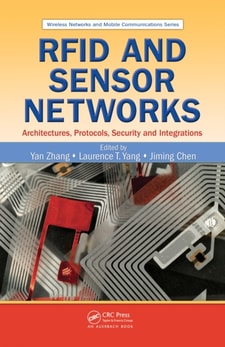
The escalating demand for ubiquitous computing along with the complementary and flexible natures of Radio Frequency Identification (RFID) and Wireless Sensor Networks (WSNs) have sparked an increase in the integration of these two dynamic technologies.
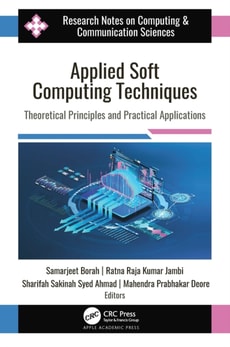
Soft computing techniques have the ability to handle complex, uncertain, and imprecise information to create usable solutions to convoluted problems, or those just too time-consuming to solve with current hardware.
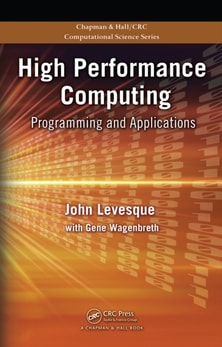
High Performance Computing: Programming and Applications presents techniques that address new performance issues in the programming of high performance computing (HPC) applications.
Mastering cluster technology-the linking of servers-is becoming increasingly important for application and system programmers and network designers, administrators, and managers.
Effective management of a communications network can be a difficult and costly activity, and even more so when the network crosses international borders.
A Thorough Overview of the Next Generation in ComputingPoised to follow in the footsteps of the Internet, grid computing is on the verge of becoming more robust and accessible to the public in the near future.
Grid technology offers the potential for providing secure access to remote services, thereby promoting scientific collaborations in an unprecedented scale.
Location-Based Services Handbook: Applications, Technologies, and Security is a comprehensive reference containing all aspects of essential technical information on location-based services (LBS) technology.
Broadband networks, such as asynchronous transfer mode (ATM), frame relay, and leased lines, allow us to easily access multimedia services (data, voice, and video) in one package.
The emergence of quality-of-service (QoS) mechanisms continues to propel the development of real-time multimedia services such as VoIP and videoconferencing.
Widely adopted by service providers to enable IP telephony, instant messaging, and other data services, SIP is the signaling protocol of choice for advanced multimedia communications signaling.
Written by VM-certified instructors with years of professional and teaching experience, VMware Certified Professional Test Prep is the ultimate guide to the VCP exam.
Collects the Latest Research Involving the Application of Process Algebra to ComputingExploring state-of-the-art applications, Process Algebra for Parallel and Distributed Processing shows how one formal method of reasoning-process algebra-has become a powerful tool for solving design and implementation challenges of concurrent systems.
Take Part in the Future of Wireless/Wireline Convergence The IP multimedia subsystem (IMS), established as the foundation for future wireless and wireline convergence, is the bedrock that will facilitate easy deployment on new, rich, personalized multimedia communication services that mix telecom and data services.
Dealing with the volume, complexity, and diversity of data currently being generated by scientific experiments and simulations often causes scientists to waste productive time.
While 3G has been an outstanding success, the ever-growing demand for higher data rates and higher quality mobile communication services continues to fuel conflict between the rapidly growing number of users and limited bandwidth resources.
Illustrating the effect of concurrency on programs written in familiar languages, this text focuses on novel language abstractions that truly bring concurrency into the language and aid analysis and compilation tools in generating efficient, correct programs.
Advances in the area of wireless and mobile telemedicine to diagnose and treat patients have drawn growing attention from healthcare providers and recipients, industry, researchers, and governments.
Facilitating high data transfers over long distances at a reasonable cost, Carrier Ethernet is solidifying its fundamental position as the core of next-generation networks.
Despite the tremendous advances in performance enabled by modern architectures, there are always new applications and demands arising that require ever-increasing capabilities.
The goal of Unlicensed Mobile Access (UMA) is to provide seamless access to GSM and GPRS mobile service networks via unlicensed spectrum technologies, including Bluetooth, WiMAX, and Wi-Fi.
The traditionally separate Fixed, Mobile, and Internet sectors have been evolving recently toward a single sector, offering numerous implications for those involved in technology and business.
Streamlined Design Solutions Specifically for NoCTo solve critical network-on-chip (NoC) architecture and design problems related to structure, performance and modularity, engineers generally rely on guidance from the abundance of literature about better-understood system-level interconnection networks.
Port-based authentication is a "e;network access control"e; concept in which a particular device is evaluated before being permitted to communicate with other devices located on the network.
Focusing on an important and complicated topic in wireless network design, Wireless Quality of Service: Techniques, Standards, and Applications systematically addresses the quality-of-service (QoS) issues found in many types of popular wireless networks.