The Multi-Agent Based Beam Search (MABBS) method systematically integrates four major requirements of manufacturing production - representation capability, solution quality, computation efficiency, and implementation difficulty - within a unified framework to deal with the many challenges of complex real-world production planning and scheduling problems.
Quality Management in Reverse Logistics intends to develop, collect, examine and evaluate a number of quality management (QM) tools and techniques, which can be applied in practice in order to understand, review and improve any closed-loop supply chain process.
Research into the methods and techniques used in simulating crowds has developed extensively within the last few years, particularly in the areas of video games and film.
Bridging the gap between concepts derived from Second Law of Thermodynamics and their application to Engineering practice, the property exergy and the exergy balance can be a tool for analyzing and improving the performance of energy conversion processes.
This book discusses all aspects of computing for expressive performance, from the history of CSEMPs to the very latest research, in addition to discussing the fundamental ideas, and key issues and directions for future research.
An extended survey of methods for the control and systems identification in gas turbines, this book reviews current methods and presents a number of new perspectives.
This book introduces and describes in detail the SEQUAL framework for understanding the quality of models and modeling languages, including the numerous specializations of the generic framework, and the various ways in which this can be used for different applications.
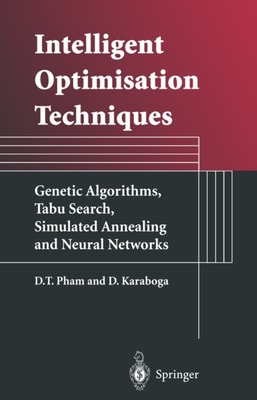
This book covers four optimisation techniques loosely classified as "e;intelligent"e;: genetic algorithms, tabu search, simulated annealing and neural networks.
Finite Element Programs for Structural Vibrations presents detailed descriptions of how to use six computer programs (written in Fortran 77) to determine the resonant frequencies of one, two, and three-dimensional skeletal structures through the finite element method.
This book is the first to provide a comprehensive survey of the computational models and methodologies used for studying the evolution and origin of language and communication.
As the use and relevance of robotics for countless scientific purposes grows all the time, research into the many diverse elements of the subject becomes ever more important and in demand.
1994 marks the year that the international version of ARlS Toolset - a software system capable of analysing, modelling and navigating business processes - was developed and released by the software and consulting company IDS Prof.
This is one of the shorter books in the 21 volume Practitioner Book Series, but this is entirely appropriate for a text on the ubiquitous topic of Quality.
Hydraulic Servo-systems details the basic concepts of many recent developments of nonlinear identification and nonlinear control and their application to hydraulic servo-systems: developments such as feedback linearisation and fuzzy control.
The two-volume set LNAI 15497 and LNAI 15498 constitutes the refereed proceedings of the 14th International Conference on Brain Inspired Cognitive Systems, BICS 2024, held in Hefei, China, during December 6-8, 2024.
After a brief introduction to the main law of physics and fundamental concepts inherent in electromechanical conversion, Vector Control of Induction Machines introduces the standard mathematical models for induction machines - whichever rotor technology is used - as well as several squirrel-cage induction machine vector-control strategies.
Discrete event simulation and agent-based modeling are increasingly recognized as critical for diagnosing and solving process issues in complex systems.
In recent years, rapid changes and improvements have been witnessed in the field of transformer condition monitoring and assessment, especially with the advances in computational intelligence techniques.
With the increasing complexity and dynamism in today's product design and manufacturing, more optimal, robust and practical approaches and systems are needed to support product design and manufacturing activities.
The sense of touch is fundamental during the interaction between humans and their environment; in virtual reality, objects are created by computer simulations and they can be experienced through haptic devices.
Managing the Dynamics of New-Product Development Processes merges product-based planning, process modelling, process execution, probabilistic simulations, and simulation based decision-making into one framework called the Dynamic new-Product Development Process.