Introduction The exponential scaling of feature sizes in semiconductor technologies has side-effects on layout optimization, related to effects such as inter- connect delay, noise and crosstalk, signal integrity, parasitics effects, and power dissipation, that invalidate the assumptions that form the basis of previous design methodologies and tools.
Computer Science and Operations Research continue to have a synergistic relationship and this book - as a part of the Operations Research and Computer Science Interface Series - sits squarely in the center of the confluence of these two technical research communities.
This book discusses the latest advances in manufacturing and process control, with a special emphasis on digital manufacturing and intelligent technologies for manufacturing and industrial processes control.
This is the first volume in a suite of short, inexpensive, paperbound volumes intended for student usage as textbooks, or course supplements, and for purchase as single-copy reference works for professionals in specific disciplines, and, in some cases, for interdisciplinary use.
Computer simulation has developed into a powerful tool for problem solving in a variety of areas, in the sciences as well as in industrial environments.
Since the establishment of the CAAD Futures Foundation in 1985, CAAD experts from all over the world meet every two years to present and document the state of the art of research in Computer Aided Architectural Design.
This book is based on a number of systems concepts, of which the following are emphasized here: oThe interacting systems of society and the environment are dynamic and evolution- ary oEvolution of these systems carries them through stages of differential stability and instability, continuity and discontinuity oAssociated with evolution and instability is structural change that is essentially irre- versible oThe present is a stage of world transformation that may not have been equaled for decades or even centuries oPolicies and decisions must match the times, in the present case the stage of world transformation The time 11:59:59 PM, approximately, on December 31, 2000 has an impor- tant symbolic meaning.
This book is a compilation of a selected subset of research articles presented at the Eighth INFORMS Computing Society Conference, held in Chandler, Arizona, from January 8 to 10, 2003.
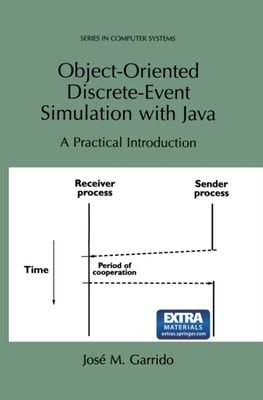
Researches and developers of simulation models state that the Java program- ming language presents a unique and significant opportunity for important changes in the way we develop simulation models today.
This book presents an overview of a variety of contemporary statistical, mathematical and computer science techniques which are used to further the knowledge in the medical domain.
Over the last several years there has been a growing interest in developing computational methodologies for modeling and analyzing movements and behaviors of 'crowds' of people.
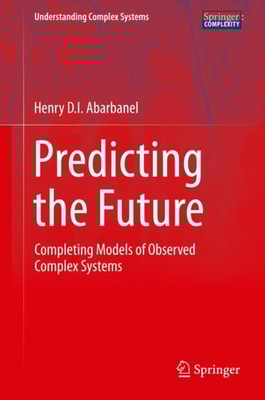
Through the development of an exact path integral for use in transferring information from observations to a model of the observed system, the author provides a general framework for the discussion of model building and evaluation across disciplines.
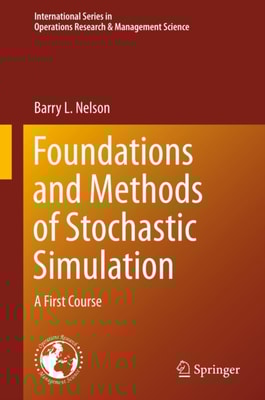
This graduate-level text covers modeling, programming and analysis of simulation experiments and provides a rigorous treatment of the foundations of simulation and why it works.
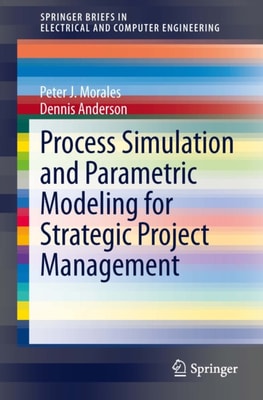
Process Simulation and Parametric Modeling for Strategic Project Management will offer CIOs, CTOs and Software Development Managers, IT Graduate Students an introduction to a set of technologies that will help them understand how to better plan software development projects, manage risk and have better insight into the complexities of the software development process.
Imaging Heat and Mass Transfer Processes: Visualization and Analysis applies Schlieren and shadowgraph techniques to complex heat and mass transfer processes.
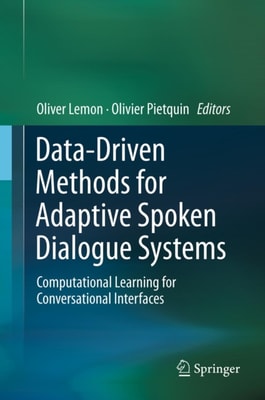
Data driven methods have long been used in Automatic Speech Recognition (ASR) and Text-To-Speech (TTS) synthesis and have more recently been introduced for dialogue management, spoken language understanding, and Natural Language Generation.
This book describes thermal plant simulation, that is, dynamic simulation of plants which produce, exchange and otherwise utilize heat as their working medium.
This book provides a complete and comprehensive reference/guide to Pyomo (Python Optimization Modeling Objects) for both beginning and advanced modelers, including students at the undergraduate and graduate levels, academic researchers, and practitioners.
The main idea of this book is that to comprehend the instructional potential of simulation and to design effective simulation-based learning environments, one has to consider both what happens inside the computer and inside the students' minds.
Mobile Intention Recognition addresses problems of practical relevance for mobile system engineers: how can we make mobile assistance systems more intelligent?
In this work, we provide a treatment of the relationship between two models that have been widely used in the implementation of autonomous agents: the Belief DesireIntention (BDI) model and Markov Decision Processes (MDPs).
The present volume contains the papers which were accepted for presentation at the 3rd International Symposium for Systems Analysis and Simulation held in Berlin (GDR), September 12-:-16, 1988.
Computer models offer a means of interpreting and analyzing the dynamics of real-world systems ranging from population growth to ozone depletion and a new section on modeling in genetics.
Designed for senior electrical engineering students, this textbook explores the theoretical concepts of digital signal processing and communication systems by presenting laboratory experiments using real-time DSP hardware.
This monograph is an outgrowth of the authors' recent research on the de- velopment of algorithms for several low-level vision problems using artificial neural networks.
The analysis of time series data is an important aspect of data analysis across a wide range of disciplines, including statistics, mathematics, business, engineering, and the natural and social sciences.
Knowledge-Based Simulation: Methodology and Application represents a recent compilation of research material that reviews fundamental concepts of simulation methodology and knowledge-based simulation applications.
In this book a global shape model is developed and applied to the analysis of real pictures acquired with a visible light camera under varying conditions of optical degradation.
This concise text on geometry with computer modeling presents some elementary methods for analytical modeling and visualization of curves and surfaces.
Joseph-Louis Lagrange (1736-1813), one of the greatest mathematicians of the 18th century, made important contributions to the theory of numbers and to analytical and celestial mechanics.
Artificial "e;neural networks"e; are widely used as flexible models for classification and regression applications, but questions remain about how the power of these models can be safely exploited when training data is limited.
Developments in both computer hardware and Perhaps the greatest impact has been felt by the software over the decades have fundamentally education community.