Since interactions may occur between animals, humans, or computational agents, an interdisciplinary approach which investigates foundations of affective communication in a variety of platforms is indispensable.
The value of intangible assets has become increasingly prominent in recent years, in spite of the difficulties involved in the identification, measurement and financial valuation of intangibles.
As modern electronic communication devices and technologies continue to evolve, the discipline of e-collaboration becomes an increasingly significant area of study.
Handheld and mobile technologies have witnessed significant advances in functionality, leading to their widespread use as both business and social networking tools.
By combining agent capabilities with computational linguistics, conversational agents can exploit natural language technologies to improve communication between humans and computers.
Wireless sensor networks (WSNs) have many applications ranging from environmental monitoring, security management, and medical applications to smart homes.
The field of high technology focuses on new, rapidly developing technologies, which include electronic technology, new material technology, new energy technology, bioengineering technology, and communication technology.
Given the widespread, frequent use of social networks as a means for people to communicate and share their interests, it comes as no surprise that they have become an important tool for businesses and business networking.
Clear communication requires understanding readers from perspectives of technical communication, cognitive psychology, usability, human-computer interaction, information design, and information science.
End users have become increasingly integrated into computing environments, necessitating continued inquiry into successful models for end user design and development and the impact that these models have on performance and productivity.
Although business leaders and designers may appear to have different objectives, they actually share a common goal: ensuring the long-term success and profitability of their organization.
Auditory User Interfaces: Toward the Speaking Computer describes a speech-enabling approach that separates computation from the user interface and integrates speech into the human-computer interaction.
Transaction Management Support for Cooperative Application is a comprehensive report on a successful international project, called TRANSCOOP, carried out from 1994 to 1997 by a group of European scientists.
Over the past decade high performance computing has demonstrated the ability to model and predict accurately a wide range of physical properties and phenomena.
With this important work, written around current behavioral psychology research and practice as it applies to school-age children, the authors address both experimental and applied issues in the assessments and interventions used with this population.
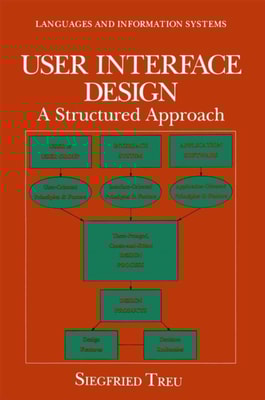
A companion to the author's User Interface Evaluation, this book details a systematic and comprehensive methodology to measure and evaluate new or existing human-computer interfaces.
Solidly founded on 25 years of research and teaching, the author integrates the salient features of the subdisciplines of computer science into a comprehensive conceptual framework for the design of human-computer interfaces.
The following are the proceedings of the Fourth International Workshop on Human and Machine Perception held in Palermo, Italy, on June 20 -23, 2000, under the auspices of three Institutions: the Cybernetic and Biophysics Group (GNCB) of the Italian National Research Council (CNR) and the two Inter-Department Centers of Cognitive Sciences of Palermo and Pavia University respectively.
Coordination And Communication Using Signs: Studies in Organisational Semiotics is a cutting-edge volume that bridges the gap between the technical and social aspects of information systems and information technology.
Analyzing Video Sequences of Multiple Humans: Tracking, Posture Estimation and Behavior Recognition describes some computer vision-based methods that analyze video sequences of humans.
Michael Strobel worked for several years as a software engineer and consultant in the German IT industry before joining IBM Research in Switzerland, where he developed his interest in support for negotiations in electronic markets.
Grid Resource Management: State of the Art and Future Trends presents an overview of the state of the field and describes both the real experiences and the current research available today.
Software Visualization: From Theory to Practice was initially selected as a special volume for "e;The Annals of Software Engineering (ANSE) Journal"e;, which has been discontinued.
Approaches to the recovery of three-dimensional information on a biological object, which are often formulated or implemented initially in an intuitive way, are concisely described here based on physical models of the object and the image-formation process.
Computer-Supported Collaboration with Applications to Software Development reviews the theory of collaborative groups and the factors that affect collaboration, particularly collaborative software development.
This is an edited collection by world-class experts, from diverse fields, focusing on integrating smart in-vehicle systems with human factors to enhance safety in automobiles.
This volume addresses the emerging area of human computation, The chapters, written by leading international researchers, explore existing and future opportunities to combine the respective strengths of both humans and machines in order to create powerful problem-solving capabilities.
The use of contextually aware, pervasive, distributed computing, and sensor networks to bridge the gap between the physical and online worlds is the basis of mobile social networking.