The key idea of the book is that scientific and practical advances can be obtained if researchers working in traditions that have been assumed to be mutually incompatible make a real effort to engage in dialogue with each other, comparing and contrasting their understandings of a given phenomenon and how these different understandings can either complement or mutually elaborate on each other.
Performance Evaluation Software: Moving Object Detection and Tracking in Videos introduces a software approach for the real-time evaluation and performance comparison of the methods specializing in moving object detection and/or tracking (D&T) in video processing.
In recent years, searching for source code on the web has become increasingly common among professional software developers and is emerging as an area of academic research.
In this brief, the authors discuss recently explored spectral (sub-segmental and pitch synchronous) and prosodic (global and local features at word and syllable levels in different parts of the utterance) features for discerning emotions in a robust manner.
Semantic Analysis and Understanding of Human Behaviour in Video Streaming investigates the semantic analysis of the human behaviour captured by video streaming, and introduces both theoretical and technological points of view.
In Monitoring Adaptive Spoken Dialog Systems, authors Alexander Schmitt and Wolfgang Minker investigate statistical approaches that allow for recognition of negative dialog patterns in Spoken Dialog Systems (SDS).
Imaging Heat and Mass Transfer Processes: Visualization and Analysis applies Schlieren and shadowgraph techniques to complex heat and mass transfer processes.
Data driven methods have long been used in Automatic Speech Recognition (ASR) and Text-To-Speech (TTS) synthesis and have more recently been introduced for dialogue management, spoken language understanding, and Natural Language Generation.
Introducing Spoken Dialogue Systems into Intelligent Environments outlines the formalisms of a novel knowledge-driven framework for spoken dialogue management and presents the implementation of a model-based Adaptive Spoken Dialogue Manager(ASDM) called OwlSpeak.
The inverse scattering problem is central to many areas of science and technology such as radar and sonar, medical imaging, geophysical exploration and nondestructive testing.
The increasingly prevalent use of online- or blended-learning in schools universities has resulted in asynchronous online discussion forum becoming an increasingly common means to facilitate dialogue between instructors and students, as well as students and students beyond the boundaries of their physical classrooms.
Writing Virtual Environments for Software Visualization book describes the software for a networked, 3D multi-user virtual environment that allows users to create and share remotely visualizations of program behavior.
Cross-Word Modeling for Arabic Speech Recognition utilizes phonological rules in order to model the cross-word problem, a merging of adjacent words in speech caused by continuous speech, to enhance the performance of continuous speech recognition systems.
This book aims to serve as a multidisciplinary forum covering technical, pedagogical, organizational, instructional, as well as policy aspects of ICT in Education and e-Learning.
Based on a selection of the most relevant and high quality research papers from the 2010 Networked Learning Conference, this book is an indispensible resource for all researchers, instructional designers, program managers, and learning technologists interested in the area of Technology Enhanced Learning.
Ontology-based Application Integration introduces UI-level (User Interface Level) application integration and discusses current problems which can be remedied by using ontologies.
This volume includes proceedings articles presented at the Workshop on Paralinguistic Information and its Integration in Spoken Dialogue Systems held in Granada, Spain.
Cognitive and Computational Strategies for Word Sense Disambiguation examines cognitive strategies by humans and computational strategies by machines, for WSD in parallel.
Augmented Reality (AR) refers to the merging of a live view of the physical, real world with context-sensitive, computer-generated images to create a mixed reality.
This book is concerned with recent experimental and theoretical work dealing with phenomena created by the transient dipoles and polarizabilities produced by intermolecular interactions.
Human-System interaction has been and will continue to be of interest to many researchers of various disciplines: engineers, computer scientists, psychologists, and social scientists.
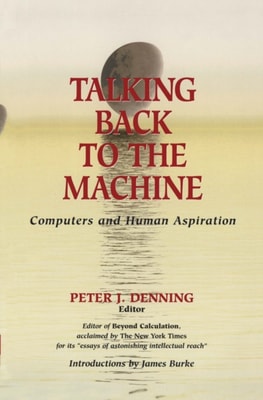
In February 1996, a chess-playing computer known as Deep Blue made history by defeating the reigning world chess champion, Gary Kasparov, in a game played under match conditions.
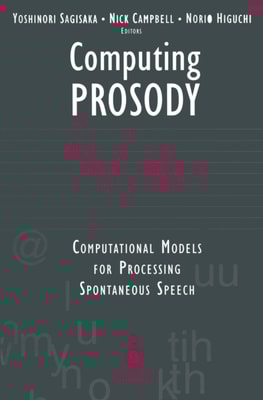
This book presents a collection of papers from the Spring 1995 Work- shop on Computational Approaches to Processing the Prosody of Spon- taneous Speech, hosted by the ATR Interpreting Telecommunications Re- search Laboratories in Kyoto, Japan.
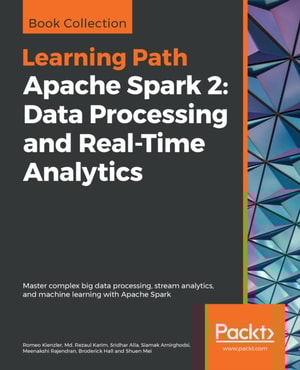
Build efficient data flow and machine learning programs with this flexible, multi-functional open-source cluster-computing frameworkKey FeaturesMaster the art of real-time big data processing and machine learning Explore a wide range of use-cases to analyze large data Discover ways to optimize your work by using many features of Spark 2.
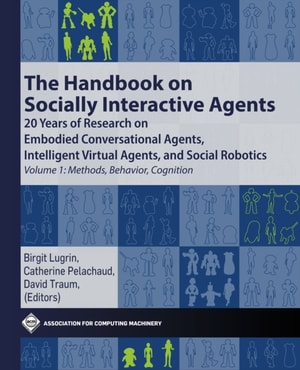
The Handbook on Socially Interactive Agents provides a comprehensive overview of the research fields of Embodied Conversational Agents;Intelligent Virtual Agents;and Social Robotics.
The Handbook on Socially Interactive Agents provides a comprehensive overview of the research fields of Embodied Conversational Agents, Intelligent Virtual Agents, and Social Robotics.
With recent advances in natural language understanding techniques and far-field microphone arrays, natural language interfaces, such as voice assistants and chatbots, are emerging as a popular new way to interact with computers.
With recent advances in natural language understanding techniques and far-field microphone arrays, natural language interfaces, such as voice assistants and chatbots, are emerging as a popular new way to interact with computers.
The popular open source KDE desktop environment for Unix was built with Qt, a C++ class library for writing GUI applications that run on Unix, Linux, Windows 95/98, Windows 2000, and Windows NT platforms.
The popular open source KDE desktop environment for Unix was built with Qt, a C++ class library for writing GUI applications that run on Unix, Linux, Windows 95/98, Windows 2000, and Windows NT platforms.
The recent digital and mobile revolutions are a minor blip compared to the next wave of technological change, as everything from robot swarms to skin-top embeddable computers and bio printable organs start appearing in coming years.