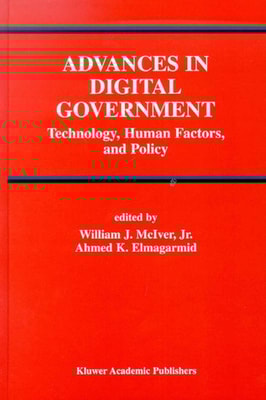
Advances In Digital Government presents a collection of in-depth articles that addresses a representative cross-section of the matrix of issues involved in implementing digital government systems.
The emergence of network facilities and the increased availability of personal computer systems over the last decade has seen a growing interest in the use of computers to support cooperative work.
Enterprises all over the world are experiencing a rapid development of networked computing for applications that are required for the daily survival of an organization.
An examination of the implications for society of rapidly advancing artificial intelligence systems, combining a humanities perspective with technical analysis; includes exercises and discussion questions.
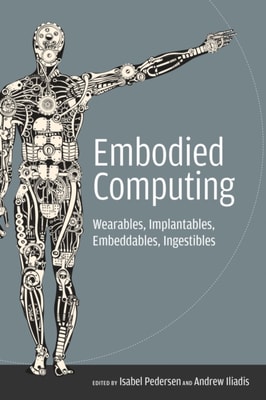
Practitioners and scholars explore ethical, social, and conceptual issues arising in relation to such devices as fitness monitors, neural implants, and a toe-controlled computer mouse.
Unexpected ways that individuals adapt technology to reclaim what matters to them, from working through conflict with smart lights to celebrating gender transition with selfies.
Interaction design that entails a qualitative shift from a symbolic, language-oriented stance to an experiential stance that encompasses the entire design and use cycle.
How to educate the next generation of college students to invent, to create, and to discover—filling needs that even the most sophisticated robot cannot.
A new conceptualization of the relationship between the systemic and the iconic in real-time simulations that distinguishes among four levels of forming.
The history of the first programmable electronic computer, from its conception, construction, and use to its afterlife as a part of computing folklore.
How pervasive digital devices—smartphones, iPods, GPS navigation systems, and their networks—us formulate a sense of place and refine social relationships
A systematic presentation of activity theory, its application to interaction design, and an argument for the development of activity theory as a basis for understanding how people interact with technology.
A new edition of the classic primer in the psychology of computation, with a new introduction, a new epilogue, and extensive notes added to the original text.
This book explores the intersection of legal frameworks, healthcare innovation, and computational intelligence, shedding light on how emerging technologies like artificial intelligence (AI) and machine learning (ML) are reshaping the medical landscape.
This book explores the transformative potential of blockchain technology and shows how blockchain can promote equitable access to resources and bridge societal gaps.