Offering a unique perspective on vehicle design and on new developments in vehicle technology, this book seeks to bridge the gap between engineers, who design and build cars, and human factors, as a body of knowledge with considerable value in this domain.
Human Factors in Practice: Concepts and Applications is written for the practitioner who wishes to learn about human factors (HF) but is more interested in application (applied research) than theory (basic research).
Human Factors in Practice: Concepts and Applications is written for the practitioner who wishes to learn about human factors (HF) but is more interested in application (applied research) than theory (basic research).
This edited book presents an array of approaches on how human factors theory and research addresses the challenges associated with combat identification.
This edited book presents an array of approaches on how human factors theory and research addresses the challenges associated with combat identification.
This second edition of Human Factors Methods: A Practical Guide for Engineering and Design now presents 107 design and evaluation methods as well as numerous refinements to those that featured in the original.
This second edition of Human Factors Methods: A Practical Guide for Engineering and Design now presents 107 design and evaluation methods as well as numerous refinements to those that featured in the original.
Soldier-robot teams will be an important component of future battle spaces, creating a complex but potentially more survivable and effective combat force.
Soldier-robot teams will be an important component of future battle spaces, creating a complex but potentially more survivable and effective combat force.
Living in Digital Worlds investigates the relationship between human society and technology, as our private and particularly our public lives are increasingly undertaken in spaces that are inherently digital: digital public spaces.
Living in Digital Worlds investigates the relationship between human society and technology, as our private and particularly our public lives are increasingly undertaken in spaces that are inherently digital: digital public spaces.
Macrocognition Metrics and Scenarios: Design and Evaluation for Real-World Teams translates advances by scientific leaders in the relatively new area of macrocognition into a format that will support immediate use by members of the software testing and evaluation community for large-scale systems as well as trainers of real-world teams.
Since its inception, just after the Second World War, Human Factors research has paid special attention to the issues surrounding human control of systems.
Since its inception, just after the Second World War, Human Factors research has paid special attention to the issues surrounding human control of systems.
The Handbook of Human-Machine Interaction features 20 original chapters and a conclusion focusing on human-machine interaction (HMI) from analysis, design and evaluation perspectives.
The Handbook of Human-Machine Interaction features 20 original chapters and a conclusion focusing on human-machine interaction (HMI) from analysis, design and evaluation perspectives.
The development of new technologies of information and communication will, in the coming years, transform deeply their uses and practices in transport.
The development of new technologies of information and communication will, in the coming years, transform deeply their uses and practices in transport.
Browsing for information is a significant part of most research activity, but many online collections hamper browsing with interfaces that are variants on a search box.
Browsing for information is a significant part of most research activity, but many online collections hamper browsing with interfaces that are variants on a search box.
New Ergonomics Perspective represents a selection of the papers presented at the 10th Pan-Pacifi c Conference on Ergonomics (PPCOE), held in Tokyo, Japan, August 25-28, 2014.
Ergonomics and human factors is the discipline concerned with the application of scientifc knowledge to improve people's interaction with products, systems and environments.
Handbook of Human Factors and Ergonomics in Contemporary Business highlights the symbiotic relationship between human-centric approaches and organizational success in 21st century business and corporate culture.
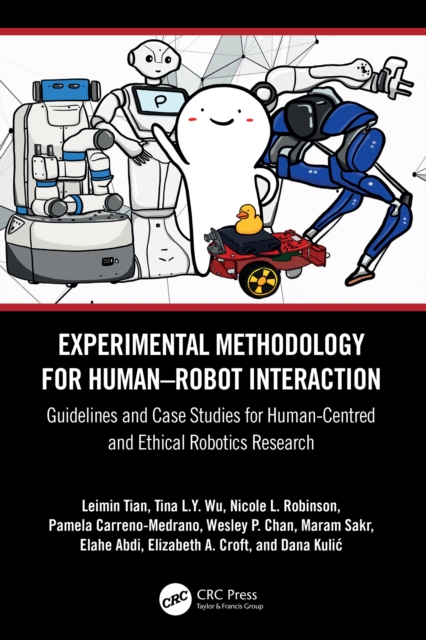
Leading figures in Australian robotics research provide an overview and guidance for human-robot interaction (HRI) experimental design and evaluation methodologies that consider the ethical implications of the research and its applications from a human-centred and contextual perspective.
This book brings together diverse voices from across the field of sustainable human computer interaction (SHCI) to discuss what it means for digital technology to support sustainability and how humans and technology can work together optimally for a more sustainable future.
This book brings together diverse voices from across the field of sustainable human computer interaction (SHCI) to discuss what it means for digital technology to support sustainability and how humans and technology can work together optimally for a more sustainable future.
Understanding Tablets from Early Childhood to Adulthood offers an alternative to dominant and populist narratives that young people are intuitively able to successfully use tablet devices.
Understanding Tablets from Early Childhood to Adulthood offers an alternative to dominant and populist narratives that young people are intuitively able to successfully use tablet devices.
This book outlines the new concept of user engineering and covers the diversity of users, along with the business process that includes the design and the user's experience processes.
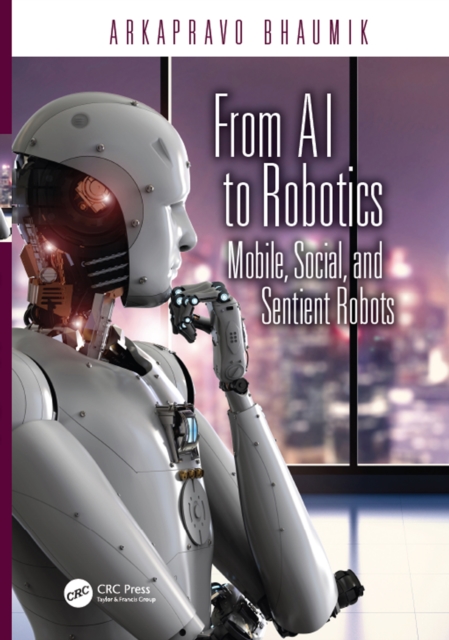
From AI to Robotics: Mobile, Social, and Sentient Robots is a journey into the world of agent-based robotics and it covers a number of interesting topics, both in the theory and practice of the discipline.