Signal Processing for Computer Vision is a unique and thorough treatment of the signal processing aspects of filters and operators for low-level computer vision.
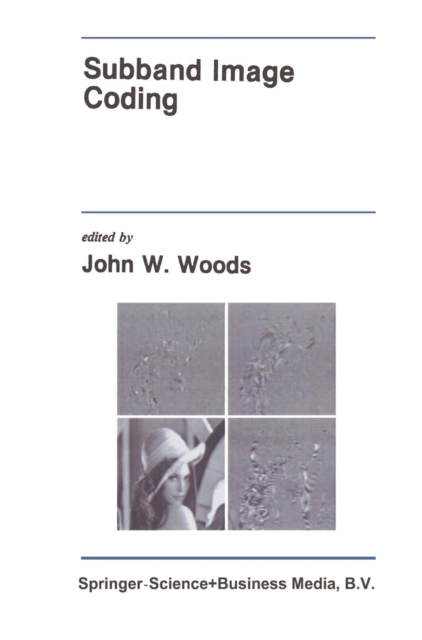
This book concerns a new method of image data compression which weil may supplant the well-established block-transfonn methods that have been state-of-the- art for the last 15 years.
The science associated with the development of artificial sen- sory systems is occupied primarily with determining how information about the world can be extracted from sensory data.
A Decade of Extraordinary GrowthThe past decade has brought a surge of growth in the technologies for digital color imaging, multidimensional signal processing, and visual scene analysis.
One stop guide to implementing award-winning, and cutting-edge CNN architecturesKey Features[*]Fast-paced guide with use cases and real-world examples to get well versed with CNN techniques[*]Implement CNN models on image classification, transfer learning, Object Detection, Instance Segmentation, GANs and more[*]Implement powerful use-cases like image captioning, reinforcement learning for hard attention, and recurrent attention modelsBook DescriptionConvolutional Neural Network (CNN) is revolutionizing several application domains such as visual recognition systems, self-driving cars, medical discoveries, innovative eCommerce and more.
This book focuses on the fusion of artificial intelligence and machine learning in advanced image processing, data analysis, and cyber security, as well as compiles and discusses various engineering solutions using various artificial intelligence paradigms.
Traditional methods of biometric analysis are unable to overcome the limitations of existing approaches, mainly due to the lack of standards for input data, privacy concerns involving use and storage of actual biometric data, and unacceptable accuracy.
Embodied conversational agents (ECA) and speech-based human-machine interfaces can together represent more advanced and more natural human-machine interaction.
Helping readers master digital imaging, this text presents a unified theoretical basis for understanding and designing methods of imaging and image processing.
Reflecting new discoveries in fingerprint science, Lee and Gaensslen's Advances in Fingerprint Technology, Third Edition has been completely updated with new material and nearly double the references contained in the previous edition.
Investigating image encryption approaches, this book examines image encryption algorithms for the purpose of wireless communication of images in secure form.
The application of imaging techniques in plant and agricultural sciences had previously been confined to images obtained through remote sensing techniques.
Based on the experiences of the Department of Information Engineering of the University of Pisa and the Radar and Surveillance System (RaSS) national laboratory of the National Interuniversity Consortium of Telecommunication (CNIT), Radar Imaging for Maritime Observation presents the most recent results in radar imaging for maritime observation.
Successful thermal modeling of the human eye helps in the early diagnosis of eye abnormalities such as inflammation, cataracts, diabetic retinopathy, and glaucoma-all leading causes of blindness.
Since the publication of the best-selling, highly acclaimed first edition, the technology and clinical applications of medical imaging have changed significantly.
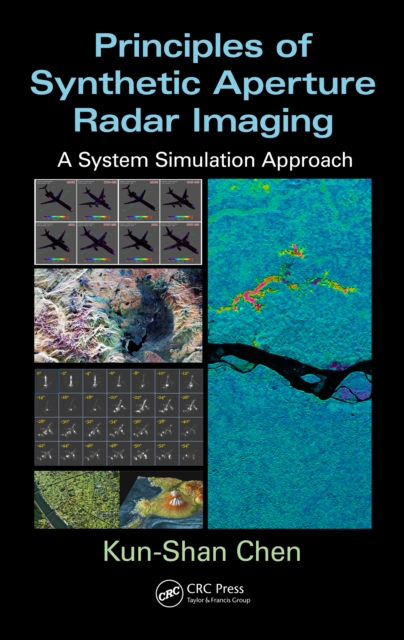
Synthetic aperture radar (SAR) is a well-known remote sensing technique, but conventional single-antenna SAR is inherently limited by the minimum antenna area constraint.
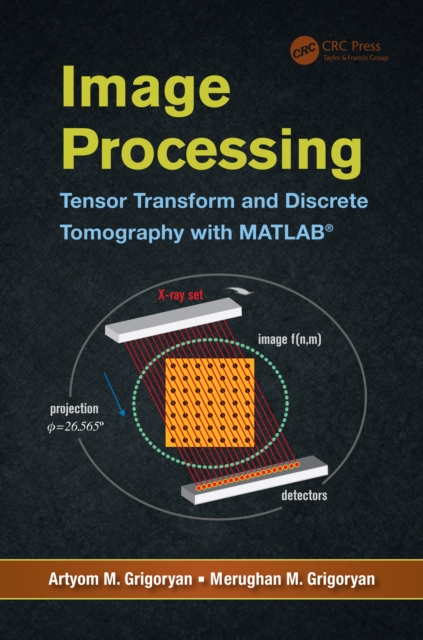
Focusing on mathematical methods in computer tomography, Image Processing: Tensor Transform and Discrete Tomography with MATLAB(R) introduces novel approaches to help in solving the problem of image reconstruction on the Cartesian lattice.
Exploring theories and applications developed during the last 30 years, Digital Geometry in Image Processing presents a mathematical treatment of the properties of digital metric spaces and their relevance in analyzing shapes in two and three dimensions.
Physics-Based Deformable Models presents a systematic physics-based framework for modeling rigid, articulated, and deformable objects, their interactions with the physical world, and the estimate of their shape and motion from visual data.
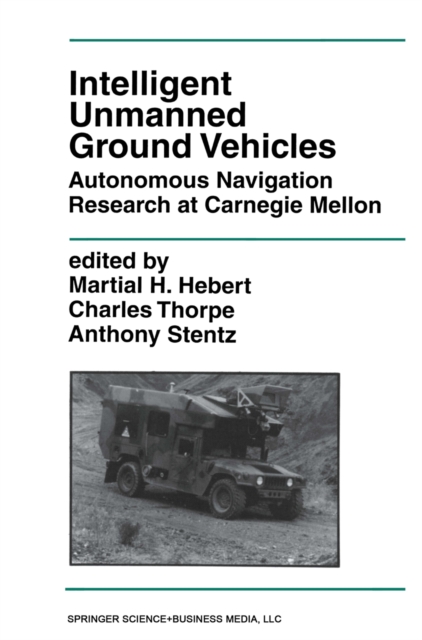
Intelligent Unmanned Ground Vehicles describes the technology developed and the results obtained by the Carnegie Mellon Robotics Institute in the course of the DARPA Unmanned Ground Vehicle (UGV) project.
During the past few years, we have been witnessing the rapid growth of the ap- plications of Interactive Digital Video, Multimedia Computing, Desktop Video Teleconferencing, Virtual Reality, and High Definition Television (HDTV).
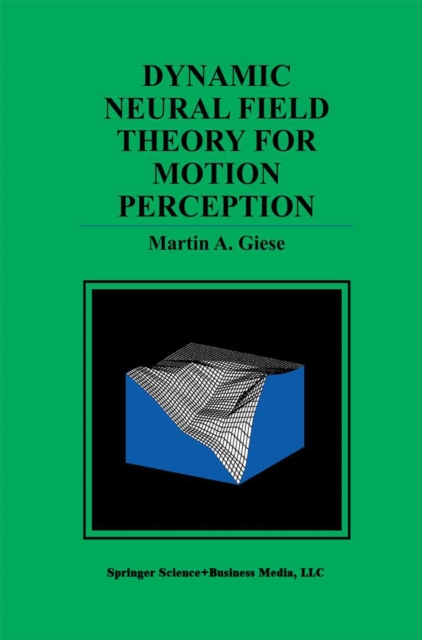
Dynamic Neural Field Theory for Motion Perception provides a new theoretical framework that permits a systematic analysis of the dynamic properties of motion perception.
Advanced Video-Based Surveillance Systems presents second generation surveillance systems that automatically process large sets of signals for performance monitoring tasks.
This chapter presents a set of introductory material, which in addition to providing a general view on the topic, highlights the importance of research in this area.
The ability to extract generic 3D objects from images is a crucial step towards automation of a variety of problems in cartographic database compilation, industrial inspection and assembly, and autonomous navigation.
Human Face Recognition Using Third-Order Synthetic Neural Networks explores the viability of the application of High-order synthetic neural network technology to transformation-invariant recognition of complex visual patterns.
Perceptual Organization for Artificial Vision Systems is an edited collection of invited contributions based on papers presented at The Workshop on Perceptual Organization in Computer Vision, held in Corfu, Greece, in September 1999.
A color time-varying image can be described as a three-dimensional vector (representing the colors in an appropriate color space) defined on a three-dimensional spatiotemporal space.