The vast amounts of ontologically unstructured information on the Web, including HTML, XML and JSON documents, natural language documents, tweets, blogs, markups, and even structured documents like CSV tables, all contain useful knowledge that can present a tremendous advantage to the Artificial Intelligence community if extracted robustly, efficiently and semi-automatically as knowledge graphs.
This book provides a comprehensive guide to JavaScript, which stands as the cornerstone of modern programming and is the main computer language driving the Internet.
An example-rich guide for beginners to start their reinforcement and deep reinforcement learning journey with state-of-the-art distinct algorithmsKey FeaturesCovers a vast spectrum of basic-to-advanced RL algorithms with mathematical explanations of each algorithmLearn how to implement algorithms with code by following examples with line-by-line explanationsExplore the latest RL methodologies such as DDPG, PPO, and the use of expert demonstrationsBook DescriptionWith significant enhancements in the quality and quantity of algorithms in recent years, this second edition of Hands-On Reinforcement Learning with Python has been revamped into an example-rich guide to learning state-of-the-art reinforcement learning (RL) and deep RL algorithms with TensorFlow 2 and the OpenAI Gym toolkit.
Scientific Computing for Scientists and Engineers is designed to teach undergraduate students relevant numerical methods and required fundamentals in scientific computing.
This vital work for researchers and graduate students focuses on resilience estimation and control of cyber-physical networked systems using attacker-defender game theory.
Algorithms are ubiquitous in the contemporary technological world, and they ultimately consist of finite sequences of instructions used to accomplish tasks with necessary input values.
This book provides an up-to-date account of current research in quantum information theory, at the intersection of theoretical computer science, quantum physics, and mathematics.
This book provides an up-to-date account of current research in quantum information theory, at the intersection of theoretical computer science, quantum physics, and mathematics.
This vital work for researchers and graduate students focuses on resilience estimation and control of cyber-physical networked systems using attacker-defender game theory.
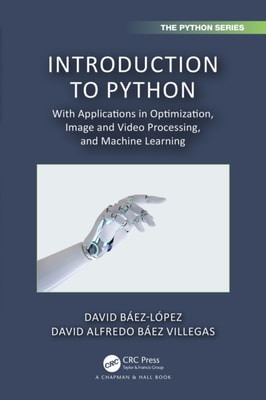
Introduction to Python: with Applications in Optimization, Image and Video Processing, and Machine Learning is intended primarily for advanced undergraduate and graduate students in quantitative sciences such as mathematics, computer science, and engineering.
Dieses Buch bietet einen Überblick über die neuesten Implementierungen von Quanten-Zufallszahlengeneratoren (QRNGs) und untersucht insbesondere deren Beziehung zu klassischen statistischen Zufallsmodellen und numerischen Techniken zur Berechnung von Zufallszahlen.
The book presents a comprehensive treatment on a novel design theory that fosters innovative thinking and creativity essential for addressing wicked problems.
Artificial Intelligence: An Introduction to Big Ideas and their Development, Second Edition guides readers through the history and development of artificial intelligence (AI), from its early mathematical beginnings through to the exciting possibilities of its potential future applications.
This proceedings is based on research work on formula manipulation and computer algebra, culminating in the design and construction of a formula manipulation machine at RIKEN known as the FLATS project.
The topics treated in this handbook cover all areas of games and entertainment technologies, such as digital entertainment; technology, design/art, and sociology.
Professor Nicholas N Govorun, corresponding member of the USSR Academy of Sciences, was the principal organizer of the precedent meetings held at Dubna (1979, 1983, 1985).
This book contains some invited lectures on subjects as diverse as document preparation systems, fractals, number theory, graph colouring and neural networks.
This volume is a collection of papers which were presented at the traditional international conference on programming and mathematical methods for solving physical problems.
The topics discussed at the conference revolved around the interaction of computational methods and theoretical function theory, as well as recent advances and developments in both fields.
The next generation of engineering and computing systems will be both complex and distributed in functionality due to a variety of information sources needed for their operation.
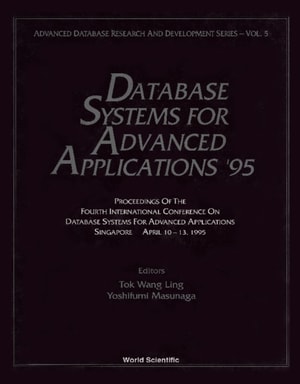
This volume contains three keynote papers and 51 technical papers from contributors around the world on topics in the research and development of database systems, such as Data Modelling, Object-Oriented Databases, Active Databases, Data Mining, Heterogeneous Databases, Distributed Databases, Parallel Query Processing, Multi-Media Databases, Transaction Management Systems, Document Databases, Temporal Databases, Deductive Databases, User Interface, and Advanced Database Applications.
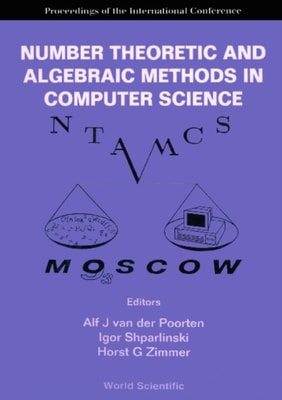
NTAMCS '93 brought to Moscow researchers from areas of computer science and mathematics that traditionally have been apart, but which use similar number theoretic and algebraic methods.
The contributions of the proceedings cover almost all parts of the theory of formal languages from pure theoretical investigations to applications to programming languages.
This book is of interest to researchers in universities, research centres and industries who are involved in measurements and need advanced mathematical tools to solve their problems, and to whoever is working in the development of these mathematical tools.
The conference was a rare occasion for different schools and perspectives to meet in a single event, bringing together researchers interested in semigroups, automata and languages.