The preparation of a volume on this topic was undertaken with some hesitancy on my part because the ramifications of the mineralogy of apatite involve both bio- logical and physical sciences in very elaborate ways.
Experts from university and industry are presenting new technologies for solving industrial problems and giving many important and practicable impulses for new research.
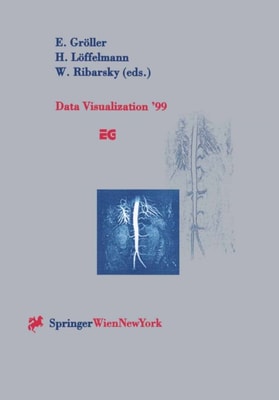
In twelve selected papers common problems in scientific visualization are discussed: adaptive and multi-resolution methods, feature extraction, flow visualization, and visualization quality.
In this volume experts from university and industry are presenting new technologies for solving industrial problems as well as important and practicable impulses for new research.
This book is the formal proceedings of the Eurographics Workshop on Design, Specifi- cation and Verification ofInteractive Systems, DSV-IS'99, which was held at the Uni- versity of Minho, Braga, Portugal from June 2 to June 4, 1999.
This book is a collection of selected papers written by researchers qf our "e;RISC"e; institute (Research Institute for Symbolic Computation) along with the ESPRIT MEDLAR Project (Mechanizing Deduction in the Logics of Practical Reason- ing).
For several years now I have been teaching courses in computer algebra at the Universitat Linz, the University of Delaware, and the Universidad de Alcala de Henares.
New methodological aspects related to design and implementation of symbolic computation systems are considered in this volume aiming at integrating such aspects into a homogeneous software environment for scientific computation.
The calculus of relations has been an important component of the development of logic and algebra since the middle of the nineteenth century, when Augustus De Morgan observed that since a horse is an animal we should be able to infer that the head of a horse is the head of an animal.
This is a new type of calculus book: Students who master this text will be well versed in calculus and, in addition, possess a useful working knowledge of one of the most important mathematical software systems, namely, MACSYMA.
During the last couple of years we learned that infonnation and communication technologies have to be seen as key factors for the success in various industries.
19 papers presented by international experts give a state-of-the-art survey of the relevant problems and issues in modeling, CAD/CAM, scientific visualization, and computational geometry.
Advanced information technology is pervasive in any kind of human activity - science, business, finance, management and others - and this is particularly true for database systems.
The contents of these proceedings reflect the intention of the organizers of the workshop to bring together scientists and engineers having a strong interest in interdisciplinary work in the fields of computer science, mathematics and applied statistics.
The book is characterized by the illustration of cases of fractal, self-similar and multi-scale structures taken from the mechanics of solid and porous materials, which have a technical interest.
The book aims to merge Computational Intelligence with Data Mining, which are both hot topics of current research and industrial development, Computational Intelligence, incorporates techniques like data fusion, uncertain reasoning, heuristic search, learning, and soft computing.
The current work provides CIOs, software architects, project managers, developers, and cloud strategy initiatives with a set of architectural patterns that offer nuggets of advice on how to achieve common cloud computing-related goals.
The central subject of the book is the generalization of Loewy's decomposition - originally introduced by him for linear ordinary differential equations - to linear partial differential equations.