Computeralgebrasysteme (CAS) werden in vielen Mathematikvorlesungen noch nicht benutzt, der Student möchte sie aber zur Behandlung grundlegender mathematischer Probleme einsetzen, die andernfalls nur sehr aufwändig per Hand zu lösen wären.
Das vorliegende Buch bietet eine auf die Belange der mathematischen Grundausbildung der Informatiker zugeschnittene Einführung in die Lineare Algebra, die den Leser bis hin zu den Euklidischen Vektorräumen und der Hauptachsentransformation führt.
Dieses Lehrbuch umfaßt einen Kanon von Themen, der an vielen Universitäten unter dem Titel "Diskrete Strukturen" fester Bestandteil des Informatik-Grundstudiums geworden ist.
Intelligent Information Technology (iiT) encompasses the theories and ap- plications of artificial intelligence, statistical pattern recognition, learning theory, data warehousing, data mining and knowledge discovery, Grid com- puting, and autonomous agents and multi-agent systems in the context of today's as well as future IT, such as Electronic Commerce (EC), Business Intelligence (BI), Social Intelligence (SI), Web Intelligence (WI), Knowledge Grid (KG), and Knowledge Community (KC), among others.
The need for a comprehensive survey-type exposition on formal languages and related mainstream areas of computer science has been evident for some years.
In any serious engineering discipline, it would be unthinkable to construct a large system without having a precise notion of what is to be built and without verifying how the system is expected to function.
Diese Einführung in die Informatik zeichnet sich durch die Ausrichtung auf moderne Konzepte aus und legt insbesondere die objektorientierte Programmiersprache Java zugrunde.
Diese Einführung in die Grundlagen der Dokumentation und des Wiederauffindens von Information zu thematisch-inhaltlichen Fragen entstand auf der Basis langjähriger Lehrtätigkeit.
Initially proposed as rivals of classical logic, alternative logics have become increasingly important in sciences such as quantum physics, computer science, and artificial intelligence.
Alan Turing's fundamental contributions to computing led to the development of modern computing technology, and his work continues to inspire researchers in computing science and beyond.
Formal methods for the specification and verification of hardware and software systems are becoming more and more important as systems increase in size and complexity.
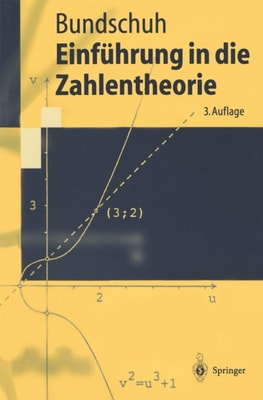
Modern cryptography depends heavily on number theory, with primality test- ing, factoring, discrete logarithms (indices), and elliptic curves being perhaps the most prominent subject areas.
Fluids, play an important role in environmental systems, appearing as surface water in rivers, lakes, and coastal regions or in the subsurface as well as in the atmosphere.
Genetic programming (GP), one of the most advanced forms of evolutionary computation, has been highly successful as a technique for getting computers to automatically solve problems without having to tell them explicitly how.
As an interdisciplinary field, computational linguistics has its sources in several areas of science, each with its own goals, methods, and historical background.
Soft computing encompasses various computational methodologies, which, unlike conventional algorithms, are tolerant of imprecision, uncertainty, and partial truth.
Calendar units, such as months and days, clock units, such as hours and seconds, and specialized units, such as business days and academic years, play a major role in a wide range of information system applications.
Recent breakthroughs in AI have not only increased demand for AI products, they've also lowered the barriers to entry for those who want to build AI products.
Mathematicians do not study objects, but relations among objectsj they are indifferent to the replacement of objects by others as long as relations do not change.
The central task of a future-oriented computationallinguistics is the development of cognitive machines which humans can freely talk with in their respective naturallan- guage.