Queueing theory applications can be discovered in many walks of life including; transportation, manufacturing, telecommunications, computer systems and more.
Software components and component-based software development (CBSD) are acknowledged as the best approach for constructing quality software at reasonable cost.
This book provides a comprehensive presentation of the most advanced research results and technological developments enabling understanding, qualifying and mitigating the soft errors effect in advanced electronics, including the fundamental physical mechanisms of radiation induced soft errors, the various steps that lead to a system failure, the modelling and simulation of soft error at various levels (including physical, electrical, netlist, event driven, RTL, and system level modelling and simulation), hardware fault injection, accelerated radiation testing and natural environment testing, soft error oriented test structures, process-level, device-level, cell-level, circuit-level, architectural-level, software level and system level soft error mitigation techniques.
This volume covers recent developments in the design, operation, and management of telecommunication and computer network systems in performance engineering and addresses issues of uncertainty, robustness, and risk.
Practical Programming in the Cell Broadband Engine offers a unique programming guide for the Cell Broadband Engine, demonstrating a large number of real-life programs to identify and solve problems in engineering, logic design, VLSI CAD, number-theory, graph-theory, computational geometry, image processing, and other subjects.
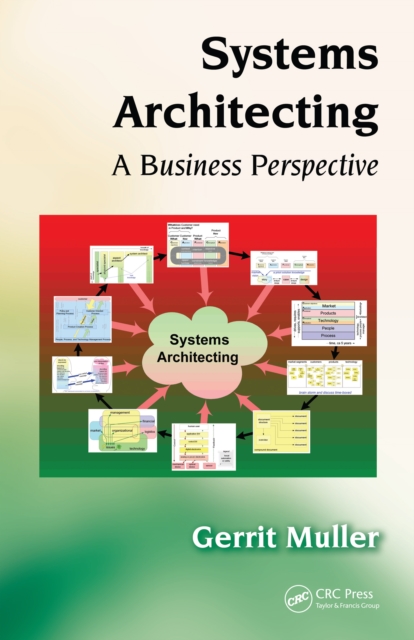
Derived from industry-training classes that the author teaches at the Embedded Systems Institute at Eindhoven, the Netherlands and at Buskerud University College at Kongsberg in Norway, Systems Architecting: A Business Perspective places the processes of systems architecting in a broader context by juxtaposing the relationship of the systems archit
Before software engineering builds and installations can be implemented into software and/or systems integrations in military and aerospace programs, a comprehensive understanding of the software development life cycle is required.
Advances in fluorescent proteins, live-cell imaging, and superresolution instrumentation have ushered in a new era of investigations in cell biology, medicine, and physiology.
Modern-day projects require software and systems engineers to work together in realizing architectures of large and complex software-intensive systems.
Offering a practical way to generate effective and efficient project-specific system architecture engineering methods, this volume addresses the entire range of systems architecture including hardware, software, subsystems, and systems of systems.
With their ability to cross traditional boundaries and achieve a level of functionality greater than their component elements, mega-systems have helped corporations and government organizations around the world resolve complex challenges that they otherwise couldn't address with stand-alone systems.
Over the last decade, software product line engineering (SPLE) has emerged as one of the most promising software development paradigms for increasing productivity in IT-related industries.
Tsutomu Sasao - Kyushu Institute of Technology, Japan The material covered in this book is quite unique especially for p- ple who are reading English, since such material is quite hard to ?
Design and specification languages are of utmost interest in the area of embedded systems and the Forum on Specification and Design Languages has been once again the main European event for the embedded systems and chip design community.
In a relatively short span of time, computers have evolved from huge mainframes to small and elegant desktop computers, and now to low-power, ultra-portable handheld devices.
Platform Based Design at the Electronic System Level presents a multi-faceted view of the set of problems that the electronic industry currently faces in the development and integration of complex heterogeneous systems (including both hardware and software components).
Processor Design provides insight into a number of different flavors of processor architectures and their design, software tool generation, implementation, and verification.
The International Workshop on "e;Embedded Systems - Modeling, Techn- ogy, and Applications"e; is the seventh in a successful series of workshops that were established by Shanghai Jiao Tong University and Technische Universitat Berlin.
This reference divides its coverage into five closely examined sections: 1) IT management tasks, and the importance of transparent IT architecture to meeting functional and performance demands; 2) Traditional IT management, discussed in light of current methods and standards; 3) Controlling IT, both from internal and customer care perspectives; 4) financial, personnel, legal and security aspects in IT, including service agreements and standardization.
This book presents the perspective of the project on a Paradigm Unifying System Specification Environments for proven Electronic design (PUS SEE) as conceived in the course of the research during 2002 -2003.
The Transactions on Pattern Languages of Programming subline aims to publish papers on patterns and pattern languages as applied to software design, development, and use, throughout all phases of the software life cycle, from requirements and design to implementation, maintenance and evolution.
This book serves as both a textbook and handbook on the benchmarking of systems and components used as building blocks of modern information and communication technology applications.