Key FeaturesGet a solid grasp of the principles behind quantum algorithms and optimization with minimal mathematical prerequisitesLearn the process of implementing the algorithms on simulators and actual quantum computersSolve real-world problems using practical examples of methodsBook DescriptionThis book provides deep coverage of modern quantum algorithms that can be used to solve real-world problems.
In the world of safety science, where complex socio-technical systems demand innovative approaches, the Functional Resonance Analysis Method (FRAM) stands as a beacon of insight.
Although data engineering is a multi-disciplinary field with applications in control, decision theory, and the emerging hot area of bioinformatics, there are no books on the market that make the subject accessible to non-experts.
With computers becoming embedded as controllers in everything from network servers to the routing of subway schedules to NASA missions, there is a critical need to ensure that systems continue to function even when a component fails.
A solid introduction to the practices, plans, and skills required for developing a smart system architecture Information architecture combines IT skills with business skills in order to align the IT structure of an organization with the mission, goals, and objectives of its business.
A solid introduction to the practices, plans, and skills required for developing a smart system architecture Information architecture combines IT skills with business skills in order to align the IT structure of an organization with the mission, goals, and objectives of its business.
FPGA Prototyping Using Verilog Examples will provide you with a hands-on introduction to Verilog synthesis and FPGA programming through a learn by doing approach.
This book uses a "e;learn by doing"e; approach to introduce the concepts and techniques of VHDL and FPGA to designers through a series of hands-on experiments.
This book focuses on systems analysis, broadly defined to also include problem formulation and interpretation of proposed alternatives in terms of the value systems of stakeholders.
Thinking: A Guide to Systems Engineering Problem-Solving focuses upon articulating ways of thinking in today's world of systems and systems engineering.
This book discusses risk management as it applies to problem-solving for simple, complex and wicked problems faced by policy creators and implementors, project managers and systems engineers in the context of policies, large engineering projects (LEPs), projects and systems.
The book describes how to manage and successfully deliver large, complex, and expensive systems that can be composed of millions of line of software code, being developed by numerous groups throughout the globe, that interface with many hardware items being developed by geographically dispersed companies, where the system also includes people, policies, constraints, regulations, and a myriad of other factors.
The book describes how to manage and successfully deliver large, complex, and expensive systems that can be composed of millions of line of software code, being developed by numerous groups throughout the globe, that interface with many hardware items being developed by geographically dispersed companies, where the system also includes people, policies, constraints, regulations, and a myriad of other factors.
Wireless technology and handheld devices are dramatically changing the degrees of interaction throughout the world, further creating a ubiquitous network society.
Introduction to Network Simulator NS2 is a primer providing materials for NS2 beginners, whether students, professors, or researchers for understanding the architecture of Network Simulator 2 (NS2) and for incorporating simulation modules into NS2.
This volume is a selection of best papers presented at the CoreGRID - tegration Workshop 2006 (CGIW'2006), which took place on 19-20 October 2006 in Krakow, Poland.
Do-All Computing for Distributed Systems: Cooperation in the Presence of Adversity studies algorithmic issues associated with cooperative execution of multiple independent tasks by distributed computing agents including partitionable networks.
The aim of CoreGRID is to strengthen and advance scientific and technological excellence in the area of Grid and Peer-to-Peer technologies in order to overcome the current fragmentation and duplication of effort in this area.
Embedded computing systems have started to carry out the key control functions in diverse domains such as telecommunications, automotive electronics, avionics and even complete industrial manufacturing lines.
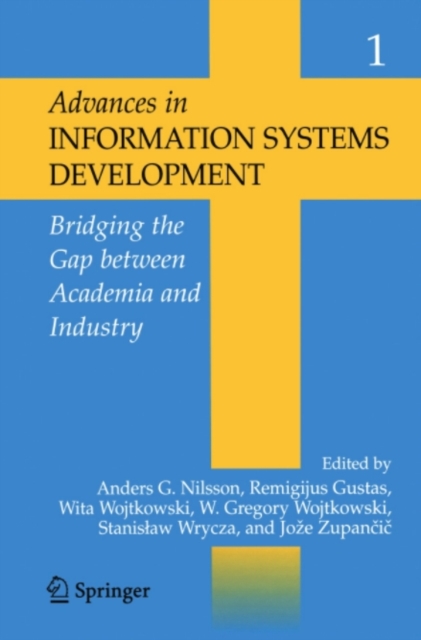
Advances in Information Systems Development: Bridging the Gap between Academia and Industry, Volumes 1 and 2, are the collected proceedings of the Fourteenth International Conference on Information Systems Development: Methods and Tools, Theory and Practice - ISD'2005 Conference.
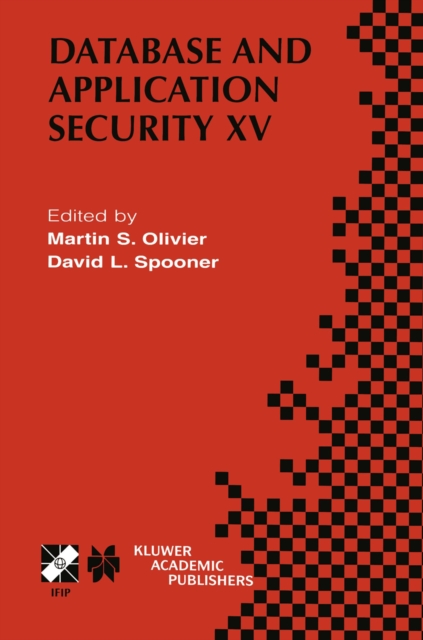
Database and Application Security XV provides a forum for original research results, practical experiences, and innovative ideas in database and application security.
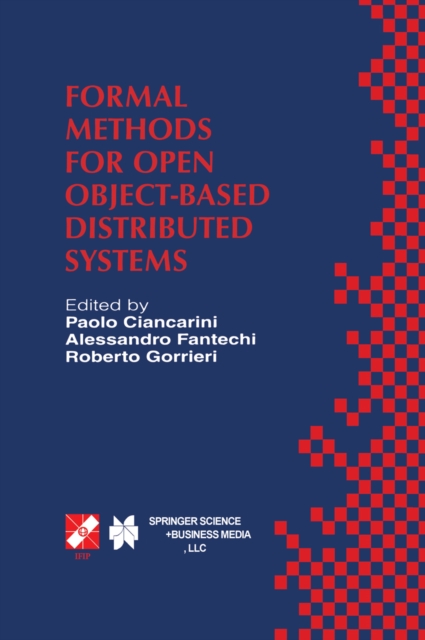
Formal Methods for Open Object-Based Distributed Systems presents the leading edge in several related fields, specifically object-orientated programming, open distributed systems and formal methods for object-oriented systems.
Due to the decreasing production costs of IT systems, applications that had to be realised as expensive PCBs formerly, can now be realised as a system-on-chip.
An understanding of the techniques used to make distributed computing systems and networks reliable, fault-tolerant and secure will be crucial to those involved in designing and deploying the next generation of mission-critical applications and Web Services.
It is widely acknowledged that the cost of validation and testing comprises a s- nificant percentage of the overall development costs for electronic systems today, and is expected to escalate sharply in the future.
A Software Process Model Handbook for Incorporating People's Capabilities offers the most advanced approach to date, empirically validated at software development organizations.
Architecture Description Languages is an essential reference for both academic and professional researchers in the field of system engineering and design.
Software Process Modeling brings together experts to discuss relevant results in software process modeling, and expresses their personal view of this field.
Supervisory Control Theory (SCT) provides a tool to model and control human-engineered complex systems, such as computer networks, World Wide Web, identification and spread of malicious executables, and command, control, communication, and information systems.
Data Mining is the process of posing queries and extracting useful information, patterns and trends previously unknown from large quantities of data [Thu, 00].
DAPSY (Austrian-Hungarian Workshop on Distributed and Parallel Systems) is an international conference series with biannual events dedicated to all aspects of distributed and parallel computing.