To help you navigate the large number of new data tools available, this guide describes 60 of the most recent innovations, from NoSQL databases and MapReduce approaches to machine learning and visualization tools.
To help you navigate the large number of new data tools available, this guide describes 60 of the most recent innovations, from NoSQL databases and MapReduce approaches to machine learning and visualization tools.
The availability of geographic and geospatial information and services, especially on the open Web has become abundant in the last several years with the proliferation of online maps, geo-coding services, geospatial Web services and geospatially enabled applications.
Change Management for Semantic Web Services provides a thorough analysis of change management in the lifecycle of services for databases and workflows, including changes that occur at the individual service level or at the aggregate composed service level.
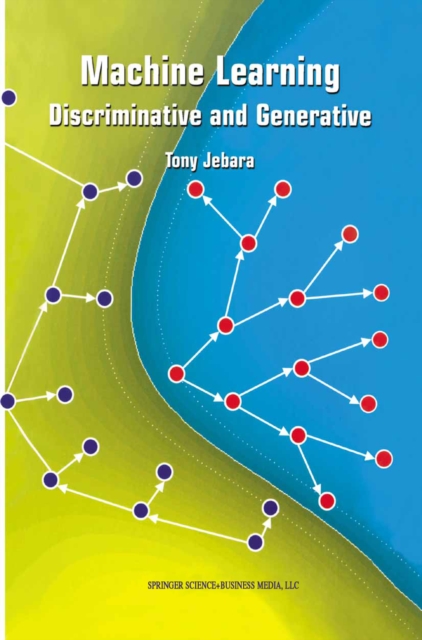
Machine Learning: Discriminative and Generative covers the main contemporary themes and tools in machine learning ranging from Bayesian probabilistic models to discriminative support-vector machines.
Advanced Signature Indexing for Multimedia and Web Applications presents the latest research developments in signature-based indexing and query processing, specifically in multimedia and Web domains.
Advanced Database Indexing begins by introducing basic material on storage media, including magnetic disks, RAID systems and tertiary storage such as optical disk and tapes.
This book examines the techniques and applications involved in the Web Mining, Web Personalization and Recommendation and Web Community Analysis domains, including a detailed presentation of the principles, developed algorithms, and systems of the research in these areas.
This text presents a theoretical and practical examination of the latest developments in Information Retrieval and their application to existing systems.
Information-Statistical Data Mining: Warehouse Integration with Examples of Oracle Basics is written to introduce basic concepts, advanced research techniques, and practical solutions of data warehousing and data mining for hosting large data sets and EDA.
The present volume gathers together the talks presented at the second colloquim on the Future Professional Communication in Astronomy (FPCA II), held at Harvard University (Cambridge, MA) on 13-14 April 2010.
The emergence of Web technologies for the distribution of an immense amount of data and knowledge has given rise to the need for supportive frameworks for kno- edge management.
Cryptographic access control (CAC) is an approach to securing data by encrypting it with a key, so that only the users in possession of the correct key are able to decrypt the data and/or perform further encryptions.
Multi-Modal User Interactions in Controlled Environments investigates the capture and analysis of user's multimodal behavior (mainly eye gaze, eye fixation, eye blink and body movements) within a real controlled environment (controlled-supermarket, personal environment) in order to adapt the response of the computer/environment to the user.
DATA ENGINEERING: Mining, Information, and Intelligence describes applied research aimed at the task of collecting data and distilling useful information from that data.
Market Basket Analysis (MBA) provides the ability to continually monitor the affinities of a business and can help an organization achieve a key competitive advantage.
Aligning business intelligence (BI) infrastructure with strategy processes not only improves your organization's ability to respond to change, but also adds significant value to your BI infrastructure and development investments.
Open Source Data Warehousing and Business Intelligence is an all-in-one reference for developing open source based data warehousing (DW) and business intelligence (BI) solutions that are business-centric, cross-customer viable, cross-functional, cross-technology based, and enterprise-wide.
As it is with building a house, most of the work necessary to build a data warehouse is neither visible nor obvious when looking at the completed product.
Knowledge management (KM) is the identification and analysis of available and required knowledge, and the subsequent planning and control of actions, to develop "e;knowledge assets"e; that enable businesses to generate profits and improve their competitive positions.
Today's database professionals must understand how to apply database systems to business processes and how to develop database systems for both business intelligence and Web-based applications.