Many professionals and students in engineering, science, business, and other application fields need to develop Windows-based and web-enabled information systems to store and use data for decision support, without help from professional programmers.
The handling and analysis of data generated by proteomics investigations represent a challenge for computer scientists, biostatisticians, and biologists to develop tools for storing, retrieving, visualizing, and analyzing genomic data.
Written by a dynamic team of highly regarded and experienced scientists, many of whom pioneered current methodologies in computer-assisted research in the life sciences, this interdisciplinary handbook covers terminology, software, and applications of computational biology with academic-level precision.
The E-Medicine, E-Health, M-Health, Telemedicine, and Telehealth Handbook provides extensive coverage of modern telecommunication in the medical industry, from sensors on and within the body to electronic medical records and beyond.
Deductive Databases and their Applications is an introductory text aimed at undergraduate students with some knowledge of database and information systems.
Although today's job market requires IT professionals to understand cloud computing theories and have hands-on skills for developing real-world database systems, there are few books available that integrate coverage of both.
Giving organizations the ability to track, secure, and manage items from the time they are raw materials through the life-cycle of the product, radio frequency identification (RFID) makes internal processes more efficient and improves overall supply chain responsiveness.
Large Scale and Big Data: Processing and Management provides readers with a central source of reference on the data management techniques currently available for large-scale data processing.
Databases for Data-Centric Geotechnics forms a definitive reference and guide to databases in geotechnical and rock engineering, to enhance decision-making in geotechnical practice using data-driven methods.
Due to the increasing complexity in application workloads and query engines, database administrators are turning to automated tuning tools that systematically explore the space of physical design alternatives.
Covering analysis, field studies, micro-world studies, training and the creation of computer artefacts under the Co-operative Process Management umbrella.
An emerging, ever-evolving branch of science, bioinformatics has paved the way for the explosive growth in the distribution of biological information to a variety of biological databases, including the National Center for Biotechnology Information.
Optimize Your Chemical DatabaseDesign and Use of Relational Databases in Chemistry helps programmers and users improve their ability to search and manipulate chemical structures and information, especially when using chemical database "e;cartridges"e;.
Databases for Data-Centric Geotechnics forms a definitive reference and guide to databases in geotechnical and rock engineering, to enhance decision-making in geotechnical practice using data-driven methods.
Providing key information on how to work with research data, Introduction to Data Technologies presents ideas and techniques for performing critical, behind-the-scenes tasks that take up so much time and effort yet typically receive little attention in formal education.
Databases for Data-Centric Geotechnics forms a definitive reference and guide to databases in geotechnical and rock engineering, to enhance decision-making in geotechnical practice using data-driven methods.
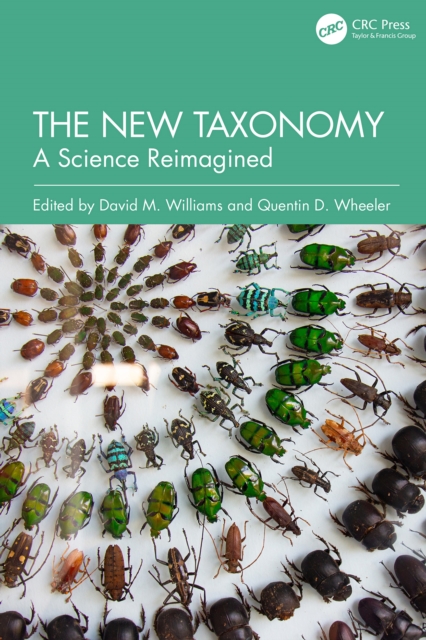
The advent of relational databasing and data storage capacity, coupled with revolutionary advances in molecular sequencing technology and specimen imaging, have led to a taxonomic renaissance.
Focusing on tried and true best practice techniques in cross-technology based Oracle embedded programming, this book provides authoritative guidance for improving your code compilation and execution.
Today's database professionals must understand how to apply database systems to business processes and how to develop database systems for both business intelligence and Web-based applications.
This book aims to explore how to automate, innovate, design, and deploy emerging technologies in actuarial work transformations for the insurance and finance sector.
Maintaining the advanced technical focus found in Developing Essbase Applications, this second volume is another collaborative effort by some of the best Essbase practitioners from around the world.
The third edition of Database Principles maintains its engaging writing style and brevity; its unique balance between theory and practice; and its wealth of examples throughout the text.
With the advent of such advanced technologies as cloud computing, the Internet of Things, the Medical Internet of Things, the Industry Internet of Things and sensor networks as well as the exponential growth in the usage of Internet-based and social media platforms, there are enormous oceans of data.