Building information modeling (BIM) is the new AutoCAD(R) for architects and interior designers-and Revit(R) Architecture is the leading software package in the BIM marketplace.
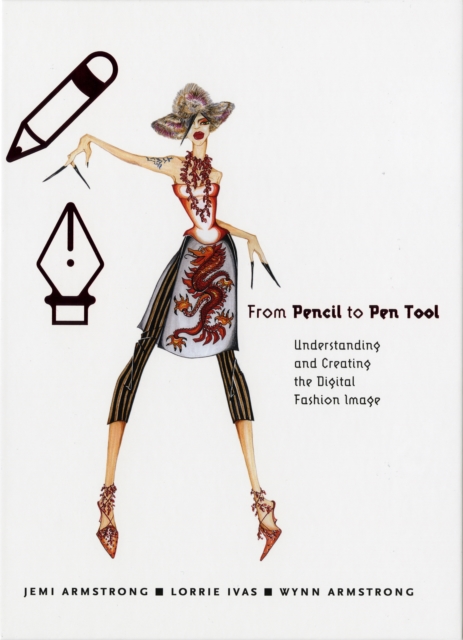
It takes more than raw talent and passion to make it in today's global apparel and accessories markets-excellent computer-aided design skills are a prerequisite.
Since the appearance of simplified 3D sketching programs like SketchUp, architects and interior designers have been called on to use both freehand and 3D CAD drawings, often at very earliest stages of design.
The emergence and adoption of computational technologies has significantly changed design and design education beyond the replacement of drawing boards with computers or pens and paper with computer-aided design (CAD), computer-aided manufacturing (CAM), and computer-aided engineering (CAE) applications.
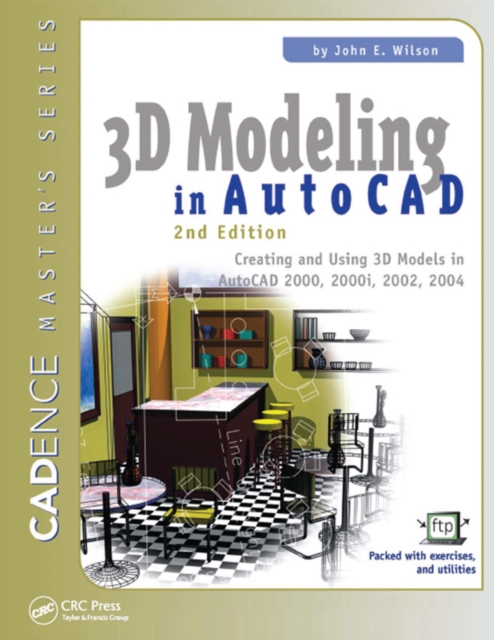
Interior designers use AutoCAD software for their drafting and rendering, but where do they learn to apply basic AutoCAD drafting standards and procedures to their specific needs?
Work through multiple design projects in this part-color guide to understand how Autodesk Fusion 360 helps improve efficiency and draftingKey FeaturesUnderstand the project workflow of Autodesk Fusion 360Design and redesign projects while learning to fix errorsGain a better insight into repurposing real-world items into Fusion 360 for custom designsPurchase of the print or Kindle book includes a free PDF eBookBook DescriptionAutodesk Fusion 360 has become an indispensable tool for designers, tinkerers, and engineers worldwide thanks to its versatility that allows for large-scale assemblies and smaller, quick 3D prints.
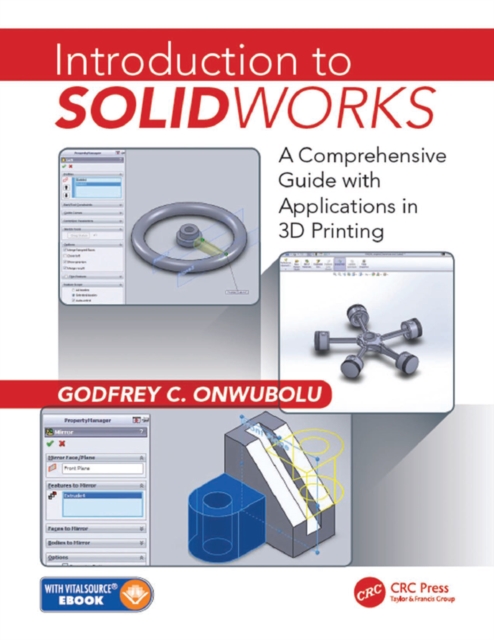
Elevate your Fusion 360 skills and streamline your 3D printing workflow by learning how to repair broken STLs, design for additive manufacturing, optimize part positioning, and slice your models in this user-friendly guide, complete with color imagesKey FeaturesCombine Fusion 360's powerful modeling capabilities with an intuitive interface to jump into 3D printing with confidenceLearn the entire workflow from design to 3D print using the software's powerful capabilitiesImport and repair external designs and create native lightweight designs for 3D printingPurchase of the print or Kindle book includes a free PDF eBookBook DescriptionAs 3D printing gains traction, the demand for CAD experts in manufacturing grows.
The inspection process is one of the most important steps in manufacturing industries because it safeguards high quality products and customer satisfaction.
Get started with the basics of part modeling, assembly modeling, presentations, and drawings in this step-by-step tutorial on Autodesk Inventor fundamentals.
Continuing the forward thinking of previously held distributed computer control systems meetings, this volume discusses both the positive and negative views on trends in OSI-based communications; the development of the fieldbus; the importance of the incorporation into basic real time operating systems to be used for distributed systems of concepts such as time-stamping and access to global time-bases; and the influence of artificial-intelligence-based technologies on the distributed computer control world.
A leading expert in CAGD, Gerald Farin covers the representation, manipulation, and evaluation of geometric shapes in this the Third Edition of Curves and Surfaces for Computer Aided Geometric Design.
This is a comprehensive textbook catering for BTEC students at NIII and Higher National levels, advanced City and Guilds courses, and the early years of degree courses.
This book will give a competitive edge to students of manufacturing, managers in industry, and anyone involved in specifying, implementing and using CIM systems.
Computer Integrated Manufacturing: From Fundamentals to Implementation is based on a course in computer integrated manufacturing (CIM) which is part of the Production Engineering Tripos for postgraduate-level students at Cambridge University.
Weld Quality: The Role of Computers documents the proceedings of the International Conference on Improved Weldment Control with Special Reference to Computer Technology, held in Vienna, Austria, 4-5 July 1988, under the auspices of the International Institute of Welding.
CIM Handbook: The Opportunities for Rationalisation Opened Up by the Acquisition and Integration of Computer Automation aims to help everyone responsible for structuring computer integrated manufacturing (CIM) concepts and for procuring and selecting CIM components, to find the solutions which meet their requirements in an optimal way, as well as having scope for future development.
This work presents a systematic and comprehensive overview to the theory and applications of mechatronic processes, emphasizing the adaptation and incorporation of this important tool in fulfilling desired performance and quality requirements.
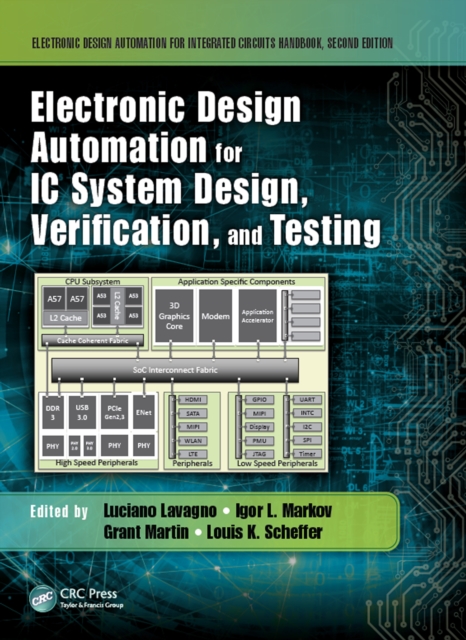
The first of two volumes in the Electronic Design Automation for Integrated Circuits Handbook, Second Edition, Electronic Design Automation for IC System Design, Verification, and Testing thoroughly examines system-level design, microarchitectural design, logic verification, and testing.
The second of two volumes in the Electronic Design Automation for Integrated Circuits Handbook, Second Edition, Electronic Design Automation for IC Implementation, Circuit Design, and Process Technology thoroughly examines real-time logic (RTL) to GDSII (a file format used to transfer data of semiconductor physical layout) design flow, analog/mixed signal design, physical verification, and technology computer-aided design (TCAD).