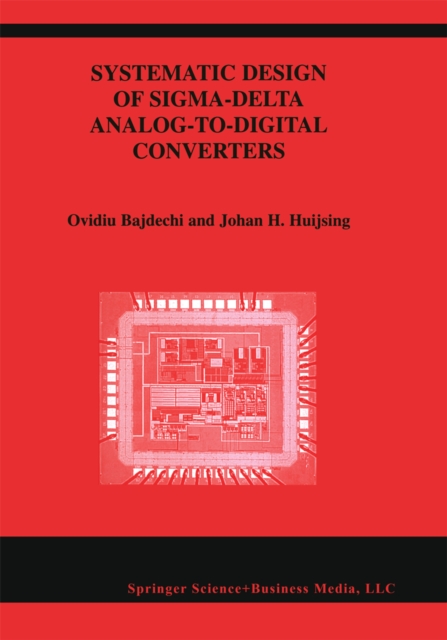
Systematic Design of Sigma-Delta Analog-to-Digital Converters describes the issues related to the sigma-delta analog-to-digital converters (ADCs) design in a systematic manner: from the top level of abstraction represented by the filters defining signal and noise transfer functions (STF, NTF), passing through the architecture level where topology-related performance is calculated and simulated, and finally down to parameters of circuit elements like resistors, capacitors, and amplifier transconductances used in individual integrators.
Design of System on a Chip is the first of two volumes addressing the design challenges associated with new generations of the semiconductor technology.
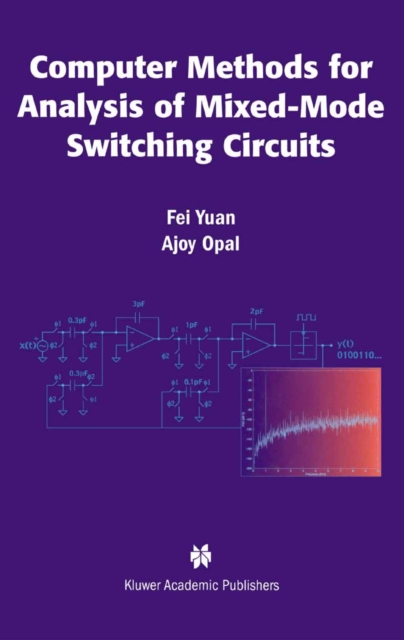
Computer Methods for Analysis of Mixed-Mode Switching Circuits provides an in-depth treatment of the principles and implementation details of computer methods and numerical algorithms for analysis of mixed-mode switching circuits.
Synthesis and Optimization of DSP Algorithms describes approaches taken to synthesising structural hardware descriptions of digital circuits from high-level descriptions of Digital Signal Processing (DSP) algorithms.
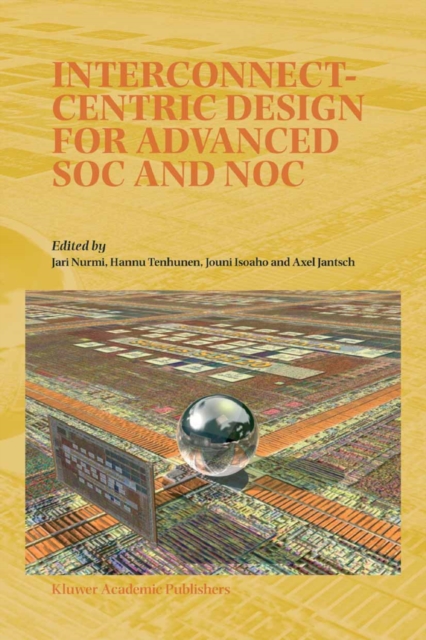
In Interconnect-centric Design for Advanced SoC and NoC, we have tried to create a comprehensive understanding about on-chip interconnect characteristics, design methodologies, layered views on different abstraction levels and finally about applying the interconnect-centric design in system-on-chip design.
The main intention of this book is to give an impression of the state of the art in energy-aware task-scheduling-related issues for very dynamic emb- ded real-time processing applications.
Global Specification and Validation of Embedded Systems offers a deep understanding of concepts and practices behind the composition of heterogeneous components.
The 33 papers presented in this book were selected from amongst the 97 papers presented during the sixth edition of the International Conference on Integrated Design and Manufacturing in Mechanical Engineering during 28 sessions.
The subject of computation in electricity and magnetism has so advanced in the past 40 years, since the advent of digital computers and thanks to the development of numerical methods, that today it urges and deserves adequate collocation also in curricula for electrical engineering.
This is the second volume of the new conference series Design Computing and Cognition (DCC) that takes over from and subsumes the successful series Artificial Intelligence in Design (AID) published by Kluwer since 1992.
Aiming at the core of the problem, Reuse Based Methodologies and Tools in the Design of Analog and Mixed-Signal Integrated Circuits presents a framework for the reuse-based design of AMS circuits.
Computer Aided Tolerancing (CAT) is an important topic in any field of design and production where parts move relative to one another and/or are assembled together.
Design for Manufacturability and Yield for Nano-Scale CMOS walks the reader through all the aspects of manufacturability and yield in a nano-CMOS process and how to address each aspect at the proper design step starting with the design and layout of standard cells and how to yield-grade libraries for critical area and lithography artifacts through place and route, CMP model based simulation and dummy-fill insertion, mask planning, simulation and manufacturing, and through statistical design and statistical timing closure of the design.
We are presently observing a paradigm change in designing complex SoC as it occurs roughly every twelve years due to the exponentially increasing number of transistors on a chip.
Business models, which aims at determining how efficient can be a life cycle strategy from different point of view (customer, policy, environment, economics,.
MARTENS Bob and BROWN Andre Co-conference Chairs, CAAD Futures 2005 Computer Aided Architectural Design is a particularly dynamic field that is developing through the actions of architects, software developers, researchers, technologists, users, and society alike.
New Algorithms, Architectures and Applications for Reconfigurable Computing consists of a collection of contributions from the authors of some of the best papers from the Field Programmable Logic conference (FPL'03) and the Design and Test Europe conference (DATE'03).
This book presents design guidelines and implementation approaches for enterprise safety management system as integrated within enterprise integrated systems.
This book focuses on source-to-source code transformations that remove addressing-related overhead present in most multimedia or signal processing application programs.
After a brief introduction to low-power VLSI design, the design space of ASIP instruction set architectures (ISAs) is introduced with a special focus on important features for digital signal processing.
Artificial intelligence provides an environmentally rich paradigm within which design research based on computational constructions can be carried out.
Streamlined Design Solutions Specifically for NoCTo solve critical network-on-chip (NoC) architecture and design problems related to structure, performance and modularity, engineers generally rely on guidance from the abundance of literature about better-understood system-level interconnection networks.
Presenting a comprehensive overview of the design automation algorithms, tools, and methodologies used to design integrated circuits, the Electronic Design Automation for Integrated Circuits Handbook is available in two volumes.
Offering a single volume reference for high frequency semiconductor devices, this handbook covers basic material characteristics, system level concerns and constraints, simulation and modeling of devices, and packaging.
During the development of an engineered product, developers often need to create an embedded system-a prototype-that demonstrates the operation/function of the device and proves its viability.
The second of two volumes in the Electronic Design Automation for Integrated Circuits Handbook, Second Edition, Electronic Design Automation for IC Implementation, Circuit Design, and Process Technology thoroughly examines real-time logic (RTL) to GDSII (a file format used to transfer data of semiconductor physical layout) design flow, analog/mixed signal design, physical verification, and technology computer-aided design (TCAD).
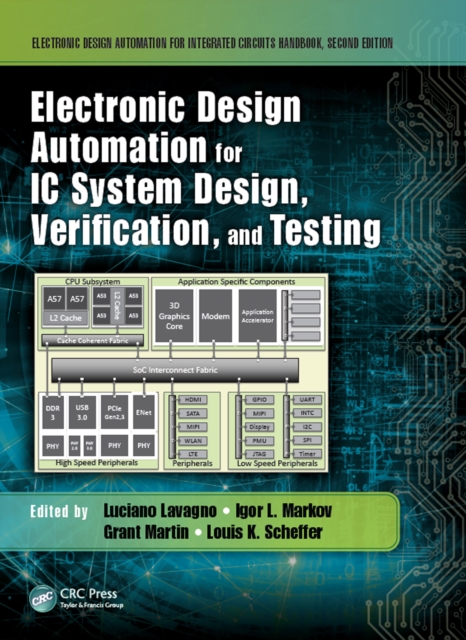
The first of two volumes in the Electronic Design Automation for Integrated Circuits Handbook, Second Edition, Electronic Design Automation for IC System Design, Verification, and Testing thoroughly examines system-level design, microarchitectural design, logic verification, and testing.
Organized around a series of pedagogical exercises, this book provides a visual journey through a series of games architects can play as a means to design.
Organized around a series of pedagogical exercises, this book provides a visual journey through a series of games architects can play as a means to design.
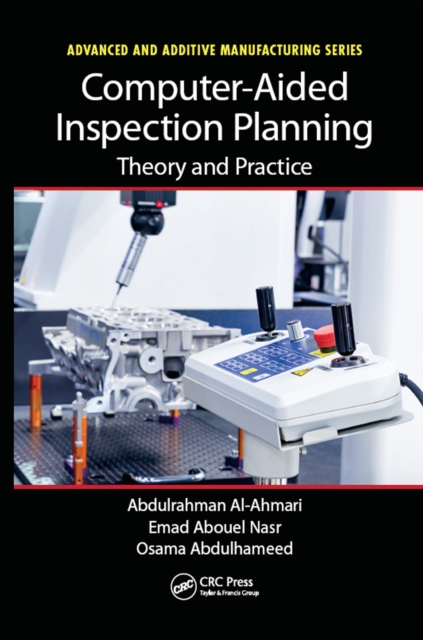
The inspection process is one of the most important steps in manufacturing industries because it safeguards high quality products and customer satisfaction.
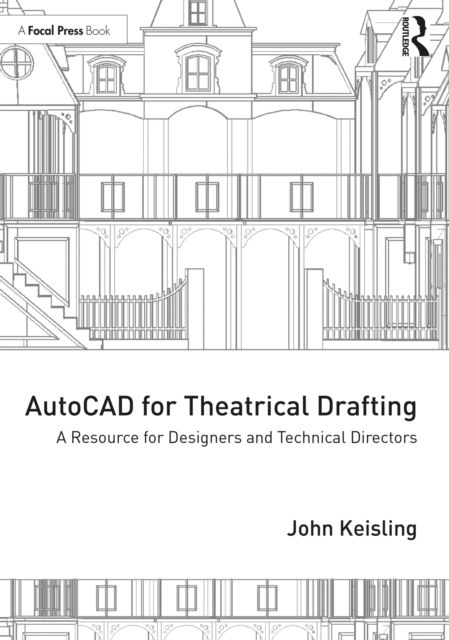
AutoCAD for Theatrical Drafting provides an introduction to the software AutoCAD, specifically focusing on how to navigate the commands most commonly used when creating design, construction and installation drafting plates for theatrical use.
AutoCAD for Theatrical Drafting provides an introduction to the software AutoCAD, specifically focusing on how to navigate the commands most commonly used when creating design, construction and installation drafting plates for theatrical use.