If you want to be successful in any area of game development-game design, programming, graphics, sound, or publishing-you should know how standouts in the industry approach their work and address problems.
Make More Immersive and Engaging Magic Systems in GamesGame Magic: A Designer's Guide to Magic Systems in Theory and Practice explains how to construct magic systems and presents a compendium of arcane lore, encompassing the theory, history, and structure of magic systems in games and human belief.
GPU Pro4: Advanced Rendering Techniques presents ready-to-use ideas and procedures that can help solve many of your day-to-day graphics programming challenges.
Written by a pioneer of game development in academia, Introduction to Game Physics with Box2D covers the theory and practice of 2D game physics in a relaxed and entertaining yet instructional style.
Despite the proliferation of video games in the twenty-first century, the theory of game design is largely underdeveloped, leaving designers on their own to understand what games really are.
Improvement in the quality of integrated circuit designs and a designer's productivity can be achieved by a combination of two factors: Using more structured design methodologies for extensive reuse of existing components and subsystems.
Rapid increases in chip complexity, increasingly faster clocks, and the proliferation of portable devices have combined to make power dissipation an important design parameter.
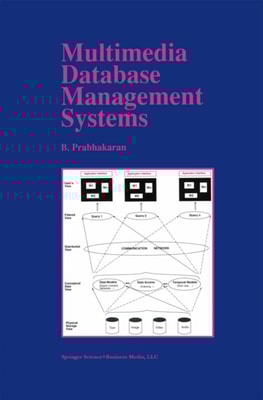
During the past few years, we have been witnessing the rapid growth of the ap- plications of Interactive Digital Video, Multimedia Computing, Desktop Video Teleconferencing, Virtual Reality, and High Definition Television (HDTV).
Multimedia Information Retrieval: Content-Based Information Retrieval from Large Text and Audio Databases addresses the future need for sophisticated search techniques that will be required to find relevant information in large digital data repositories, such as digital libraries and other multimedia databases.
Synthesis of Finite State Machines: Logic Optimization is the second in a set of two monographs devoted to the synthesis of Finite State Machines (FSMs).
Embedded systems are informally defined as a collection of programmable parts surrounded by ASICs and other standard components, that interact continuously with an environment through sensors and actuators.
This book represents an attempt to treat three aspects of digital systems, design, prototyping and customization, in an integrated manner using two major technologies: VHSIC Hardware Description Language (VHDL) as a modeling and specification tool, and Field-Programmable Logic Devices (FPLDs) as an implementation technology.
Low Power Design in Deep Submicron Electronics deals with the different aspects of low power design for deep submicron electronics at all levels of abstraction from system level to circuit level and technology.
High-Performance Networks for Multimedia Applications presents the latest research on the services and protocols for networks providing the communication support for distributed multimedia applications.