This book constitutes the thoroughly refereed post-conference proceedings of the Third International ICST Conference on Forensic Applications and Techniques in Telecommunications, Information and Multimedia, E-Forensics 2010, held in Shanghai, China, in November 2010.
This book constitutes the joint thoroughly refereed post-proceedings of The Modeling Social Media Workshop, MSM 2010 held in Toronto, Canada in June 2010 and the International Workshop on Mining Ubiquitous and Social Environments, MUSE 2010, held in Barcelona, Spain in September 2010.
This book constitutes the thoroughly refereed post-proceedings of the 16th International Workshop on Security Protocols, SP 2008, held in Cambridge, UK, in April 2008.
This book constitutes the refereed proceedings of the Pacific Asia Workshop on Intelligence and Security Informatics, PAISI 2011, held in Beijing, China, in July 2011.
This book contains a selection of thoroughly refereed and revised papers from the Second International ICST Conference on Digital Forensics and Cyber Crime, ICDF2C 2010, held October 4-6, 2010 in Abu Dhabi, United Arab Emirates.
This book constitutes the proceedings of the nine workshops that were organized in conjunction with the Business Information Systems Conference, BIS 2009, taking place in Poznan, Poland, on April 27-29, 2009.
The Second Annual Workshop on Privacy and Security, organized by the Center for Interdisciplinary Studies in Information Privacy and Security of the School of C- munication and Information at Rutgers University, was held on May 12, 2008 at the Hyatt Regency, New Brunswick, New Jersey, USA.
This book constitutes the thoroughly refereed post-workshop proceedings of the 11th International Workshop on Information Hiding, IH 2009, held in Darmstadt, Germany, in June 2009.
This book constitutes the thoroughly refereed post-conference proceedings of the two international workshops DPM 2009, the 4th International Workshop on Data Privacy Management, and SETOP 2009, the Second International Workshop on Autonomous and Spontaneous Security, collocated with the ESORICS 2009 symposium in St.
The 13th International Conference on Human-Computer Interaction, HCI Inter- tional 2009, was held in San Diego, California, USA, July 19-24, 2009, jointly with the Symposium on Human Interface (Japan) 2009, the 8th International Conference on Engineering Psychology and Cognitive Ergonomics, the 5th International Conference on Universal Access in Human-Computer Interaction, the Third International Conf- ence on Virtual and Mixed Reality, the Third International Conference on Internati- alization, Design and Global Development, the Third International Conference on Online Communities and Social Computing, the 5th International Conference on Augmented Cognition, the Second International Conference on Digital Human Mod- ing, and the First International Conference on Human Centered Design.
Intelligence and Security Informatics (ISI) is concerned with the study of the dev- opment and use of advanced information technologies and systems for national, int- national, and societal security-related applications.
This book constitutes the thoroughly refereed post-workshop proceedings of the Second International Workshop on Privacy, Security, and Trust in KDD, PinKDD 2008, held in Las Vegas, NV, USA, in March 2008 in conjunction with the 14th ACM SIGKDD International Conference on Knowledge Discovery and Data Mining, KDD 2008.
The Second International Conference on Forensic Applications and Techniques in Telecommunications, Information and Multimedia (e-Forensics 2009) took place in Adelaide, South Australia during January 19-21, 2009, at the Australian National Wine Centre, University of Adelaide.
This book constitutes the refereed proceedings of the First European Conference on Intelligence and Security Informatics, EuroISI 2008, held in Esbjerg, Denmark, in December 2008.
EGOV 2007 was the sixth edition of this highly successful series of annual int- national conferences dedicated to electronic government research and practice.
Intelligence and security informatics (ISI) is concerned with the study of the development and use of advanced information technologies and systems for national, international, and societal security-related applications.
In the past few years, intelligence and security informatics (ISI) research, which is concerned with the study of the development and use of advanced information te- nologies and systems for national and international security-related applications, has experienced tremendous growth and attracted substantial interest from academic - searchers in related fields as well as practitioners from both government agencies and industry.
The First International Conference on Digital Rights Management: Technology, Issues, Challenges and Systems (DRMTICS - pronounced 'dramatics'), took place in Sydney, Australia on 31st October - 2nd November, 2005.
Intelligence and security informatics (ISI) can be broadly defined as the study of the development and use of advanced information technologies and systems for national and international security-related applications.
Intelligence and security informatics (ISI) can be broadly defined as the study of the development and use of advanced information technologies and systems for national and international security-related applications, through an integrated technological, organizational, and policy-based approach.
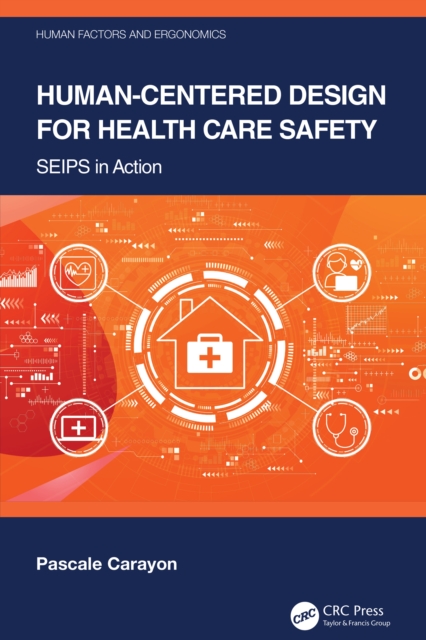
Human-Centered Design for Health Care Safety describes a conceptual framework (SEIPS or Systems Engineering Initiative for Patient Safety) based on the Human Factors and Ergonomics (HFE) discipline and associated human-centered design (HCD) approaches and methods that can help to create innovative solutions for enhancing health care safety.
Human-Centered Design for Health Care Safety describes a conceptual framework (SEIPS or Systems Engineering Initiative for Patient Safety) based on the Human Factors and Ergonomics (HFE) discipline and associated human-centered design (HCD) approaches and methods that can help to create innovative solutions for enhancing health care safety.
The emergence of quantum computing introduces a significant shift in the digital and security landscape-prompting organizations to reassess the foundations of how we protect information.
As digital ecosystems advance toward pervasive connectivity, smart devices have become embedded in the operational, social, and economic fabric of modern life.
As digital ecosystems advance toward pervasive connectivity, smart devices have become embedded in the operational, social, and economic fabric of modern life.
The emergence of quantum computing introduces a significant shift in the digital and security landscape-prompting organizations to reassess the foundations of how we protect information.
Machine Music: How AI is Transforming Music's Next Act explores the seismic impact of AI on the music industry - offering a sweeping yet grounded analysis of how AI and generative tools are reshaping what it means to make, monetize, and experience music.