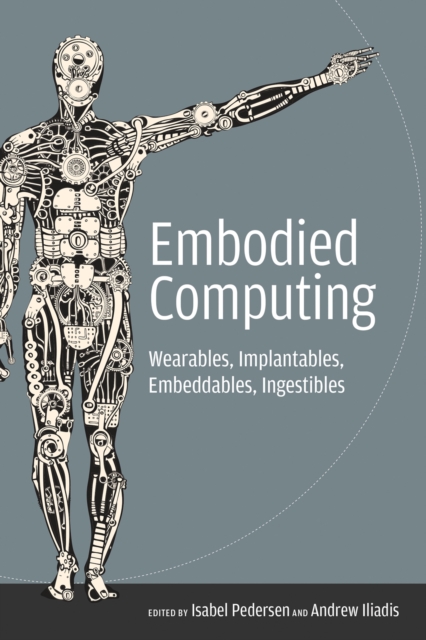
Practitioners and scholars explore ethical, social, and conceptual issues arising in relation to such devices as fitness monitors, neural implants, and a toe-controlled computer mouse.
Provocative takes on cyberbullshit, smartphone zombies, instant gratification, the traffic school of the information highway, and other philosophical concerns of the Internet age.
How developments in science and technology may enable the emergence of purely digital minds—intelligent machines equal to or greater in power than the human brain.
The evolution of the multi-billion-dollar computer services industry, from consulting and programming to data analytics and cloud computing, with case studies of important companies.
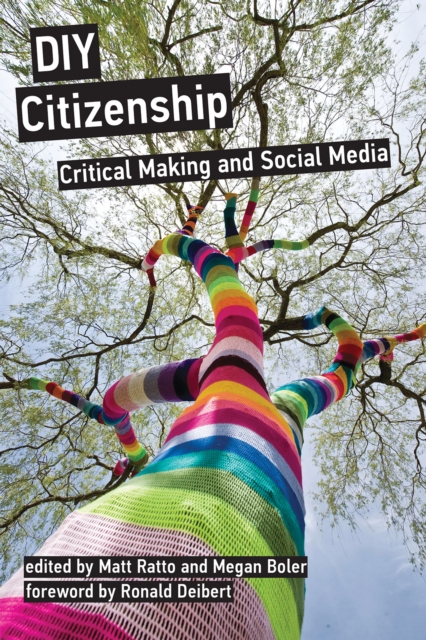
How social media and DIY communities have enabled new forms of political participation that emphasize doing and making rather than passive consumption.
How the tools of information technology can support environmental sustainability by tackling problems that span broad scales of time, space, and complexity.
The aim of this book is to provide "e;human engineering"e; for workplaces, tools, machinery, computers, shift work, lighting, sound, climate, work demands, offices, vehicles, healthcare, and the home - and everything else that we can produce - to suit the human body and mind.
How pervasive digital devices—smartphones, iPods, GPS navigation systems, and their networks—us formulate a sense of place and refine social relationships
The role that children and youth play in the emerging digital media culture; as consumers targeted by marketing campaigns, as creators of their own digital culture, and as political participants.
What are the global implications of the looming shortage of Internet addresses and the slow deployment of the new IPv6 protocol designed to solve this problem?
The major purpose of this book is to illustrate and explain the fundamental similarities and correspondences between humankind's oldest and newest thought-technologies: oral tradition and the Internet.
Discover the Future That Awaits with AIStep into a world where technology pushes the boundaries of imagination, fundamentally altering the fabric of our daily lives.
The purpose of this book is to avail students of the many different reasons and back-stories equated with the advent of interaction design and its effect on our world.
John Maeda is one of the world's preeminent thinkers on technology and design, and in How to Speak Machine, he offers a set of simple laws that govern not only the computers of today, but the unimaginable machines of the future.
Ubiquitous news, global information access, instantaneous reporting, interactivity, multimedia content, extreme customization: Journalism is undergoing the most fundamental transformation since the rise of the penny press in the nineteenth century.
How can we make sure that our children are learning to be creative thinkers in a world of global competition - and what does that mean for the future of education in the digital age?
In this theoretically and empirically engaging volume, the contributors demonstrate that despite the dynamism of India's software industry and the rhetorical flourishes of industry leaders, at present, the benefits of the revolution in information and communication technologies (ICTs) touch only the hundreds of thousands with the right skills and access.
Confronting the digital revolution in academia, this book examines the application of new computational techniques and visualisation technologies in the Arts & Humanities.
This work explores the growing convergence between youth culture and digital communication technologies and the corresponding challenges posed to policymakers, examining the current governance debate on online child safety.
Exploring the implications of the internet and bio-technologies for intimate and sexual life, this book discusses the concept of citizenship in relation to the extension of public health through the internet, and reveals concerns that sexually transmitted infections and HIV are associated with such technologies.
By exploring the experiences of community activists and organizations working with information and communication technology (ICT) to build communities, this book offers a grounded and informed study of the role ICT plays in people's lives.
A trio of headlines in the Chronicle of Higher Education seem to say it all: in 2013, "e;A Bold Move Toward MOOCs Sends Shock Waves;"e; in 2014, "e;Doubts About MOOCs Continue to Rise,"e; and in 2015, "e;The MOOC Hype Fades.
Over the past few decades, we have witnessed the growth of movements using digital means to connect with broader interest groups and express their points of view.