In recent years, the field of Universal Access has made significant progress in consolidating theoretical approaches, scientific methods and technologies, as well as in exploring new application domains.
AI for a Just World: Power, Liberation, and the People Left Behind examines how contemporary artificial intelligence (AI) systems are reshaping social, political, and economic life and how prevailing narratives of neutrality and efficiency obscure their unequal consequences.
AI for a Just World: Power, Liberation, and the People Left Behind examines how contemporary artificial intelligence (AI) systems are reshaping social, political, and economic life and how prevailing narratives of neutrality and efficiency obscure their unequal consequences.
A practical, essential guide to social media for health care professionals, Social Media in Health Care equips readers with the skills to build their online brand, share their professional knowledge with a wider audience, and become a trusted source of information and thought leader in their field.
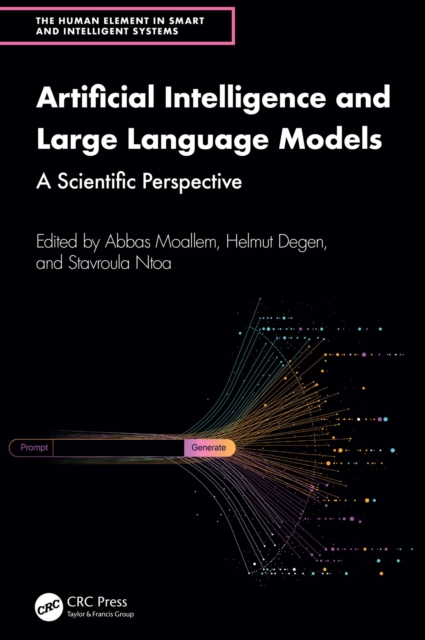
With the latest developments in generative artificial intelligence (AI) and large language model (LLM) applications, like ChatGPT and Gemini, millions of people have started using them in their personal and professional lives.
Across imperial histories and contemporary digital infrastructures, Tianxia and Its Discontents challenges the enduring assumption that the Chinese notion of tianxia-"e;all under heaven"e;-offers a benign or alternative vision of world order.
Architectural education and the profession are at a crossroads, grappling with the climate crisis, housing shortages, migration, and the omnipresent rise of AI.
This book offers a comprehensive exploration of how artificial intelligence (AI) is transforming postgraduate business education in UK higher education institutions.
Digital transformation is a promising way to increase the possibilities and effectiveness of public organizations, but the implementation of digital technologies alone does not bring value.
Trust and Artificial Intelligence: Development and Application of AI Technology explores the crucial role of trust in the development and application of artificial intelligence (AI) technology.
Digital transformation is a promising way to increase the possibilities and effectiveness of public organizations, but the implementation of digital technologies alone does not bring value.
A practical, essential guide to social media for health care professionals, Social Media in Health Care equips readers with the skills to build their online brand, share their professional knowledge with a wider audience, and become a trusted source of information and thought leader in their field.
Digital Equity Ecosystems introduces readers to the groundswell of community coalitions that work to alleviate technological inequity and social injustice.
For those wanting to understand implications for the Global South of China's emergence as a digital superpower, this book analyses China's digital impact in Latin America, North Africa and Asia, covering issues including platforms, e-commerce, technology transfer and digital surveillance.
Social informatics examines how society is influenced by digital technologies and how digital technologies are shaped by political, economic, and socio-cultural forces.
Although recent global disasters have clearly demonstrated the power of social media to communicate critical information in real-time, its true potential has yet to be unleashed.
This book offers a critical primer on how Artificial Intelligence and digitalization are shaping our planet and the risks posed to society and environmental sustainability.
Social informatics examines how society is influenced by digital technologies and how digital technologies are shaped by political, economic, and socio-cultural forces.
This book offers a critical primer on how Artificial Intelligence and digitalization are shaping our planet and the risks posed to society and environmental sustainability.
With the latest developments in generative artificial intelligence (AI) and large language model (LLM) applications, like ChatGPT and Gemini, millions of people have started using them in their personal and professional lives.
Trust and Artificial Intelligence: Development and Application of AI Technology explores the crucial role of trust in the development and application of artificial intelligence (AI) technology.
Architectural education and the profession are at a crossroads, grappling with the climate crisis, housing shortages, migration, and the omnipresent rise of AI.
The rapid development of the information society has accentuated the importance of digital divides, which refer to economic and social inequalities among populations due to differences in access to, use of, or knowledge of information and communication technologies (ICT).
This book offers a comprehensive exploration of how artificial intelligence (AI) is transforming postgraduate business education in UK higher education institutions.
Across imperial histories and contemporary digital infrastructures, Tianxia and Its Discontents challenges the enduring assumption that the Chinese notion of tianxia-"e;all under heaven"e;-offers a benign or alternative vision of world order.
For those wanting to understand implications for the Global South of China's emergence as a digital superpower, this book analyses China's digital impact in Latin America, North Africa and Asia, covering issues including platforms, e-commerce, technology transfer and digital surveillance.
Das Buch betrachtet das Thema Suchmaschinen ausgehend von der täglichen Recherche und führt in die technischen Grundlagen, in Recherchetechniken sowie die gesellschaftlichen und wirtschaftlichen Bedingungen der Recherche im Web ein.
Misbehavior in Cyber Places studies computer-mediated, interpersonal communication on the Internet up to the turn of the century, portraying a technological universe that existed before social media, smartphones, and commercialism began to dominate cyberspace in the new millennium.
Misbehavior in Cyber Places studies computer-mediated, interpersonal communication on the Internet up to the turn of the century, portraying a technological universe that existed before social media, smartphones, and commercialism began to dominate cyberspace in the new millennium.
Das aktuelle Wissen der Welt im Spiegel einer Weltausstellung: Wie stellt man das dar und wie macht man es Interessierten zugänglich - in der Ausstellung, in Publikationen, im Funk und über das Internet?
Es ist eine bekannte Streitfrage, ob wir der Eigendynamik der Technik blind ausgeliefert sind, oder ob wir Technik zielgerichtet und nach gesellschaftlichen Werten aktiv und bewusst gestalten können.