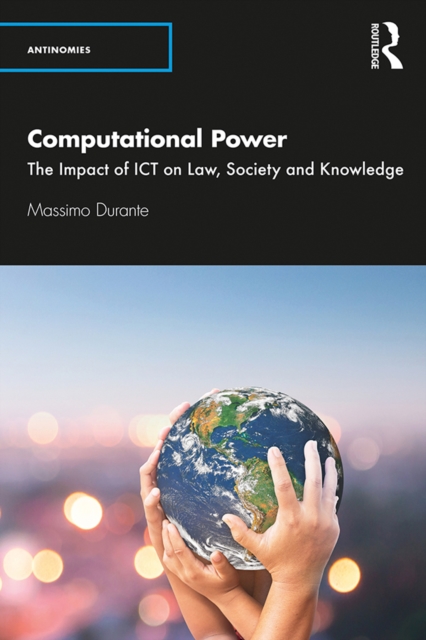
Cutting through the confusion around the nature and implications of digitalization, this book explores the rise of the new digital networks, how they affect traditional infrastructure, and how they will eventually need to be regulated.
Cutting through the confusion around the nature and implications of digitalization, this book explores the rise of the new digital networks, how they affect traditional infrastructure, and how they will eventually need to be regulated.
Drawing on research from multiple disciplines and international case studies, this book provides a comprehensive and up-to-date understanding of online disinformation and its potential countermeasures.
Drawing on research from multiple disciplines and international case studies, this book provides a comprehensive and up-to-date understanding of online disinformation and its potential countermeasures.
Using the SARS-CoV-2/CoVID-19 pandemic as a giant case study, and following the structure of the domains of information security, this book looks at what the crisis teaches us about security.
Using the SARS-CoV-2/CoVID-19 pandemic as a giant case study, and following the structure of the domains of information security, this book looks at what the crisis teaches us about security.
Technology has become a major subject of philosophical ethical reflection in recent years, as the novelty and disruptiveness of technology confront us with new possibilities and unprecedented outcomes as well as fundamental changes to our "e;normal"e; ways of living that demand deep reflection of technology.
Technology has become a major subject of philosophical ethical reflection in recent years, as the novelty and disruptiveness of technology confront us with new possibilities and unprecedented outcomes as well as fundamental changes to our "e;normal"e; ways of living that demand deep reflection of technology.
We delegate more and more decisions and tasks to artificial agents, machine-learning mechanisms, and algorithmic procedures or, in other words, to computational systems.
We delegate more and more decisions and tasks to artificial agents, machine-learning mechanisms, and algorithmic procedures or, in other words, to computational systems.
This volume provides a broad examination of how technology and globalisation have influenced contemporary higher education institutions and how moves towards internationalisation within and between educational providers continue to be a force for change in this context.
This volume provides a broad examination of how technology and globalisation have influenced contemporary higher education institutions and how moves towards internationalisation within and between educational providers continue to be a force for change in this context.
Cognitive Computing is a new topic which aims to simulate human thought processes using computers that self-learn through data mining, pattern recognition, and natural language processing.
Cognitive Computing is a new topic which aims to simulate human thought processes using computers that self-learn through data mining, pattern recognition, and natural language processing.
Exploring potential scenarios of artificial intelligence regulation which prevent automated reality harming individual human rights or social values, this book reviews current debates surrounding AI regulation in the context of the emerging risks and accountabilities.
Exploring potential scenarios of artificial intelligence regulation which prevent automated reality harming individual human rights or social values, this book reviews current debates surrounding AI regulation in the context of the emerging risks and accountabilities.
Social change in the twenty-first century is shaped by both demographic changes associated with ageing societies and significant technological change and development.
This volume is the first of four publications that will present the research on technology and employment carried out by Conservation of Human Resources of Columbia University over the past several years.
The growth of microcomputer applications in industrialized countries is predicated on an existing base that includes the ready availability of affordable hardware and software, trained personnel, capable maintenance, efficient communication systems, and a benign environment; applications are selected and facilitated by a wide range of underlying ex
Social change in the twenty-first century is shaped by both demographic changes associated with ageing societies and significant technological change and development.
Becoming a Digital Parent is a practical, readable guide that will help all parents have confidence to successfully navigate technology with their children.
Becoming a Digital Parent is a practical, readable guide that will help all parents have confidence to successfully navigate technology with their children.
Digital Democracy, Social Media and Disinformation discusses some of the political, regulatory and technological issues which arise from the increased power of internet intermediaries (such as Facebook, Twitter and YouTube) and the impact of the spread of digital disinformation, especially in the midst of a health pandemic.
Digital Democracy, Social Media and Disinformation discusses some of the political, regulatory and technological issues which arise from the increased power of internet intermediaries (such as Facebook, Twitter and YouTube) and the impact of the spread of digital disinformation, especially in the midst of a health pandemic.
Smart cities promise to generate economic, social and environmental value through the seamless connection of urban services and infrastructure by digital technologies.
Smart cities promise to generate economic, social and environmental value through the seamless connection of urban services and infrastructure by digital technologies.
The Intelligent Nation proposes a systemic and radical transformation of the organisation, management, ownership and performance of the services of the state by capitalising on the potential offered by contemporary information capability and fulfilling the rights and obligations both to and of citizens.
The Intelligent Nation proposes a systemic and radical transformation of the organisation, management, ownership and performance of the services of the state by capitalising on the potential offered by contemporary information capability and fulfilling the rights and obligations both to and of citizens.