This book, first published in 1999, analyses the convergence of financial, technical, and public policy considerations that turned what seemed like science fiction twenty years ago into a library fact of life today.
This book, first published in 1992, outlines the issues, indicates major trends, and sets challenges for libraries and publishers concerning new technologies and serials.
This book examines the illicit trade in antiquities, a trade which has increased massively following the destruction and looting of ancient Near Eastern sites in the Middle East.
This book examines the illicit trade in antiquities, a trade which has increased massively following the destruction and looting of ancient Near Eastern sites in the Middle East.
This book looks closely at the endings of narrative digital games, examining their ways of concluding the processes of both storytelling and play in order to gain insight into what endings are and how we identify them in different media.
This book looks closely at the endings of narrative digital games, examining their ways of concluding the processes of both storytelling and play in order to gain insight into what endings are and how we identify them in different media.
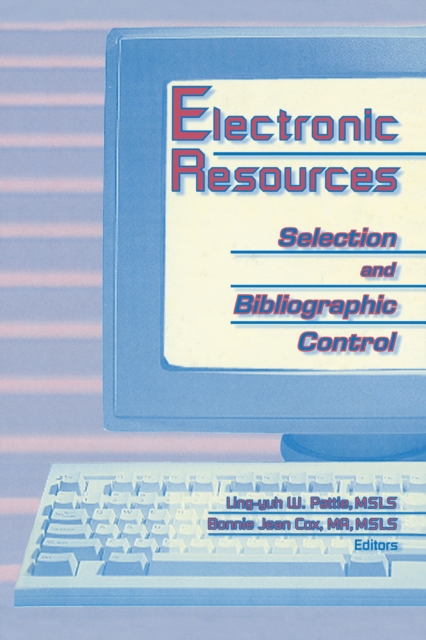
The universe of electronic resources is indeed diverse, expansive, intimidating, and unstructured compared to the finite, prepackaged print world upon which the information delivery infrastructure has been constructed.
Papers collected here, from a December 2001 workshop held at the University of Central Florida, examine topics related to process coordination and ubiquitous computing.
Development of Online Hybrid Testing: Theory and Applications to Structural Engineering provides comprehensive treatments of several topics pertinent to substructure online hybrid tests.
From the Occupy movement in the Western world to the Arab Spring and the role of Twitter in the Middle East, the internet and social media is changing the global landscape.
From the Occupy movement in the Western world to the Arab Spring and the role of Twitter in the Middle East, the internet and social media is changing the global landscape.
We live in a world where a tweet can be instantly retweeted and read by millions around the world in minutes, where a video forwarded to friends can destroy a political career in hours, and where an unknown man or woman can become an international celebrity overnight.
Thoroughly revised and updated, this new edition of Blogging provides an accessible study of a now everyday phenomenon and places it in a historical, theoretical and contemporary context.
Your essential guide to deploying IPv6 on Windows networks Get in-depth technical information to put IPv6 technology to work-including networks with hardware running Windows 8 and Windows Server 2012.
User interface (UI) design rules and guidelines, developed by early HCI gurus and recognized throughout the field, were based on cognitive psychology (study of mental processes such as problem solving, memory, and language), and early practitioners were well informed of its tenets.
The emerging idea of the semantic web is based on the maximum automation of the complete knowledge lifecycle processes: knowledge representation, acquisition, adaptation, reasoning, sharing and use.
The Semantic Web combines the descriptive languages RDF (Resource Description Framework) and OWL (Web Ontology Language), with the data-centric, customizable XML (eXtensible Mark-up Language) to provide descriptions of the content of Web documents.
The Semantic Web is an idea of World Wide Web inventor Tim Berners-Lee that the Web as a whole can be made more intelligent and perhaps even intuitive about how to serve a users needs.
'A rallying cry for privacy justice' New York Times'We need more warriors like Carrie' Tarana Burke, founder of the MeToo movementIn an era of doxing, revenge porn and online stalking, the law is failing us.
The past few years have seen a major change in computing systems, as growing data volumes and stalling processor speeds require more and more applications to scale out to clusters.
The past few years have seen a major change in computing systems, as growing data volumes and stalling processor speeds require more and more applications to scale out to clusters.