The livelihoods of millions of people in developing countries, which depend on dryland agriculture to ensure their food security and their well-being, could be improved measurably by gains in agricultural crop yields.
The livelihoods of millions of people in developing countries, which depend on dryland agriculture to ensure their food security and their well-being, could be improved measurably by gains in agricultural crop yields.
This book examines the effects that land-use changes (notably agricultural intensification, logging, soil erosion, urbanisation and mining) have on soil characteristics and processes in tropical and savannah environments.
Rifting and Sediments in the Red Sea and Arabian Gulf Regions is a unique text that covers a wide range of topics related to the tectonics and geology of the Red Sea and Arabian (Persian) Gulf region.
This important volume, Soil Salinity Management in Agriculture, addresses the crucial issue of soil salinity of potential farmland and provides a comprehensive picture of the saline environment and plant interactions, along with management and reclamation methods and policies.
This new volume in the Innovations and Challenges in Micro Irrigation series covers an array of technologies to estimate evapotranspiration and to evaluate parameters that are needed in the management of micro irrigation, with worldwide applicability to irrigation management in agriculture.
The tenth and final volume in the series Research Advances in Sustainable Micro Irrigation, this valuable book focuses on new and recent innovations in technology, methods, and applications for micro irrigation.
This new book, Sustainable Micro Irrigation Design Systems for Agricultural Crops, brings together the best research for efficient micro irrigation methods for field crops, focusing on design methods and best practices.
From Lonely Planet, the world's leading travel guide publisher, Wine Trails, the first book in Lonely Planet's "e;Perfect Weekends"e; series, introduces the secret gems in well-known regions such as Napa and Sonoma, Tuscany, Burgundy and Rioja, and also explores off-the-beaten-path regions in Georgia, Greece and beyond.
This book allows readers to grasp both the fundamentals and the latest technological advances in the field of mine drainage, which is increasingly crucial both environmentally and economically.
This book allows readers to grasp both the fundamentals and the latest technological advances in the field of mine drainage, which is increasingly crucial both environmentally and economically.
Wild wines around the world have been created since the dawn of time, with nearly every civilization and culture on earth developing their own means of fermenting and distilling various fruits and grains into aromatic, strong spirited drinks that have graced the tables of kings and peasants alike.
An easy, informative introduction to the world of wineIf you love wine and are interested to learn more about it, Uncorked is the perfect tool to gain a straightforward understanding of the essentials of wine, allowing you to enjoy wine and be at ease in any setting.
Along its existence, humans have used Earth resources in a reckless way, having little consideration for its importance, and for the future generations and their needs.
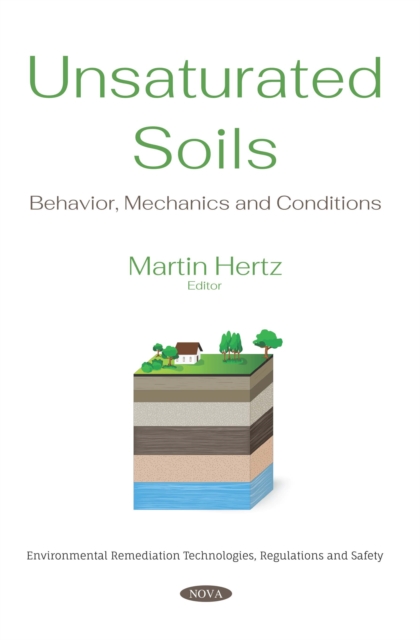
This compilation opens with an exploration of the vadose, or unsaturated zone, which is of utmost importance as the nexus between surface water and groundwater.
This volume contains a collection of vintage articles on the subject of vineyard soil, with information on preparation, taxonomy, location, and many other related aspects.
With recipes for alcoholic versions of childhood favorites like Ecto-Cooler and Mondo as well as creative pop-culture inspired originals like the Rum and Stimpy and Semi-Warmed Kind of Cider, this is a perfectly giftable mix of humor, nostalgia, and tasty recipes.
Edited by One of the Best Specialists in Soil ScienceRecent studies reveal that Phosphorus (P) in the form of phosphate, a macronutrient essential for plant growth, and crop yields can influence the bioavailability, retention, and mobility of trace elements, metal(loid)s, and radio nuclides in soils.
Georgia's territory represents a real "e;natural geological laboratory,"e; exposing magmatic, metamorphic and sedimentary rocks, ranging from the Neoproterozoic to the Quaternary.
Challenges and Innovations in Geotechnics is a collections of papers presented at the Eighth Asian Young Geotechnical Engineering Conference (8AYGEC, Astana, Kazakhstan, 5-7 August 2016), and covers various aspects the areas of soil mechanics and geotechnical engineering.
As the human population grows from seven billion toward an inevitable nine or 10 billion, the demands on the limited supply of soils will grow and intensify.
Soil contamination represents a serious environmental problem and requires an immediate action plan to be prepared for typical and emergent contaminants.
As the author states in his Preface, this book is written at a time when scientific and lay communities recognize that knowledge of environmental chemistry is fundamental in understanding and predicting the fate of pollutants in soils and waters, and in making sound decisions about remediation of contaminated soils.
Most of the papers of this book were presented in the "e;IGU-LUCC 2003 Moscow Workshop on Global and Regional Land Use/Cover Changes"e; and at International Conference "e;Society and Environment Interaction Under Global and Regional Changes"e; which was held in Barnaul (Altai), Russia in summer 2003.
The book, written from the perspective of pedologists and agronomists, is a study of the Earth's crust which is subjected to climatic agents and inhabited by living creatures.