This volume focuses on the engineering geological and environmental problems of major engineering works, rock and soil properties, and protection of the geoenvironment and reduction of geohazards, reflecting the major achievements and advancement of engineering geological science and technology.
This third edition of the bestselling Remote Sensing for Geologists: A Guide to Image Interpretation is now titled Remote Sensing for Geoscientists: Image Analysis and Integration.
Retaining all the material from the second edition and adding substantial new material, this third edition presents models and statistical methods for analyzing spatially referenced point process data.
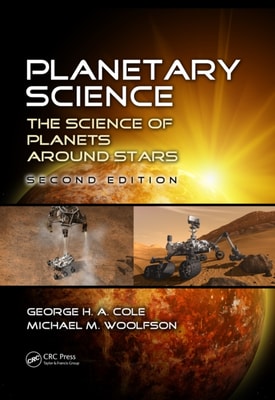
Since the publication of the popular first edition, stellar and planetary scientists have produced numerous new observations, theories, and interpretations, including the "e;demotion"e; of our former ninth planet Pluto as a dwarf planet.
During the last four decades, tremendous advances have been made towards the understanding of transport characteristics of contaminants in soils, solutes, and tracers in geological media.
A multidisciplinary field, encompassing both geophysics and civil engineering, geomechanics deals with the deformation and failure process in geomaterials such as soil and rock.
Given the importance of interdisciplinary work in sustainability, Simulation of Ecological and Environmental Models introduces the theory and practice of modeling and simulation as applied in a variety of disciplines that deal with earth systems, the environment, ecology, and human-nature interactions.
The subject of wavelet analysis and fractal analysis is fast developing and has drawn a great deal of attention in varied disciplines of science and engineering.
This book provides a categorized and visualized overview and presents microscopic observations, systematic mineralogy, chemistry, geology, stability, paragenesis, occurrence and use in petrology of 137 minerals.
A guide for students and professionals, this introductory course book covers the basic principles of remote sensing and its applications in mine environment monitoring.
Soil-structure interaction is an area of major importance in geotechnical engineering and geomechanics Advanced Geotechnical Engineering: Soil-Structure Interaction using Computer and Material Models covers computer and analytical methods for a number of geotechnical problems.
A guide for students and professionals, this introductory course book covers the basic principles of remote sensing and its applications in mine environment monitoring.
This book describes the laws of sustainable soil management to enhance ecosystem services while restoring degraded soils and promoting sustainable use.
Integrating decades of research conducted by leading scientists in the field, Remote Sensing of Energy Fluxes and Soil Moisture Content provides an overview of state-of-the-art methods and modeling techniques employed for deriving spatio-temporal estimates of energy fluxes and soil surface moisture from remote sensing.
Designed to be a high-level, approachable resource for engineers who need further insight into spatial temporal information systems from an ontological perspective, Spatial Temporal Information Systems: An Ontological Approach using STK(R) explains the dynamics of objects interaction from signal analysis to trajectory design, spatial modeling, and other spatial analytics by using STK(R), which is a general-purpose modeling and analysis application for any type of space, defense, or intelligence system.
En este ensayo, el autor plasma unos desafiantes y controversiales conceptos sobre el origen del Gran Can del Colorado, los cuales, an cuando l insiste en que son totalmente evidentes, a las dems personas nos resultan difciles de digerir.
Recent biodiversity studies, reported here for the first time, have shown that the molluscan fauna of the Gulf of Mexico is far richer and more complex than previously thought.
About 15 years ago we began the Hubbard Brook Ecosys- tem Study with the development of an ecosystem model and the conception of a method whereby some major parameters of the model could be directly measured under field conditions.
This book is the outgrowth of a week-long conference on sandstone organized by the authors, first held at Banff, Alberta, in 1964 under the auspices of the Alberta Association of Petroleum Geologists and the University of Alberta, and again, in 1965, at Bloomington, Indiana, under the sponsorship of the Indiana Geological Survey and the Department of Geology, Indiana University.
This book is the successor to A practical introduction to optical mineralogy, which was written in the early 1980s, and published by George Allen & Unwin in 1985.
The molecular theory of water and aqueous solutions has only recently emerged as a new entity of research, although its roots may be found in age-old works.
As a method of structure analysis, electron diffraction has its own spe- cial possibilities and advantages in comparison to the X -ray method for the study of finely dispersed minerals with layer or pseudolayer structures.
Later Proterozoic Stratigraphy of the Northern Atlantic stimulating and their prompt submission of text and illustrative material has enabled rapid production of Regions aims to produce a concise and up-to-date synthesis of the later Proterozoic geology of those lands the book.
This is the sixth contribution to the Computer Methods in the Geosciences series- and it continues the tradition of being practical, germaine, and easy to read.
In 1981 Chile's military government dictated a new Water Code that radically changed the country's previous water rights system by strengthening private property rights, favoring market incentives, and reducing state regulation.
Since human beings first appeared on the earth, we have changed land cover and land use for our own purposes, such as conveniences and high productivity.
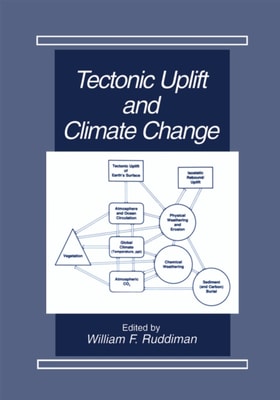
A significant advance in climatological scholarship, Tectonic Uplift and Climate Change is a multidisciplinary effort to summarize the current status of a new theory steadily gaining acceptance in geoscience circles: that long-term cooling and glaciation are controlled by plateau and mountain uplift.