Since 1950 geologists have learned more about the origin and lithification of carbonate sediments than in all the previous years of the history of science.
It is the policy of the federal Canadian Forestry Service to sponsor research initiatives from the private sector that are judged to be pertinent to its mandate and offer particular promise towards the optimal management of Canadian forest resources.
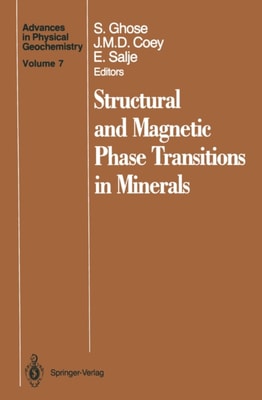
Chemical petrology is essentially the physical chemistry of rocks and associated fluids, although it also borrows heavily from such other sciences as mineralogy.
We wrote Sedimentology of Shale primarily because we lacked a handy, reasonably comprehensive source of information and ideas about shales for students in our sedimentology program.
The explosion of interest, effort, and information about the ocean since about 1950 has produced many thousand scientific articles and many hun- dred books.
The purpose of this volume is to present the latest planetary studies of an international body of scientists concerned with the physical and chemical aspects of terrestrial planets.
The fifth volume in this series is focused on the chemical and physical interactions between rocks undergoing metamorphism and the fluids that they generate and that pass through them.
Knowledge of basic clay microstructure is fundamental to an understanding of the physical, chemical, and mechanical properties of fine-grained sediments and rocks.
In a single volume, the authors bring together a review of current biological understanding of planktonic foraminifera and apply it to developments in sedimentology.
Because of the biological origin of many siliceous deposits, their geochemical transformation in the marine environment, and their occurrence in many formations around the world, oceanographers, paleontologists, geologists, geochemists, and sedimentologists are working closely together to trace the evolution of such deposits.
The collection of papers in this volume is a direct result of the Society of Economic Paleontologists and Mineralogists Research Symposium on "e;Thermal History of Sedimentary Basins: Methods and Case Histories"e; held as part of the American Association of Petroleum Geologists Annual Convention in New Orleans in March 1985.
In the extensive field of earth sciences, with its many subdisciplines, the trans- fer of knowledge is primarily established via personal communication, during meetings, by reading journal articles, or by consulting books.
Landscapes of the past have always held an inherent fascination for ge- ologists because, like terrestrial sediments, they formed in our environment, not offshore on the sea floor and not deep in the subsurface.
When we originally published Biogeochemistry of a Forested Ecosystem in 1977, the Hubbard Brook Ecosystem Study (HBES) had been in existence for 14 years, and we included data through 1974, or a biogeo- chemical record of 11 years.
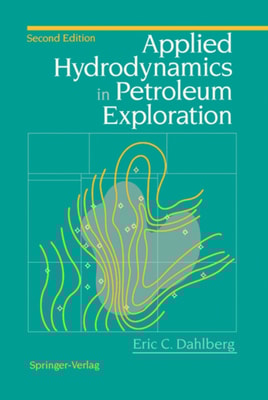
In the first edition of this book, we observed that it had been created to fill a need for a usable "e;self-contained volume on hydrodynamics"e; (and hydrogeology) that was written specifically for the petroleum industry, but could also serve the earth science community in general.
Gorda Ridge presents a primarily technical summary of recent advances in seafloor research related to mineral exploration of the only seafloor spreading center within the United States' Exclusive Economic Zone (EEZ).
Antarctic Paleobiology discusses the current status of paleobiology, principally paleobotany and palynology in Antarctica, and the interrelationship of Antarctic floras to those of other Gondwana continents.
Physical Chemistry of Magmas investigates the properties, structure, and phase relationships of silicate melts with invited contributions from an international team of experts.
The Earth Science Series of the Circum-Pacific Funding for ship time was made available through Council for Energy and Mineral Resources (CPCEMR) the U.
I n modem times, science has brought the past-and so many of its creatures-back to life via intellectual inquiry, application of the scientific method, and some extraordinary technology that has recently been devel- oped.
Prediction of a random field based on observations of the random field at some set of locations arises in mining, hydrology, atmospheric sciences, and geography.
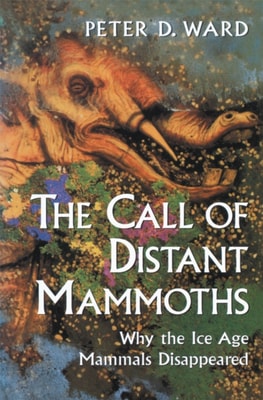
Just 12,000 years ago - at the height of the last Ice Age - saber-toothed tigers, giant ground sloths, camels, hippos and the great herds of proboscideans: giant mastodons and mammoths, extinct relatives of the elephant, roamed the land where skyscrapers now stand.
Long unknown in the West, The Biosphere established the field of biogeochemistry and is one of the classic founding documents of what later became known as Gaia theory.
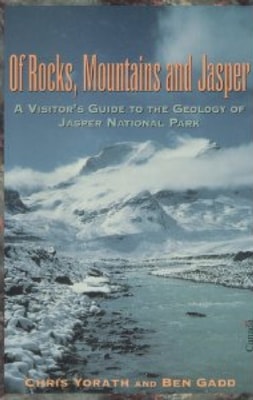
A resource for understanding the regions geology and seeing the evidence of important processes typical of the unique geological system in Jasper National Park.
A resource for understanding the regions geology and seeing the evidence of important processes typical of the unique geological system in Jasper National Park.