The climate record for the past 100,000 years clearly indicates that the climate system has undergone periodicand often extremeshifts, sometimes in as little as a decade or less.
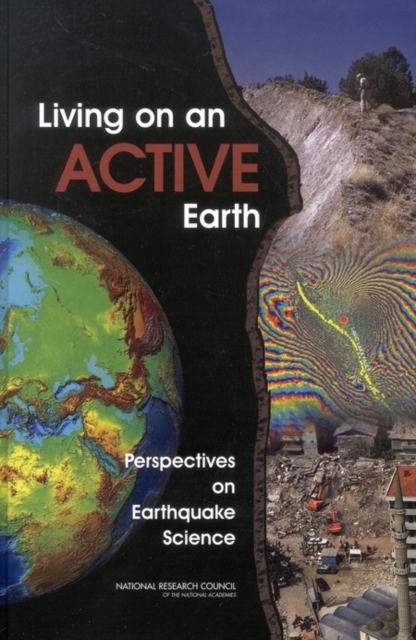
The destructive force of earthquakes has stimulated human inquiry since ancient times, yet the scientific study of earthquakes is a surprisingly recent endeavor.
This report assesses whether the Smithsonian Institution should continue to receive direct federal appropriations for its scientific research programs or if this funding should be transferred to a peer-reviewed program open to all researchers in another agency.
EarthScope is a major science initiative in the solid-earth sciences and has been described as "e;a new earth science initiative that will dramatically advance our physical understanding of the North American continent by exploring its three-dimensional structure through time"e;.
This report assesses whether the Smithsonian Institution should continue to receive direct federal appropriations for its scientific research programs or if this funding should be transferred to a peer-reviewed program open to all researchers in another agency.
The destructive force of earthquakes has stimulated human inquiry since ancient times, yet the scientific study of earthquakes is a surprisingly recent endeavor.
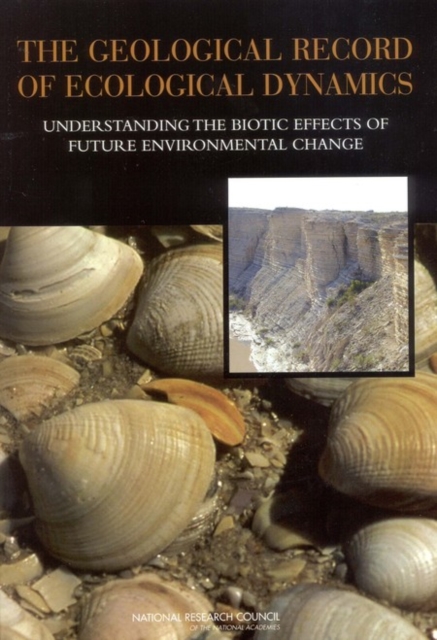
In order to answer important questions about ecosystems and biodiversity, scientists can look to the past geological recordwhich includes fossils, sediment and ice cores, and tree rings.
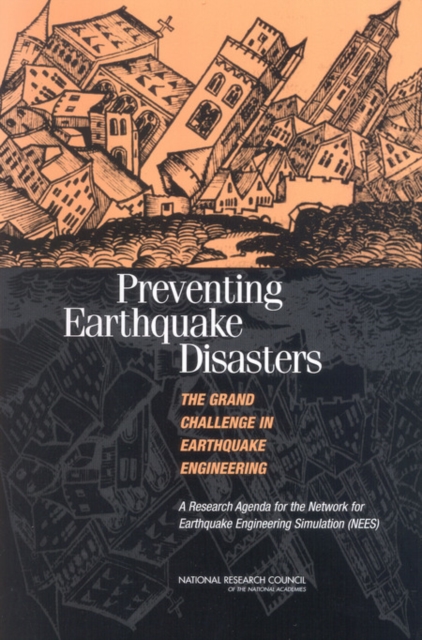
The Network for Earthquake Engineering Simulation (NEES), administered by the National Science Foundation (NSF), is scheduled to become operational in 2004.
During geologic spans of time, Earth's shifting tectonic plates, atmosphere, freezing water, thawing ice, flowing rivers, and evolving life have shaped Earth's surface features.
Safeguarding Mountain Social-Ecological Systems, Volume Two: Building Transformative Resilience in Mountain Regions Worldwide presents an overview of the relevant research in mountain regions worldwide, identifies existing challenges, and provides an understanding of the diversity of mountain ecosystems in different regions.
During geologic spans of time, Earth's shifting tectonic plates, atmosphere, freezing water, thawing ice, flowing rivers, and evolving life have shaped Earth's surface features.
The climate record for the past 100,000 years clearly indicates that the climate system has undergone periodicand often extremeshifts, sometimes in as little as a decade or less.
With tipping points and extreme global warming looming, the key to understanding our climate future lies in our distant past "e;If you care at all about our future, you must read Runaway Climate.
This book had its genesis in a symposium on gas hydrates presented at the 2003 Spring National Meeting of the American Institute of Chemical Engineers.
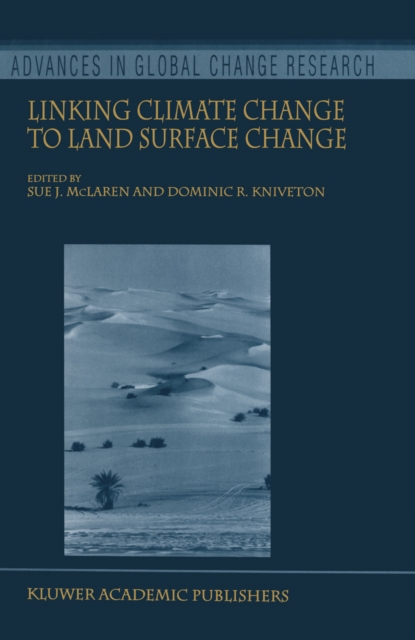
Our views and understanding of variations in climate, geomorphological processes and the interrelationships that exist between climatic changes and land surface changes, both now and in the past, have developed greatly over the last decade.
"e;This water"e; he told me, "e;runs out to the eastern region, and flows into the Arabah; and when it comes into the sea, into the sea of foul waters [i.
High mountains can be considered as particularly appropriate environments to detect effects ofclimate change on natural biocoenoses in a global scale for the following reasons: Firstly, ecosystems at the l- temperature limits of plant life are generally thought to be especially sensitive to climate change [1][2][3].
Interest in arsenic in ground water has greatly increased in the past decade because of the increased awareness of human health effects and the costs of avoidance or treatment of ground water supplies used for consumption.
I am pleased to present a work which marks a milestone in the history of public works and, more precisely, in that of permanent structures-a comprehensive dictionary of Civil Engineering terms.
Soil Formation deals with qualitative and quantitative aspects of soil formation (or pedogenesis) and the underlying chemical, biological, and physical processes.
Paleomagnetic data are useful in many applications in Earth Science from determining paleocurrent directions to analyzing the long-term behavior of the geomagnetic field.
This book is a systematic guide to the recognition and interpretation of deformation microstructures and mechanisms in minerals and rocks at the scale of a thin section.
As we transition into the 21st century, it is apparent that this is an exciting time for environmental engineers and scientists studying remediation technologies.
Based on an American Chemical Society Symposium organized by Professors Glenn Seaborg and Oliver Manuel, this volume provides a comprehensive record of different views on this important subject at the end of the 20th century.