This long-awaited volume, written specifically for petroleum workers, explores the fundamental concepts of rock mechanics along with various petroleum-related applications.
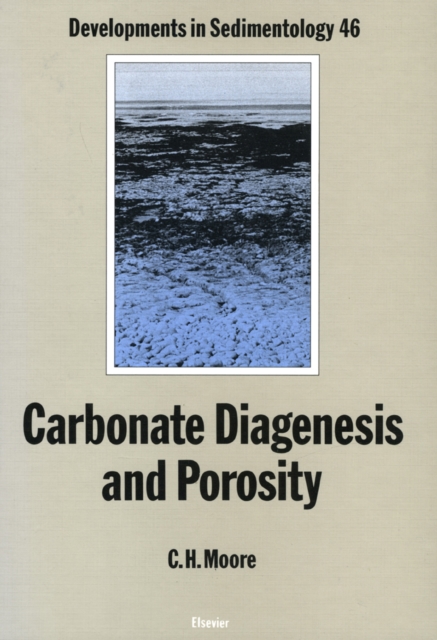
This book integrates those critical geologic aspects of reservoir formation and occurrence with engineering aspects of reservoirs, and presents a comprehensive treatment of the geometry, porosity and permeability evolution, and producing characteristics of carbonate reservoirs.
Written by foremost experts in the field, and formulated with attention to classroom use for advanced studies in reservoir characterization and processes, this book reviews and summarises state-of-the-art progress in the field of enhanced oil recovery (EOR).
In the modem language of reservoir engineering by reservoir description is understood the totality of basic local information concerning the reservoir rock and fluids which by various procedures are extrapolated over the entire reservoir.
This book provides an introduction to recent developments in automated stratigraphic correlation of fossil data, using computer programs for ranking and scaling of stratigraphic events.
Methodological procedures of the theory of estimation of statistical parameters of time series and their application to hydrology and water engineering, particularly the sphere of reservoir-controlled runoffs, are dealt with in this volume.
The book describes the drainage basin as a system unit resulting from the interaction between runoff and topography - a lengthy process of evolution that occurs according to well-defined laws.
A comprehensive, integrated view of the behaviour of the tropical hydrological cycle under various ecological, geographical and climatological conditions.
Standing alone as the main authority on the subject, this handbook is the result of a multi-million dollar investigation into groundwater monitoring strategies at energy extraction sites.
Volcanic eruptions are generally viewed as agents of destruction, yet they provide the parent materials from which some of the most productive soils in the world are formed.
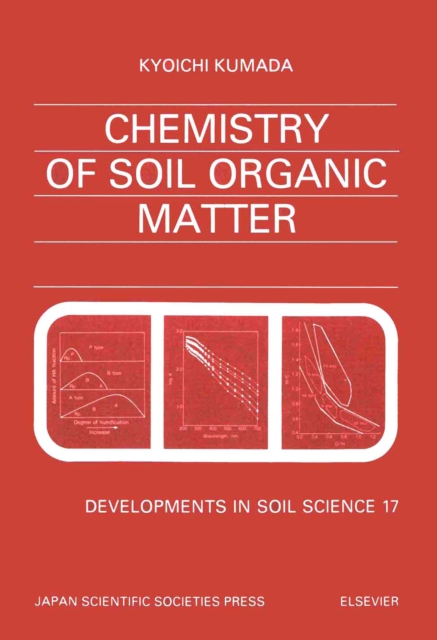
Despite the large number of papers and books published on soil organic matter (humus), our knowledge of the subject is still very limited, as is our knowledge of humic acid.
The present volume continues the philosophy of gathering contributions on diagenesis on behalf of those requiring such periodic literary surveys, namely, academics and practitioners (teachers, researchers, and oil and ore explorationists).
This book aims primarily at providing those involved in fundamental or applied research in the fields of geology, geomorphology and hydrology with a systematic overview of glacigenic sediments.
This book covers the more basic aspects of carbonate minerals and their interaction with aqueous solutions; modern marine carbonate formation and sediments; carbonate diagenesis (early marine, meteoric and burial); the global cycle of carbon and human intervention; and the role of sedimentary carbonates as indicators of stability and changes in the Earth's surface environment.
This book provides a comprehensive and critical summary of clay mineral literature that relates to geology and geologic processes, making it useful both as a reference book for geologists and as a text for the specialist.
This book follows another by the same author, published in 1977, which the author considered as ``a first attempt to put some order in the house of clay petrology'.