Discusses the global evolution of the earth, such as core-mantle separation, mantle-crust evolution, origin of ocean-atmosphere system, on the basis of isotope earth science andpaleomagnetism, where recent devlopment in planetology andastrophysical theories are extensively taken into account.
Final Report of the Sonderforschungsbereich 48 - Göttingen, "Entwicklungen, Bestand und Eigenschaften der Erdkruste, insbesondere der Geosynklinalräume"
I am pleased to be able to introduce this book by Monsieur lean-Claude Gall, firstly because it is a book, secondly because its author has been a colleague for 15 years, and finally because it is a book which demonstrates the growing importance of Palaeobiology.
Coated grains have always attracted attention, at first of naturalists, and later of geologists, and the interest in these peculiar bodies was re- lated both to their intriguing form and their significance in facies inter- pretation and sedimentology and to their relevance to accumulations of hydrocarbons and other mineral deposits.
Progress in Precambrian geology has been exceptionally great, indeed quite striking for geologists of the older generation; only some 30-40 years ago the Precambrian appeared as an uncertain and even mystic prelude to geologic evolution.
Students of a phenomenon as common but complex as andesite genesis often are overwhelmed by, or overlook, the volume and diversity of relevant information.
In these days of information explosion and high-cost publishing, it is perhaps only reasonable for an author to convince the reading public that it is getting something worth reading.
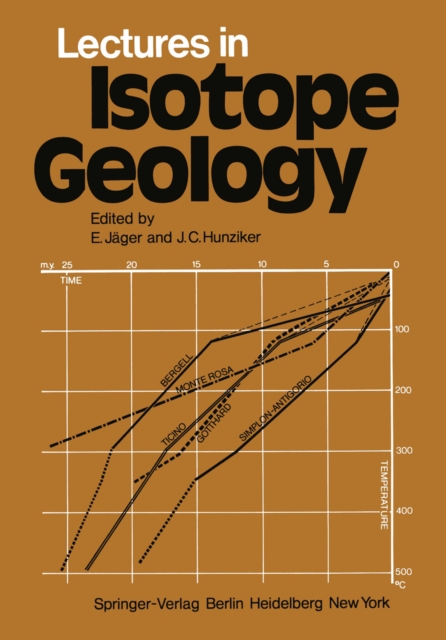
Our colleagues from the French-speaking parts of Switzerland - the Suisses romands - and above all the committee of the 3rd Cycle, e Earth Sciences (3 Cycle, Sciences de la Terre) honored us by asking us to give a course on Isotope Geology for the year 1977.
Colloid science has been applied by soil chemists and clay mineral- ogists for many years, and some of the most important studies on the behavior of colloids have been contributed by them.
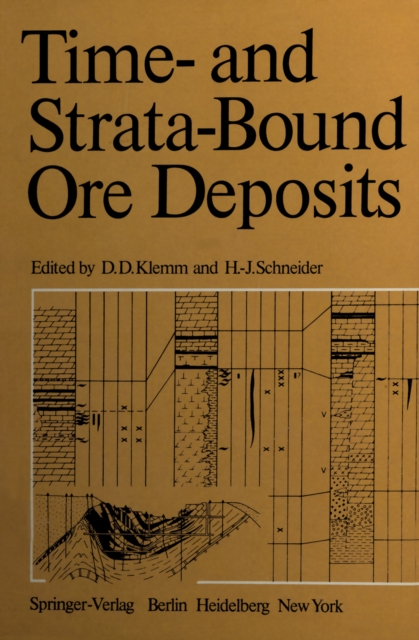
The problem of time-and strata-bound formation of ore deposits has during the past decade become one of the most debated topics in cur- rent international discussion.
On May 25, 1977 a small invited group of coastal oceanographers assembled at the Marine Sciences Research Center at Stony Brook for three days of intensive discussions in a cloistered setting.
The determination of crustal structure by means of explo- sion seismology has been one of the major objectives of the European Seismological Commission (ESC) over the past twenty-five years.
The International Association for Mathematical Geology, in conjunc- tion with the International Geological Congress, sponsored two symposia in Montreal, Canada, September 1972.
This volume, although not an integrated synthesis, treats most aspects of Holocene sedimenta- tion and diagenesis in the Persian Gulf, grouping 22 contributions under a single cover and in one language.
During the last five years transmission electron microscopy (TEM) has added numerous important new data to mineralogy and has considerably changed its outlook.
This series of monographs represents continuation on an inter- nationai basis of the previous series MINERALOGIE UND PETRO- GRAPHIE IN EINZELDARSTELLUNGEN, published by Sprin- ger-Verlag.
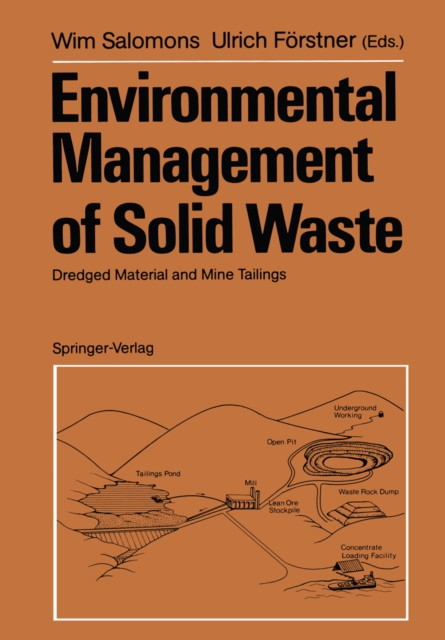
Dredged Material and Mine Tailings are two of the same thing once they are deposited on land: they must be safe-guarded, wash-out must be prevented, and they must be protected by a plantcover.