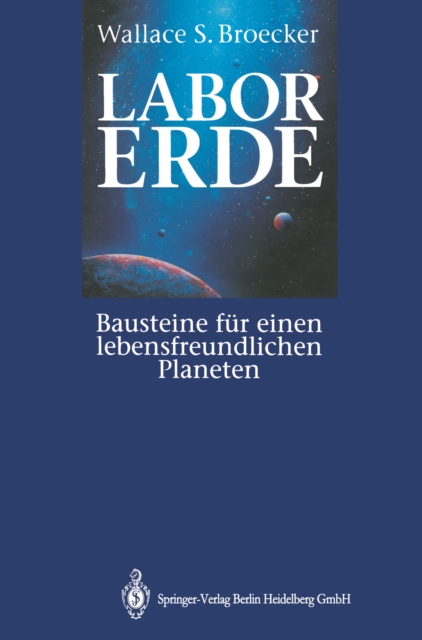
Labor Erde ist eine brillante Einführung in das Studium des Planeten Erde, von den kosmischen Ursprüngen ihrer Elemente bis hin zu der Beeinflussung der Atmosphäre durch die Menschheit und den klimatischen Änderungen, die uns bevorstehen.
Dieser Buchtitel ist Teil des Digitalisierungsprojekts Springer Book Archives mit Publikationen, die seit den Anfängen des Verlags von 1842 erschienen sind.
Results of selected projects on Exploration R & D, one of the major research areas implemented by the Commission of European Communities in Brussels on the subject of mineral raw materials, are presented on an international basis.
Dieser Buchtitel ist Teil des Digitalisierungsprojekts Springer Book Archives mit Publikationen, die seit den Anfängen des Verlags von 1842 erschienen sind.
The articles in this volume were selected from a series of reports delivered in the So- viet Union at Yaroslavl during the International Seminar "e;Super-deep drilling and deep geophysical research"e;, which was organized and held in August 1988 by the Ministry of Geology of the USSR, jointly with the Inter-Union Commission on the Lithosphere.
This book reports on the findings of, and swnmarizes the conclusions from, the Port Hacking Estuary Project, a model-guided, multidisciplinary study of an estuarine ecosystem.
Perspectives on Biogeochemistry is an account of the origin of forces and matter at the dawn of time, and the way they evolved to planet Earth of today.
This volume contains a selection of papers presented to the Fourth International Symposium on Environmental Biogeochemistry (ISEB), and a conference on Biogeochemistry in Relation to Mining Industry and Environmental Pollution (Leaching Conferenc~, held in Canberra, Aust- ralia on August 26-31 and September 3-4, 1979, respectively.
Perhaps the most striking impression gained by a geologist during twenty years of field work with deformed rocks in many parts of the world is that the minor structures in these rocks are surprisingly uniform in their properties and restricted in their variety.
Dieser Buchtitel ist Teil des Digitalisierungsprojekts Springer Book Archives mit Publikationen, die seit den Anfängen des Verlags von 1842 erschienen sind.
For future studies of oceanic circulation it is necessary to develop the tritium measurement via 3He ingrowth into a routine procedure with a high capacity for efficient use.
Dieser Buchtitel ist Teil des Digitalisierungsprojekts Springer Book Archives mit Publikationen, die seit den Anfängen des Verlags von 1842 erschienen sind.
Considerable progress has been made in our understanding of the physicochemical evolution of natural rocks through systematic analysis of the compositional properties and phase relations of their mineral assemblages.
This series of monographs represents continuation on an international basis of the previous series MINERALOGIE UNO PETROGRAPHIE IN EINZELOARSTELLUNGEN, published by Springer-Verlag.
This book covers the various ways in which rivers discharge water and sediment load, which is characteristic of the current situation caused by both human activity and the natural riverine environment.
Astromineralogy deals with the science of gathering mineralogical information from the astronomical spectroscopy of asteroids, comets and dust in the circumstellar environments in general.
To understand hydrochemistry and to analyze natural as well as man-made impacts on aquatic systems, hydrogeochemical models have been used since the 1960's and more frequently in recent times.
Astromineralogy deals with the science of gathering mineralogical information from the astronomical spectroscopy of asteroids, comets and dust in the circumstellar environments in general.
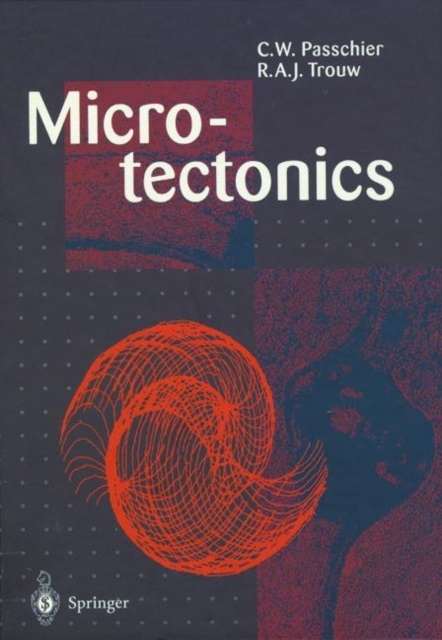
Microtectonics deals with the interpretation of microstructures, small-scale deformation structures in rocks that yield abundant information on the history and type of deformation and metamorphism.
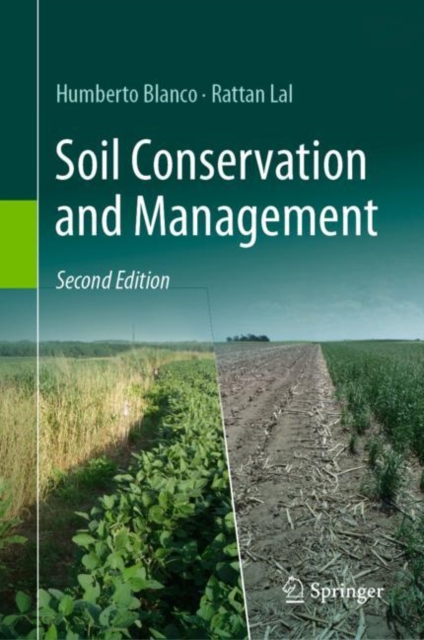
This updated and expanded second edition textbook, describes all main aspects of soil management, to address the serious problems of soil erosion and the attendant environmental pollution.
This book highlights a detailed high-resolution palynofacies origin and depositional environment, source rock potential, hydrocarbon migration pathway and structural hydrocarbon entrapment mechanisms of the outcrop lithostratigraphic units of the inland Anambra basin.