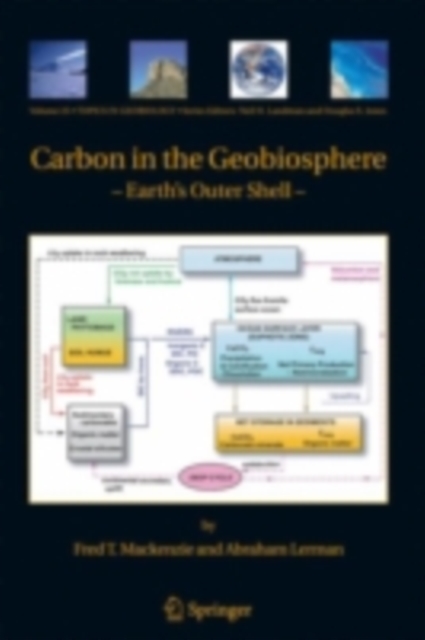
This book critically examines the available literature on oceanic acidification, including a historical review of pH and atmospheric CO2 levels over the millennia; natural and anthropogenic sources of CO2 to the atmosphere and sea surface; chemical, physical, and biological mode of action; biological effects of acidification to marine plants and an
Accessible to advanced undergraduate students, Physical Oceanography: A Mathematical Introduction with MATLAB demonstrates how to use the basic tenets of multivariate calculus to derive the governing equations of fluid dynamics in a rotating frame.
This book presents a collection of selected and peer reviewed papers of 10th International Conference on Coastal and Ocean Engineering, which is held during April 14-16, 2023.
Rip Currents: Beach Safety, Physical Oceanography, and Wave Modeling is the culmination of research from over 100 coastal scientists, engineers, forecast meteorologists, lifeguard chiefs, and other practitioners from around the world who participated in the 1st International Rip Current Symposium.
A practical resource, this book covers sampling and storage, description of analytical methodology, and guidelines and procedures for quality assurance.
Until now, there has not been any work that systematically presents the subject of acoustic fish reconnaissance, details all major aspects of applying acoustic equipment in commercial fish reconnaissance, and offers sufficient analysis of the effectiveness of fish-finding techniques.
The past fifteen thousand years - the entire span of human civilization - have witnessed dramatic sea level changes, which began with rapid global warming at the end of the Ice Age, when sea levels were more than 700 feet below modern levels.
This is the beautifully told tale of Norton's growing love of the sea, from family holidays in Whitley Bay as a boy, to his first over zealous attempts at diving.
Estuaries are complex and fascinating natural environments, where constantly changing water depths generate rapidly reversing currents and transport vast quantities of salt, heat, and sediment on a daily basis.
In 2005 the CoastGIS symposium and exhibition was once again held in Aberdeen, Scotland, in the UK, the second time that we have had the privilege host this international event in the city of Aberdeen.
In this wide-ranging and comprehensive review of the historical development and current status of ocean circulation models, the analysis extends from simple analytical approaches to the latest high-resolution numerical models with data assimilation.
Till the very end of the twentieth century tsunami waves (or 'waves in a harbour', translated from Japanese) were considered an extremely rare and exotic natural p- nomenon, originating in the ocean and unexpectedly falling upon the seaside as gigantic waves.
Deep-water coral reefs are found along large sections of the outer continental shelves and slopes of Europe, from North Cape to the Gulf of Cadiz, and because they also occur along the Atlantic seaboard of USA, the Gulf of Mexico, off Brazil, in the Mediterranean, and off New Zealand, they are currently being targeted by international groups of marine scientists.
Although numerous books have been written on both monitoring and modelling of coastal oceans, there is a practical need for an introductory multi-disciplinary volume to non-specialists in this field.
Extreme, freak or rogue waves are produced by a number of physical mechanisms that focus the water-wave energy into a small area, due to wave instability, chaotic behaviour, dispersion (frequency modulation), refraction (presence of variable currents or bottom topography), soliton interactions, etc.
Microbial activities influence water-rock interaction processes and chemical transport between the major geochemical reservoirs and the formation/transformation of minerals and rocks, whereas geological processes and geochemical controls influence the microbial ecology in extreme environments.
The Ocean-Atmosphere-Cryosphere s- tem of the Arctic is of unique importance to the World, its climate and its peoples and is changing rapidly; it is no accident that the Arctic Climate Impact Assessment (ACIA) was the first comprehensive regional assessment of climate-impact to be conducted.
This work brings together previously unpublished notes contributed by participants of the IUTAM Symposium on Hamiltonian Dynamics, Vortex Structures, Turbulence (Moscow, 25-30 August 2006).
Submarine mass movements and their consequences are of major concern for coastal communities and infrastructures but also for the exploitation and the development of seafloor resources.
Human experience has shown how great cities, nations, and empires have either collapsed or retired from their predominant stature when natural resources are depleted to an extent that exceeds the ability of the environment to restore or replenish their supply.
Until the 1980s, a tacit agreement among many physical oceanographers was that nothing deserving attention could be found in the upper few meters of the ocean.
Ever-increasing interest in oceanography and marine biology and their relevance to global environmental issues create a demand for authoritative reviews summarizing the results of recent research.