Constructed Wetlands for Water Quality Improvement is a virtual encyclopedia of state-of-the-art information on the use of constructed wetlands for improving water quality.
Groundwater Geochemistry: Fundamentals and Applications to Contamination examines the integral role geochemistry play s in groundwater monitoring and remediation programs, and presents it at a level understandable to a wide audience.
Both practical and theoretical, this book provides the basic principles of soil chemistry, hydrology, wetland ecology, microbiology, vegetation and wildlife as a sound introduction to this innovative technology to treat toxic wastewaters and sludges.
This new book focuses on sampling and analysis, radon and radium in water supply wells, predictive models, geologic and hydrogeologic controls that influence radon occurrence, monitoring radon and other radioactivity from geologic sources and mining impacts on occurrence of radioactivity in ground water.
This outstanding reference book deals with effects of various agricultural practices on ground water quality and usage; and ground water management strategies for protection of ground water affected by agriculture.
This book identifies the most important "e;rules"e; governing transport, partitioning, retention and transformation of leaked motor fuels in the underground environment.
Manual of Small Public Water Supply Systems presents current concepts and practices affecting water treatment, financing, management, community involvement in water supply, institutional support, and development of human resources for improved operations and management of water supplies.
Oil Spill Dispersants: Mechanisms of Action and Laboratory Tests provides a comprehensive summary of current information available regarding the general formulation of commercial dispersants and their function to lower oil-water interfacial tension.
Field Studies of Radon in Rocks, Soils, and Water focuses on the principal sources of indoor radon and detecting radon through geochemical and hydrological studies of ground water.
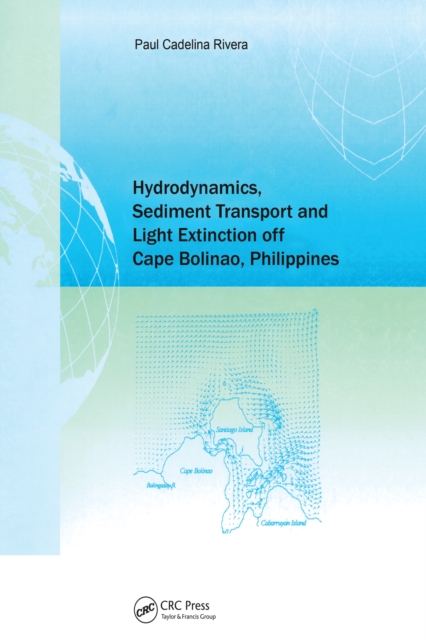
Observational and numerical modelling studies of the hydrodynamics, sediment transport, and light extinction were undertaken in the marine environment around Cape Bolinao in the Lingayen Gulf (NW Philippines).
This book is an outcome of the symposium on agricultural water management in Netherlands and discusses the methods that leads to cost effective but environmentally acceptable techniques.
This is the fifth and last volume representing the proceedings of the International Conference on Water Resources Management in Arid Regions held March 23rd-27th 2002 in Kuwait.
Exposure to Contaminants in Drinking Water: Estimating Uptake through the Skin and by Inhalation examines the current state of science in this field by identifying and reviewing the available information resources; evaluating various models and approaches; and demonstrating the feasibility of developing estimates of the distribution of absorbed doses of contaminants in drinking water through contact with the skin and by inhalation.
GeoMeasurements by Pulsing TDR Cables and Probes examines Time Domain Reflectometry (TDR) research and provides information on its use as a robust, reliable, and economical production tool.
This guidebook, now thoroughly updated and revised in its second edition, gives comprehensive advice on the designing and setting up of monitoring programmes for the purpose of providing valid data for water quality assessments in all types of freshwater bodies.
This is a collection of articles from the Asian conference UNSAT-ASIA 2000, covering topics such as: historical developments; numerical modelling; suction measurement techniques; permeability and flow; mass transport; and engineering applications.
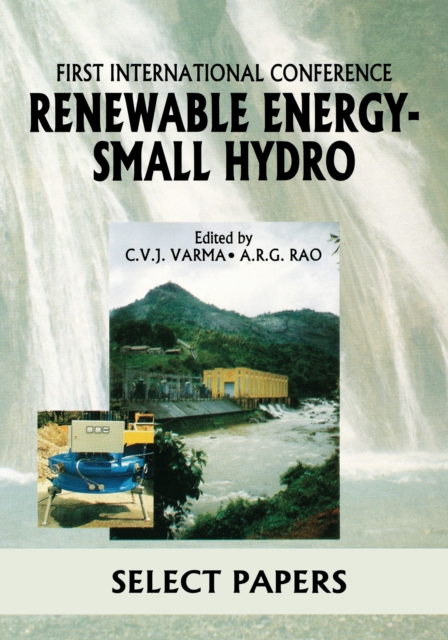
This is a collection of conference papers on small hydro renewable energy, covering such topics as: resource assessment and planning; design and construction; and plant and equipment.
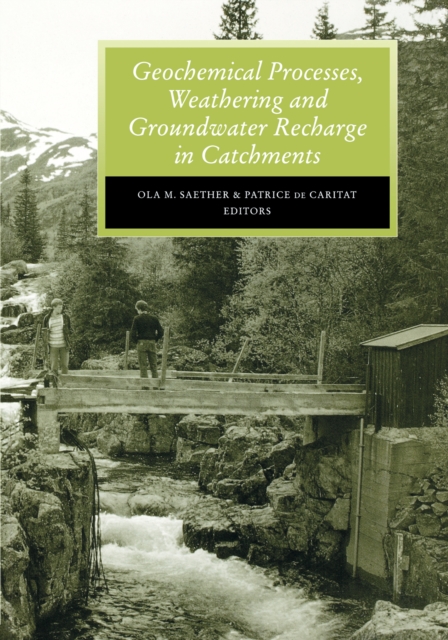
Geochemical Processes, Weathering and Groundwater Recharge in Catchments is a specialist book concerned with the natural processes taking place where water interacts with minerals and organic matter at the earth's surface, in soils or within aquifers.
The Handbook of Irrigation System Selection for Semi-Arid Regions compares the various types of available irrigation systems for different regions and conditions, and explains how to analyze field data to determine the suitability of the land for surface, sprinkle, or drip irrigation systems.
The Handbook of Irrigation System Selection for Semi-Arid Regions compares the various types of available irrigation systems for different regions and conditions, and explains how to analyze field data to determine the suitability of the land for surface, sprinkle, or drip irrigation systems.
This informative volume provides comprehensive knowledge on various aspects of wastewater resource management from the point of process sustainability and resource recovery.
This informative volume provides comprehensive knowledge on various aspects of wastewater resource management from the point of process sustainability and resource recovery.
The Hydraulic State explores the hydraulic engineering technology underlying water system constructions of many of the ancient World Heritage sites in South America, the Middle East and Asia as used in their urban and agricultural water supply systems.
The Hydraulic State explores the hydraulic engineering technology underlying water system constructions of many of the ancient World Heritage sites in South America, the Middle East and Asia as used in their urban and agricultural water supply systems.
This volume provides a broad perspective of the water scenario in India by examining the various developments in the sector and the emerging alternative paradigms.
Urban and Industrial Water Conservation Methods provides comprehensive and practical information regarding water use for various different sectors and describes the most suitable conservation devices and techniques to reduce water consumption in urban environments.
This volume provides a broad perspective of the water scenario in India by examining the various developments in the sector and the emerging alternative paradigms.
Bringing together a wealth of knowledge, Environmental Management Handbook, Second Edition, gives a comprehensive overview of environmental problems, their sources, their assessment, and their solutions.