This textbook provides an excellent resource for engineering and science students to develop basic, intermediate and advanced level skills in hydraulics, hydrology and environmental engineering.
The conservation of marine benthic biodiversity is a recognised goal of a number of national and international programs such as the United Nations Convention on Biodiversity (CBD).
The subject of thermo-hydro-mechanical coupled processes in fractured rock masses has close relevance to energy-related deep earth engineering activities, such as enhanced geothermal systems, geological disposal of radioactive waste, sequestration of CO2, long-term disposal of waste water and recovery of hydrocarbons from unconventional reservoirs.
Groundwater Science is a timely, current, and comprehensive presentation of groundwater hydrology that integrates chemistry, physics, geology, and calculus.
This book is a ready reckoner of recent information regarding the impact of leachate landfills, leachate treatment, and heavy metals on a single platform.
This concise, readable introduction to limnology (the science of investigating the structure and function of inland waters), places the subject in the context of modern ecology.
The subject of thermo-hydro-mechanical coupled processes in fractured rock masses has close relevance to energy-related deep earth engineering activities, such as enhanced geothermal systems, geological disposal of radioactive waste, sequestration of CO2, long-term disposal of waste water and recovery of hydrocarbons from unconventional reservoirs.
Data Analysis Methods in Physical Oceanography is a practical referenceguide to established and modern data analysis techniques in earth and oceansciences.
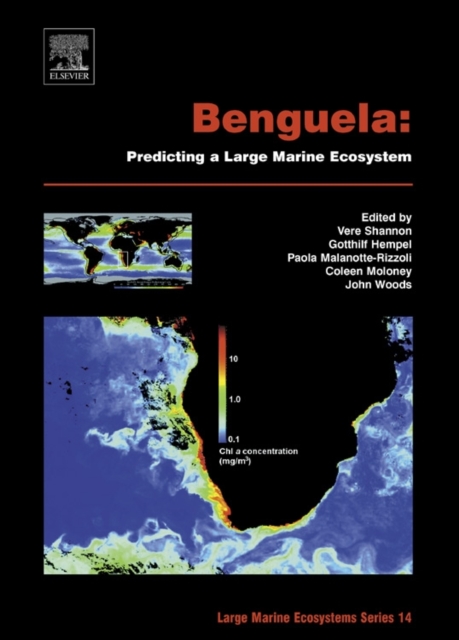
This is a book which examines much of what we know and also what we don't know about the Benguela Current Large Marine Ecosystem and its inherent variability.
The book presents the most relevant research of the participants of the VII International Conference of Young Scientists "e;Complex Investigation of the World Ocean"e; (CIWO-2023).
The second volume of this comprehensive global perspective on Integrated Drought Management is focused on drought modeling, meteorological prediction, and the use of remote sensing in assessing, analyzing, and monitoring drought.
The first volume of this comprehensive global perspective on Integrated Drought Management is focused on understanding drought, causes, and the assessment of drought impacts.
The first volume of this comprehensive global perspective on Integrated Drought Management is focused on understanding drought, causes, and the assessment of drought impacts.
This book seeks to showcase the ongoing challenges of water resource and its management through innovative and cutting-edge approaches (flooding and droughts and their respective impacts; spatial and urban planning; early warning systems; estimation of losses; water resource in the age of global climate change; risk communication; meteorology; integrated analysis; risk mitigation; infrastructures; nature-based management; watershed management; transport; legal assessment; vulnerability analysis; public participation; or case studies).
This book provides simultaneously, a cross-sectoral, multi-scale assessment of climate change issues in Morocco and proposes levers of action and innovative practices to be used to strengthen the resilience and adaptation strategies.
The International Association for the Properties of Water and Steam (IAPWS) has produced this book in order to provide an accessible, up-to-date overview of important aspects of the physical chemistry of aqueous systems at high temperatures and pressures.
Understanding and protecting our environment is a key component of environmental development, yet access to a wide range of high-quality information is currently based on very limited data due to lack of the exchange of data between source and recipient.
This advanced research-oriented volume on sustainable water management covers the latest advances in water purification, treatment, and resource management.
Even though frequent disaster losses occur in rural and agricultural areas, a substantial number of the prevailing disaster research has focused on urban areas, often failing to notice rural populations, communities, and rural development as a whole.
The contents of the book are assembled from selected papers presented during the International Conference on Isotopes in Environmental Studies - AQUATIC FORUM 2004 convened in Monaco from 25 to 29 October 2004, which was the most important gathering of the year of isotope environmental scientists.
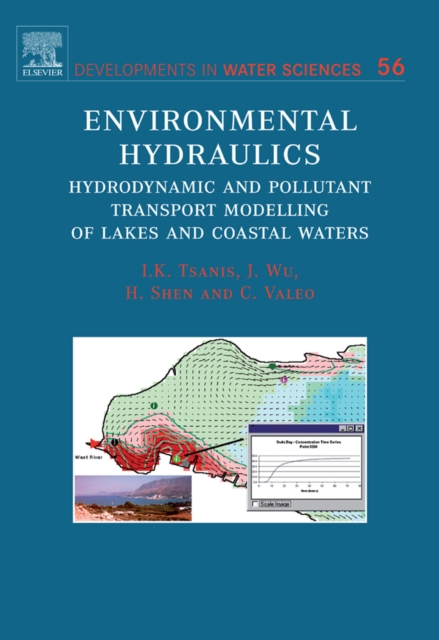
This book offers a practical guidance for environmental engineers and scientists charged with assessing the cause-and-effect of pollutants in receiving water systems.
This book provides information on the causes, consequences, and possible solutions to modern environmental problems associated with ocean pollution with a particular focus on the Back Sea.
This volume advances the scientific understanding, development, and application of geospatial technologies related to groundwater resource management, mapping, monitoring, and modelling using up-to-date remote sensing and GIS techniques.
Technological improvements have greatly increased the ability of marine scientists to collect and analyze data over large spatial scales, and the resultant insights attainable from interpreting those data vastly increase understanding of poplation dynamics, evolution and biogeography.
AWARDS:2006 Outstanding Academic Title, by CHOICEThe 2005 Award for Excellence in Professional and Scholarly Publishing by the Association of American Publishers (AAP) Best Reference 2005, by the Library JournalRivers of North America is an important reference for scientists, ecologists, and students studying rivers and their ecosystems.
This book offers a complete overview of the measurement of precipitation from space, which has made considerable advancements during the last two decades.
This book presents solutions to address water security in rapidly urbanizing cities, and explores the new paradigms of water security in changing contexts.
This book systematically and comprehensively introduces concepts, theories, principles, and applications of Thermal Infrared (TIR) imaging spectral techniques and TIR remote sensing.
This book presents the results of basic and applied studies on the solution of burning issues within the analysis of anomalous changes in marine environment under the influence of climatic changes and economic activities in the Azov-Black Sea basins.
Fully Updated Hydrology Principles, Methods, and ApplicationsThoroughly revised for the first time in 50 years, this industry-standard resource features chapter contributions from a who s who of international hydrology experts.