Presented with the Award of the Senate of the University of Bucharest for the most prestigious book in the field of Life and Earth Sciences, 2022-2023.
A participatory and integrated procedure for the planning of water resources is presented and illustrated through its application to a real-world case study: the planning of a trans-boundary, multi-purpose, regulated lake.
Covering the more recent advances in Modelling, Planning, Management and Negotiations for Integrated Water Resource Management, this text brings together knowledge and concepts from Hydrology, System Analysis, Control Theory, Conflict Resolution, and Decision and Negotiation Theory.
Drawing on a combination of modern occurrences and likely ancient counterparts, this atlas is a treatise of mat-related sedimentary features that one may expect to see in ancient terrigenous clastic sedimentary successions.
This volume contains the proceedings from the COSPAR Colloquium on "e;Space Remote Sensing of Subtropical Oceans"e; which took place between 12 and 16 September, 1996, at the Institute of Oceanography of the National Taiwan University.
The book provides a critical evaluation of South Africa's freshwater resources to illustrate the way in which its freshwater resources, water access, services and infrastructure have continued to decline over the past three decades.
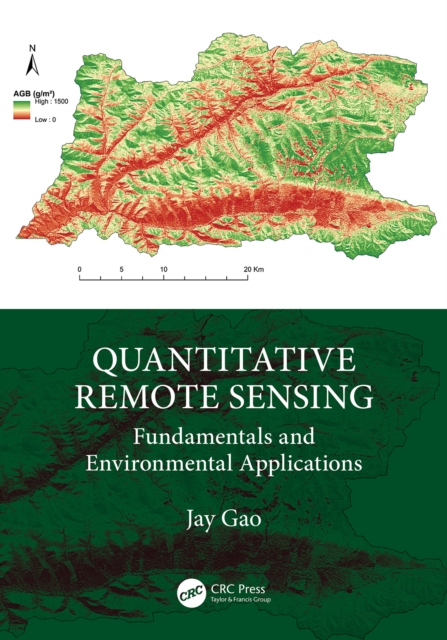
This book provides comprehensive and in-depth explanations of all topics related to quantitative remote sensing and its applications in terrestrial, biospheric, hydrospheric, and atmospheric studies.
The book explains the basic concepts of river water quality index, river environments, shifting of river courses, dams and barrages - their merits and demerits, mutual interdependence of river and society etc.
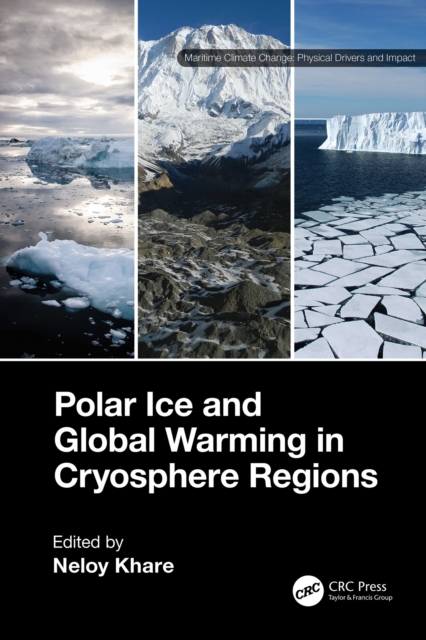
Polar Ice and Global Warming in Cryosphere Regions is based on recent and past climate variabilities data gathered through satellites and spatial-temporal analysis to explain the role of global warming on cryosphere regions such as high-latitude Himalaya, Arctic and Antarctic regions, and the surrounding Southern Ocean and Arctic Ocean.
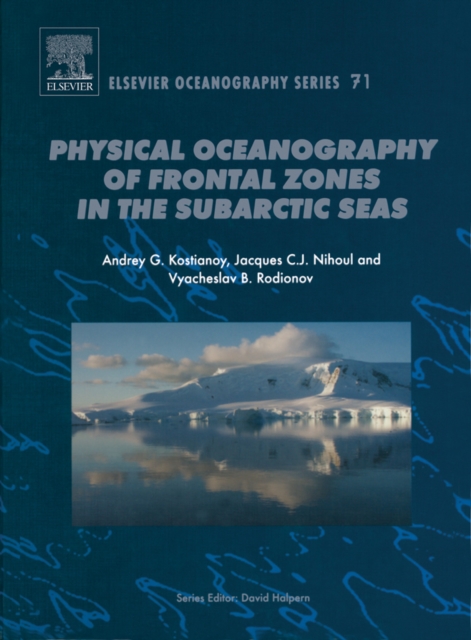
This title presents the systematization and description of accumulated knowledge on oceanic fronts of the Norwegian, Greenland, Barents and Bering Seas.
The Global Ocean Observing System (GOOS) is an international programme for a permanent global framework of observations, modelling and analysis of ocean variables that are needed to support operational services around the world.
GOOS is an international programme for a permanent global framework of observations, modelling and analysis of ocean variables which are needed to support operational services around the world.
Against a background of extensive multi-disciplinary oceanographic investigations over a number of years, together with the long-term establishment of a Society and Institute, extensive information is available from studies undertaken in the estuarine and coastal waters of the Basque Country.
Muddy coasts are land-sea transitional environments commonly found along low-energy shorelines which either receive large annual supplies of muddy sediments, or where unconsolidated muddy deposits are being eroded by wave action.
This book outlines a framework for analysis of marine resource management incorporating ecological and economic considerations and technological feasibility.
This is the first book to provide assessments of multidecadal changes in resources and environments of the Large Marine Ecosystems (LMEs) of the North Atlantic.
This beautifully illustrated text book, with state-of-the-art illustrations, is useful not only for an introduction to the subject, but also for the application of marine microfossils in paleoceanographic, paleoenvironmental and biostratigraphic analyses.
Hurricanes are one of the most adverse aspects of the ocean environment, with the potential to cause a disastrous event for marine systems in the ocean.
This book is the first collection of state-of-the-art research projects analyzing water conflict and cooperation with an explicitly theoretical point of view.
The global human population will reach nine billion by 2050, and seafood is projected to be the primary food source to sustain such a large population.
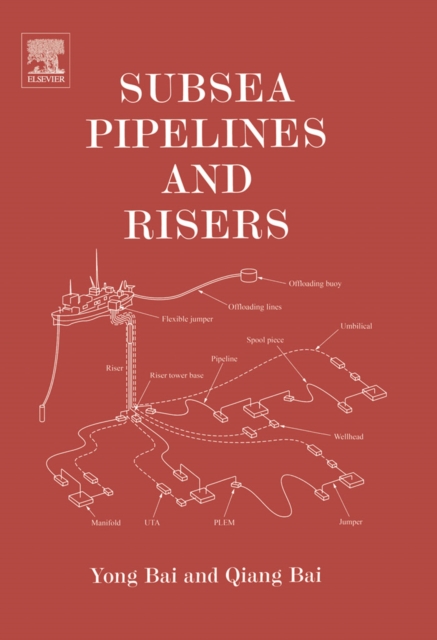
* Updated edition of a best-selling title * Author brings 25 years experience to the work * Addresses the key issues of economy and environment Marine pipelines for the transportation of oil and gas have become a safe and reliable way to exploit the valuable resources below the world's seas and oceans.
This new edition of a classic text has been significantly expanded to cover the most current issues and international standards are examined in-depth, with detailed coverage of WHO, European, UK and US standards, organisations and practice.
While ocean waves are the most visible example of oceanic mixing processes, this macroscale mixing process represents but one end of the spectrum of mixing processes operating in the ocean.
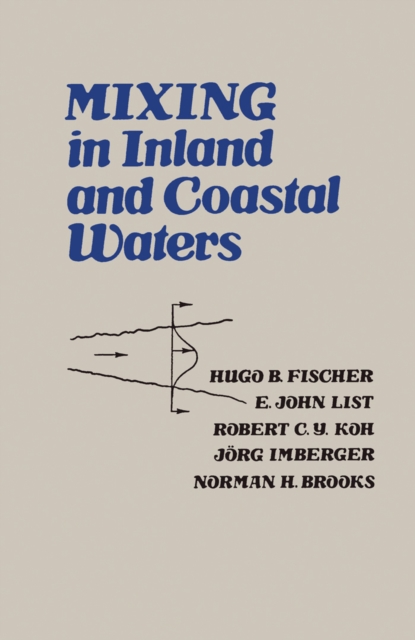
This book is an outgrowth of research contributions and teaching experiences by all the authors in applying modern fluid mechanics to problems of pollutant transport and mixing in the water environment.