This is a broad-based review of the environmental, oceanographic, engineering, and management aspects of coastal lagoons summarized in a convenient single volume.
This timely study is concerned with the current record of sea-level changes during the past 10,000 years; their rates, and our ability to estimate these changes accurately.
This volume contains the proceedings of the 19th International Liege Colloquium on Ocean Hydrodynamics, the programme of which focused on the relationships between small-scale mixing and large-scale features, transports and processes.
Methodological procedures of the theory of estimation of statistical parameters of time series and their application to hydrology and water engineering, particularly the sphere of reservoir-controlled runoffs, are dealt with in this volume.
Reliable estimates of streamflow characteristics are needed for planning, design, and operation of works for providing water supplies and for protection from flooding.
This compilation on sustainability issues in civil engineering comprises contributions from international experts who have been working in the area of sustainability in civil engineering.
This book describes recent advances in the morphodynamics of mixed sand and gravel Mediterranean coasts, and provides updates and new methods for their study and management.
This book presents a set of approaches for the real-time monitoring and control of drinking-water networks based on advanced information and communication technologies.
Despite advances in the long-range electrostatic double-layer force, which depends strongly on ionic strength in water by using theoretical models such as DLVO (Derjaguin, Landau, Verwey, and Overbeek), the structure of confined water in air still remains widely unknown and has led to a variety of unexplained phenomena.
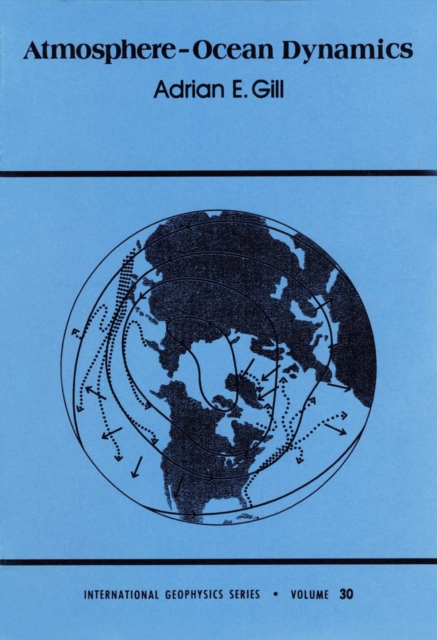
A systematic, unifying approach to the dynamics of the ocean and atmosphere is given in this book, with emphasis on the larger-scale motions (from a few kilometers to global scale).
This book provides contributions from leading experts on the integration of novel sensing technologies to yield unprecedented observations of coupled biological, chemical, and physical processes in the ocean from the macro to micro scale.
This book uses the Lagrangian approach, especially useful and convenient for studying large-scale transport and mixing in the ocean, to present a detailed view of ocean circulation.
Major advancement in the U-Th measurement techniques since the 1990's have resulted in new opportunities for the use of these nuclides to probe into aquatic processes in greater detail.
Many scientists either working on the El Nino/Southern Oscillation (ENSO) problem or its many applications have not been trained in both the equatorial ocean and atmospheric dynamics necessary to understand it.
Although it is generally accepted that the Arctic Ocean is a very sensitive and important region for changes in the global climate, this region is the last major physiographic province of the earth whose short-and long-term geological history is much less known in comparison to other ocean regions.
The value of implementing nature-based solutions (NbS) for water treatment in urban environments is increasingly recognized due to the multiple ecosystem services and societal benefits they provide.
The value of implementing nature-based solutions (NbS) for water treatment in urban environments is increasingly recognized due to the multiple ecosystem services and societal benefits they provide.