The Routledge Handbook of Field Research presents a comprehensive, go-to resource for staff and students in preparing for and thinking about the doing of field research, including both individual fieldwork and group field classes.
A THOROUGH INTRODUCTION TO ENTROPY THEORY AND ITS APPLICATIONS IN HYDROLOGIC SCIENCE AND ENGINEERINGThis comprehensive volume addresses basic concepts of entropy theory from a hydrologic engineering perspective.
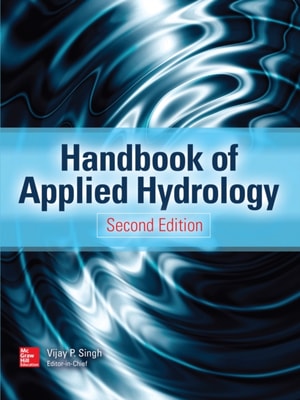
Fully Updated Hydrology Principles, Methods, and ApplicationsThoroughly revised for the first time in 50 years, this industry-standard resource features chapter contributions from a who s who of international hydrology experts.
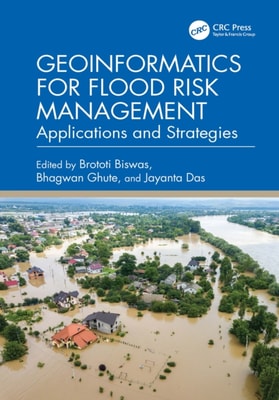
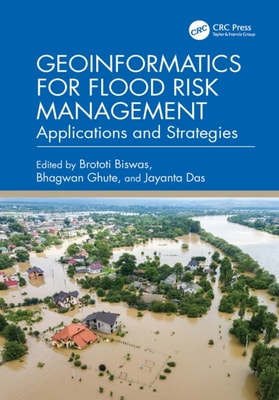
This book presents the select proceedings of the 28th International Conference on Hydraulics, Water Resources, River and Coastal Engineering (HYDRO 2023) focusing on broad spectrum of emerging opportunities and challenges in the field of flood forecasting and hydraulic structures.
This book uses five decades of map data, air photos, and medium to high-resolution satellite imagery to track the expansions of aquaculture and the loss of both estuarine and mangrove land covers in Ecuador.
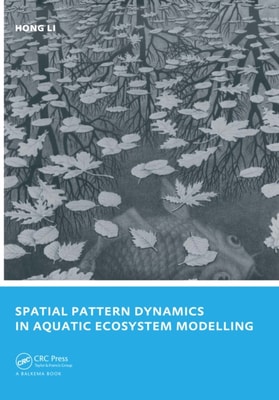
In this work, several modelling approaches are explored to represent spatial pattern dynamics of aquatic populations in aquatic ecosystems by the combination of models, knowledge and data in different scales.
This newly published book is an organized collection of papers dealing with changes in the quality of water as it moves through the world's hydrologic cycle-from the sea, lakes, and rivers-to its hydrosphere and then back to earth as precipitation, where the water again percolates through the soil or falls on the ocean, rivers, or lakes.
The Science of AI in Water Management offers a comprehensive exploration of how artificial intelligence is transforming the management of one of Earth's most vital resources.
This newly published book is an organized collection of papers dealing with changes in the quality of water as it moves through the world's hydrologic cycle-from the sea, lakes, and rivers-to its hydrosphere and then back to earth as precipitation, where the water again percolates through the soil or falls on the ocean, rivers, or lakes.
In this work, several modelling approaches are explored to represent spatial pattern dynamics of aquatic populations in aquatic ecosystems by the combination of models, knowledge and data in different scales.
The Science of AI in Water Management offers a comprehensive exploration of how artificial intelligence is transforming the management of one of Earth's most vital resources.
Integration of Advanced Systems in Environmental Science and Water Desalination explores cutting-edge technologies revolutionizing environmental monitoring and desalination processes.
Integration of Advanced Systems in Environmental Science and Water Desalination explores cutting-edge technologies revolutionizing environmental monitoring and desalination processes.
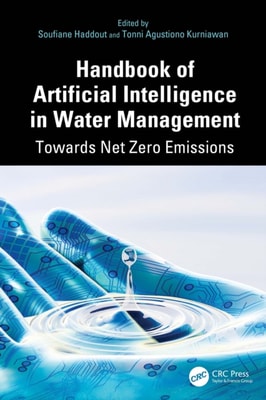
The Handbook of Artificial Intelligence in Water Management explores the intersection of artificial intelligence (AI) technologies and water management strategies aimed at achieving net zero emissions.
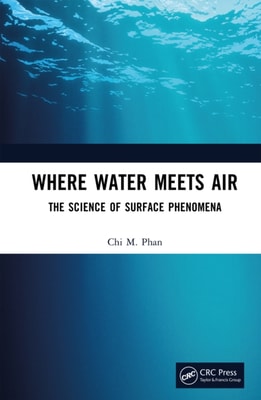
Where Water Meets Air: The Science of Surface Phenomena presents the current understanding of the water surface layer, integrating both experimental insights and theoretical developments.
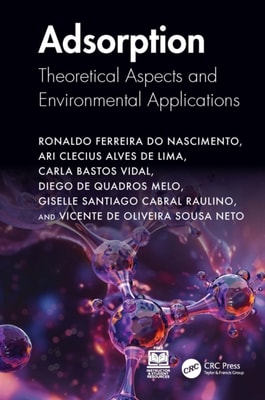
Adsorption: Theoretical Aspects and Environmental Applications offers an in-depth yet accessible exploration of adsorption processes, from fundamental theories to practical applications in environmental management and pollution control.
Where Water Meets Air: The Science of Surface Phenomena presents the current understanding of the water surface layer, integrating both experimental insights and theoretical developments.
Adsorption: Theoretical Aspects and Environmental Applications offers an in-depth yet accessible exploration of adsorption processes, from fundamental theories to practical applications in environmental management and pollution control.
The Handbook of Artificial Intelligence in Water Management explores the intersection of artificial intelligence (AI) technologies and water management strategies aimed at achieving net zero emissions.
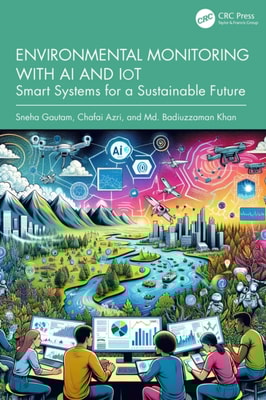
Environmental Monitoring with AI and IoT: Smart Systems for a Sustainable Future aims to provide a comprehensive understanding of how modern technologies like Artificial Intelligence (AI) and the Internet of Things (IoT) revolutionize environmental monitoring.
Environmental Monitoring with AI and IoT: Smart Systems for a Sustainable Future aims to provide a comprehensive understanding of how modern technologies like Artificial Intelligence (AI) and the Internet of Things (IoT) revolutionize environmental monitoring.
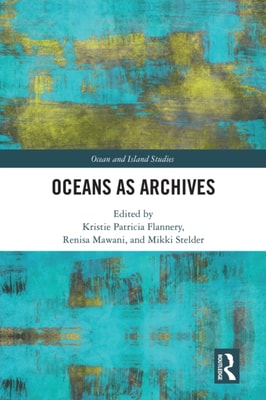
In Oceans as Archives, the ocean forms a generative site to develop practices of reading, writing, thinking, and imagining a long era of climate catastrophe.
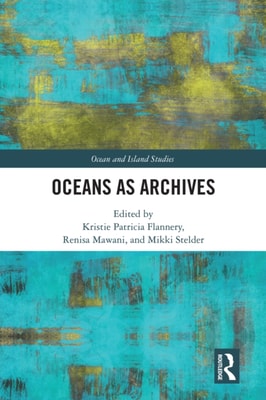
In Oceans as Archives, the ocean forms a generative site to develop practices of reading, writing, thinking, and imagining a long era of climate catastrophe.