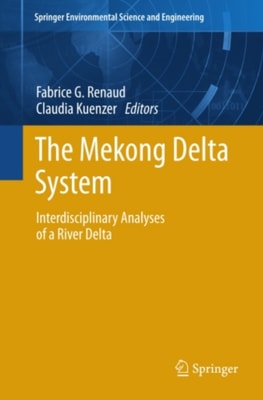
This book about the Mekong Delta presents a unique collection of state-of-the-art contributions by international experts from different scientific disciplines about the characteristics and pressing water-related challenges of the Mekong Delta in Vietnam.
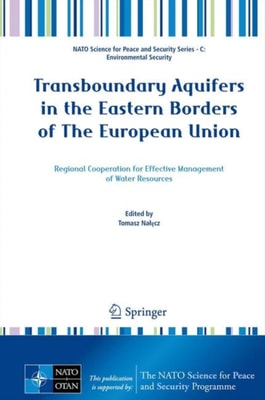
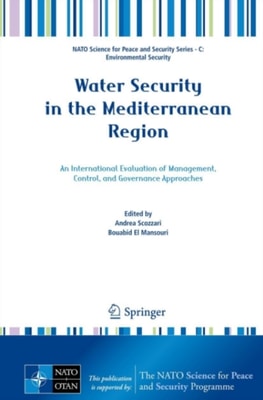
This book focuses on sustainable use and protection of transboundary aquifers located along the eastern border of European Union starting from the Baltic Sea and end in the Black Sea.
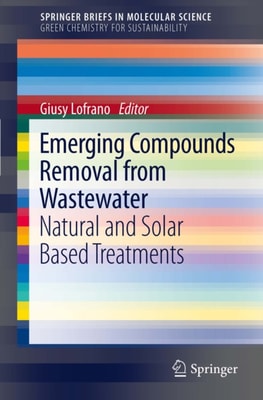
In the last years the release of emerging pollutants such as Endocrine Disruptors (EDCs), Pharmaceuticals and Personal Care Products (PPCPs) into the environment has raised great concern.
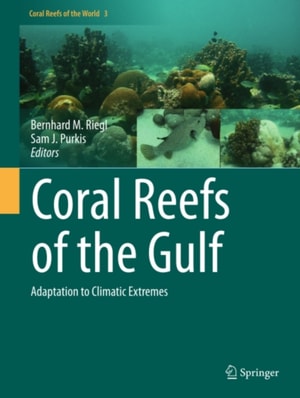
Coral Reefs of the Gulf: Adaptation to Climatic Extremes is a complete review and reference for scientists, engineers and students concerned with the geology, biology or engineering aspects of coral reefs in the Middle East.
The book details the innovative TERM (The Enormous Regional Model) approach to regional and national economic modeling, and explains the conversion from a comparative-static to a dynamic model.
This book covers the distribution, hydrochemistry and geophysics of the naturally occurring stable isotopes namely: hydrogen, oxygen and radioactive tritium, carbon and other cosmogenic and radiogenic isotopes of the uranium-thorium series, in the oceans and in atmosphere, the earth's surface and ground water.
Watersheds, supplying crucial ecosystem services to humans, seem to be a logical territorial unit to integrate societal benefits and environmental needs in order to evaluate the sustainability of natural resource use patterns.
This book addresses questions of relevance to governments and industry in many countries around the world, in particular concerning the link between contaminated-land-management programs and the protection of drinking water resources and the potential effects of climate changes on the availability of these same resources.
The role of water in our communities, from local to regional and right up to global levels, poses a series of key questions about climate change, about the anthropogenic impact on the environment, and about all the interconnected actions and events that affect the availability and quality of the resource.
As a result of the European Commission's concern for the status of continental waters, and as a clear reflection of the notion of water as heritage to be conserved, in the year 2000 the Water Framework Directive (2000/60/CE) was enacted, its goal being to establish a framework to protect water and the different aquatic ecosystems by requiring the Member States to achieve a good ecological status in all their waters by 2015.
In order to analyse the challenges posed by the quest for sustainability, Green Technologies for Wastewater treatment: Energy Recovery and Emerging Compounds Removal evaluates water management together with energy use.
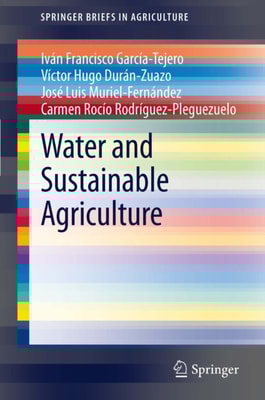
Irrigated agriculture, a vital component of general agriculture, supplies fruits, vegetables, and cereals consumed by humans and grains fed to animals.
Reef fish spawning aggregations, ranging from small groups to many tens of thousands of individuals, are spectacular but poorly known natural phenomena whereby fish assemble at specific times and locations to spawn.
This book provides the reader with the comprehensive view necessary to understand and critically evaluate the design, implementation, and monitoring of phytoremediation at sites characterized by contaminated groundwater.
Over time, the increased use of fresh water for agriculture and industry together with contamination from discharges of pollutants, mean that ever more areas of the planet are becoming water-stressed.
Co-published with UNESCOA product of the UNESCO-IHP project on Water and Cultural Diversity, this book represents an effort to examine the complex role water plays as a force in sustaining, maintaining, and threatening the viability of culturally diverse peoples.
The book addresses the development of the basic knowledge of the subsurface solute transfer with a particular emphasis on field data collection and analysis coupled with modeling (analytical and numerical) tool application.
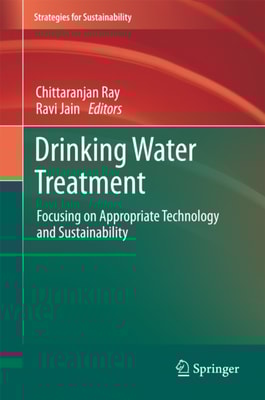
Sustainable technologies for water supply are urgently needed if water has to be supplied to billions of less fortunate people with inadequate access to water.
There are incentive indications that the growth of human population, the increasing use and abuse of natural resources combined with climate changes (probably due to anthropic pollution, to some extent) exert a considerable stress on closed (or semi-enclosed) seas and lakes.
Water - and its governance - is becoming a global concern partly because it is turning into a goods in short supply, with devastating effects on literally billions of people, but also because it is the "e;carrier"e; of global warming; whether through irregular weather patterns or through flooding, water is how global warming will be 'felt'.
Over the past decade the significant advances in real-time ocean observing systems, ocean modelling, ocean data assimilation and super-computing has seen the development and implementation of operational ocean forecast systems of the global ocean.
In four chapters and an introduction, this book systematically helps readers understand the development of the Geographical Sciences both in China and in the world during the past 30 years.
This book offers a ready solution for those who wish to learn more about this fascinating part of our water history and makes accessible to the wider world the traditional knowledge gained from building and maintaining qanats for more than 2,500 years.
This book identifies the most effective water policy tools and innovations, and the circumstances that foster their successful implementation by taking a comparative look at a world-leading 'laboratory' of water law and governance: Australia.
This beautifully illustrated book explains how water influences our culture; the many phases of water from ice to gas, its simple but still so unpredictable nature, and water resources on Earth; how water is distributed in ice, oceans, rivers, lakes and more; how it creates transport possibilities; how it produces and absorbs energy; how it is constantly changing the surface of the Earth; how there is enough water on Earth, yet sometimes there is too much or too little; the role of water in recreation; and how water supplies us with food in a myriad of ways.