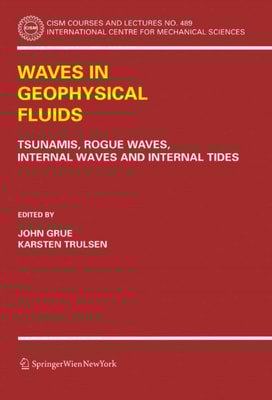
This volume - Waves in Geophysical Fluids - contains extended versions of the lec- tures that were given at a summerschool in Centre International des Sciences Mecaniques (CISM), Udine, Italy, during the week of 11-15 July 2005.
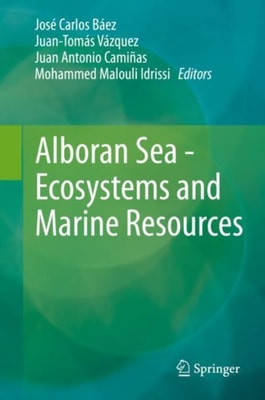
The Alboran Sea represents a regional Mediterranean space where North and South worlds merges, creating a geopolitical region where marine resources and maritime activities should be managed from a national and international perspectives.
This book provides an analysis of the evolution of navigation and seaborne trade in the Black Sea, considering the geographic, geological, and hydro-meteorological data, including information from the historical, geopolitical, economic, social, and military frames.
The biology of the Siberian sturgeon, Acipenser baerii Brandt 1869, has become a very attractive subject of investigation for biologists since the 1980s.
This manual describes the wide range of electromechanical, electrochemical and electro-optical transducers at the heart of current field-deployable ocean observing instruments.
As a response to the climate crisis and its effect on marine ecosystems and coastal populations, this book proposes concrete science driven solutions at establishing transformation pathways towards Sustainable Blue Growth, that are supported by technically and socially innovative innovations.
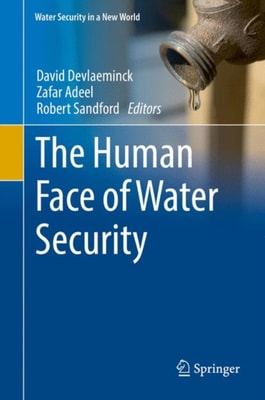
This volume collects essays from academics and practitioners from a diversity of areas and perspectives in order to discuss water security at various levels and to illuminate the central idea of water security: its focus on the individual.
This book presents the results of an interdisciplinary project that examined how law, policy and ecological dynamics influence the governance of regional scale water based social-ecological systems in the United States and Australia.
This volume provides a collection of research findings on the distribution and risk associated with emerging contaminants (ECs) in water and wastewater across the globe, and effective remediation techniques and technologies.
This collection of papers aims to draw lessons and apply indigenous knowledge, wisdom and cultural traditions to suit policy contexts describing the (a) role of individuals (b) communities, and (c) the state to ensure effectively manage water resources.
This book provides effective statistical analyses in benthic foraminiferal communities patterns and show solutions for sea-land processes and alterations caused by climate changes and other local (and global) environmental concerns.
This book deals with the challenges for efficient groundwater management, with a focus on South Asia and India, providing a balanced presentation of theory and field practice using a multidisciplinary approach.
This book presents the biodiversity of the Brazilian deep-sea and its many unique geological and biological features, as well as a review of its ecology, conservation, and future research needs.
This book addresses the needs of students, researchers, as well as engineers and other professionals or readers interested in recent advances of biofuel and efficient waste management.
The book integrates the fundamental factors that determine current and future impacts of biofuels production on water supply and demand in the context of climatic changes.
This book presents recent developments in advanced biological treatment technologies that are attracting increasing attention or that have a high potential for large-scale application in the near future.
This volume reviews recent hydrological and environmental issues resulting from human-induced water pollution practices while providing case studies on the physical, chemical, and eco-biological techniques used to mitigate the impacts of river ecosystem pollution in South Asian countries.
The evolution of the Argentina Continental Margin during the Quaternary and the stratigraphic and morphosedimentary configuration responded to climatic variability, oceanographic changes, glacioeustatic fluctuations and tectono-isostatic processes, which began to impact on the margin during previous geological periods.
The purpose of this book is to introduce the phosphorus (P) removal structure as a new BMP for reducing dissolved P loading to surface waters from non-point source pollution, provide guidance on designing site-specific P removal structures, and provide instruction on use of the design software, "e;Phrog"e; (Phosphorus Removal Online Guidance).
This book is part of a two-volume set that offers an innovative approach towards developing methods and tools for assigning conservation categories of threatened taxa and their conservation strategies by way of different phases of eco-restoration in the context of freshwater river systems of tropical bio-geographic zones.
This book highlights recent advances in the discipline of biogeochemistry that have directly resulted from the development of critical zone (CZ) science.
Water supply- and drainage systems and mixed water channel systems are networks whose high dynamic is determined and/or affected by consumer habits on drinking water on the one hand and by climate conditions, in particular rainfall, on the other hand.
This book, which contains a collection of review articles as well as focus on evidence-based policy making, will serve as a valuable resource not just for all postgraduate students conducting research using systems analysis thinking but also for policy makers.
This book empirically examines a diverse range of groundwater issues and different approaches to deal with such concerns taking into account responses from government bodies, community organizations, scientists, private sector, and academia.
This book analyzes empirical data from three specific Regional Fisheries Management Organizations (RFMOs) designed to establish rules for the conservation and management of fish stocks in the ocean, in order to assess their effectiveness in converting science into policy for the recovery and maintenance of fishery populations.
This book focuses on threats, especially contaminants, to drinking water and the supply system, especially in municipalities but also in industrial and even residential settings.
This book provides an overview of the current development status of remediation technologies involving electrochemical processes, which are used to clean up soils that are contaminated with different types of contaminants (organics, inorganics, metalloids and radioactive).