This textbook develops a fundamental understanding of geophysical fluid dynamics by providing a mathematical description of fluid properties, kinematics and dynamics as influenced by earth's rotation.
This interdisciplinary book brings philosophers and non-philosophers to the table to address questions of water ethics, specifically in terms of how moral questions inform decision making around water security at local, national, and international scales.
This book presents advanced techniques for wastewater treatment and the chapters review the environmental impact of water pollution, the analysis of water quality, and technologies for the preservation of water resources.
This book presents a case study on a semi-arid region, Maharashtra State, India, and discusses problems concerning a broad range of areas: sustainable watershed development; watershed management; groundwater condition; land and resource development plans; thematic maps on e.
Water pollution control has been a top environmental policy priority of the world's most developed countries for decades, and the focus of significant regulation and public and private spending.
This book explores computational fluid dynamics applied to ship hydrodynamics and provides guidelines for the future developments in the field based on the Tokyo 2015 Workshop.
This book synthesizes current knowledge and understanding of management and governance in the context of water resilience; advances theory through synthesis of research and experiences from a variety of disciplinary perspectives.
The book gives an overview of the tectonic, geological, potential fields, etc maps of the Arctic that were compiled during geological and geophysical studies conducted in the Arctic over the past 15 years under the International project "e;Atlas of Geological Maps of the Circumpolar Arctic at a scale of 5M"e; and presents the results of geological, geophysical, paleogeographic and tectonic studies carried out in the Arctic Ocean and the Eastern Arctic during the implementation of national mapping and scientific programmes and studies intended to provide scientific substantiation for the extension of the continental shelf (ECS).
With the consequences of climate change and biodiversity loss becoming more and more apparent, both the protection of water resources and water-related ecosystems as well as protection from water, that is flood protection policies, have become increasingly important.
The book addresses the challenges of urban water security and adaptive management in Sub-Saharan Africa, exploring and interlinking novel concepts of ecosystems services, watershed investments, and boundary work.
The book will provide an update on our understanding of predator-prey through the prism of ecology, physiology, molecular biology, and mathematical modelling.
This monograph presents cutting-edge research on dispersive wave modelling, and the numerical methods used to simulate the propagation and generation of long surface water waves.
This book provides an overview of crimes involving water, including pollution, illegal dumping, and supply chain disruption from a criminological perspective.
Describing the natural state of eight important lakes in Asia and the human impact on these lake ecosystems, this book offers a valuable reference guide.
This book presents an overview of arid desert conditions and natural mechanisms for water harvesting from fog and condensation, providing data on various bioinspired surfaces for water collection.
While science was usually at the forefront of German Antarctic expeditions, research into the Southern Polar region always had a political or economic component, whether it was about resource use or securing areas of influence.
This unique book shares the knowledge and experience of experts and scientists who apply high-quality findings and input from their research to issues concerning the management of water resources and their quality in Baltic countries including Poland, Lithuania, Latvia, Germany and Russia.
This book presents a comprehensive selection of applications employed in environmental remote sensing using optical and thermal infrared satellite-sensors aiming to map natural resources, crops, groundwater, surface water, aquatic ecosystem, land degradation, air quality, renewable energy, regional resources, and climate-related geophysical processes.
This book describes the fundamental phenomena of, and computational methods for, hydraulic transients, such as the self-stabilization effect, restriction of the Joukowsky equation, real relations between the rigid and elastic water column theories, the role of wave propagation speed, mechanism of the attenuation of pressure fluctuations, etc.
This book presents readers with an integrated modeling approach for analyzing and understanding the interconnection of water, energy, and food resources and discusses the relationship between resilience and sustainability of the food- energy -water (FEW) system.
This book discusses a major issue in the food contact materials industry: non-intentionally added substances (NIAS), and their impact on PET-bottled water.
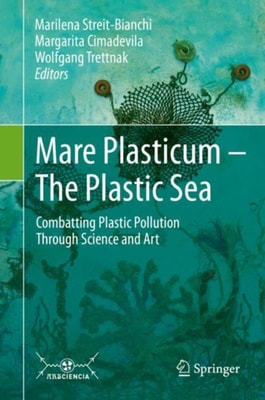
This book, written by a multidisciplinary team of authors comprising scientists, artists and communicators, explores one of the most pressing issues of our time - the menace plastics pose to marine environments and organisms.