This book describes and analyses the diversity of possible approaches and policy pathways to implement sustainable groundwater development, based on a comparative analysis of numerous quantitative management case studies from France and Australia.
This edited volume addresses the impacts of climate change on Pacific islands, and presents databases and indexes for assessing and adapting to island vulnerabilities.
This book provides an inventory of water resources, describes water challenges, and suggests methodologies and technologies for integrated water resources management in the UAE.
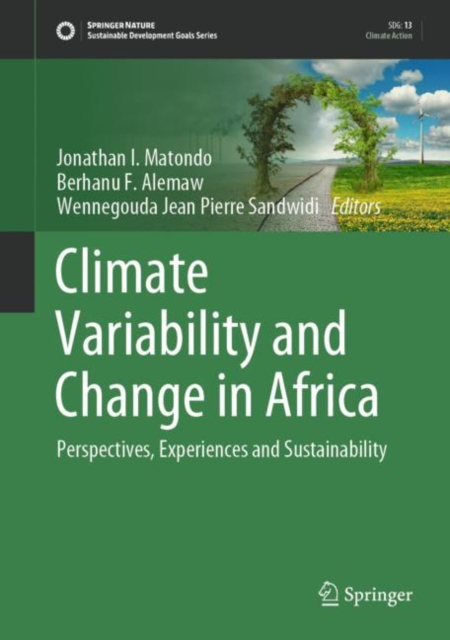
This book presents a comprehensive overview of climate variability and change in Africa, and includes impact assessments and case studies from integration frameworks, with a particular focus on climate, agriculture and water resources.
Reviews of Environmental Contamination and Toxicology attempts to provide concise, critical reviews of timely advances, philosophy and significant areas of accomplished or needed endeavor in the total field of xenobiotics, in any segment of the environment, as well as toxicological implications.
This book is the standard reference based on roughly 20 years of research on atmospheric rivers, emphasizing progress made on key research and applications questions and remaining knowledge gaps.
This book exposes practitioners and students to the theory and application of river and lake ice processes to gain a better understanding of these processes for modelling and forecasting.
Based on actual data of Soviet whaling, and reliable methodologies that existed at the time when this monograph was written, it examines the distribution and migration patterns of whales of the Southern Ocean.
The book provides an overview on national policies and regulations related to water resource management in the Middle East and North African countries (MENA), where water scarcity problems are critical.
Reviews of Environmental Contamination and Toxicology attempts to provide concise, critical reviews of timely advances, philosophy and significant areas of accomplished or needed endeavor in the total field of xenobiotics, in any segment of the environment, as well as toxicological implications.
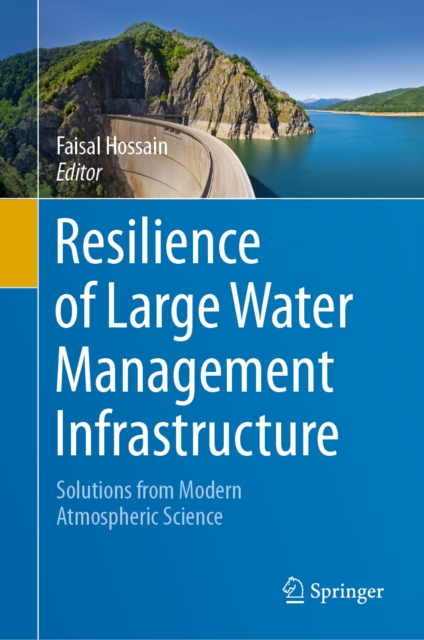
Infrastructure that manages our water resources (such as, dams and reservoirs, irrigation systems, channels, navigation waterways, water and wastewater treatment facilities, storm drainage systems, urban water distribution and sanitation systems), are critical to all sectors of an economy.
This book offers a complete overview of the measurement of precipitation from space, which has made considerable advancements during the last two decades.
This book presents a number of modeling studies of various water resources systems in the humid tropics and the typical short, steep mountain-to-coast systems in the archipelagic setting of the Philippines.
With our highly connected and interdependent world, the growing threat of infectious diseases and public health crisis has shed light on the requirement for global efforts to manage and combat highly pathogenic infectious diseases and other public health crisis on an unprecedented level.
The book provides a review of the most relevant topics on the booming discipline of palaeohydrology and focuses on previous extreme events like exceptional floods and droughts.
By combining the analysis of biotic and abiotic components of terrestrial ecosystems, this book synthesizes material on arid and semiarid landscapes, which was previously scattered among various books and journal articles.
This book discusses water resources management in Romania from a hydrological perspective, presenting the latest research developments and state-of-the-art knowledge that can be applied to efficiently solve a variety of problems in integrated water resources management.
This book uses five decades of map data, air photos, and medium to high-resolution satellite imagery to track the expansions of aquaculture and the loss of both estuarine and mangrove land covers in Ecuador.
This book presents a collection of selected reviews from PLMMP 2018 that address modern problems in the fields of liquids, solutions and confined systems, critical phenomena, as well as colloidal and biological systems.
This book provides in-depth information about the sea ice in the Arctic at scales from paleoenvironmental variability to more contemporary changes during the past and present centuries.
This is the first comprehensive science-based primer to highlight the unique ecosystem services provided by mangrove forests, and discuss how these services preserve the livelihoods of coastal populations.
This book contributes to our understanding of linkages between carbon management and local livelihoods by taking stock of the existing evidence and drawing on field experiences in the Hindu Kush Himalayan (HKH) region, an area that provides fresh water to more than 2 billion people and supports the world's largest population of pastoralists and millions of livestock.
This textbook employs a technical and quantitative approach to explain subsurface hydrology and hydrogeology, and to offer a comprehensive overview of groundwater-related topics such as flow in porous media, aquifer characterization, contaminant description and transport, risk assessment, and groundwater remediation.
Reviews of Environmental Contamination and Toxicology attempts to provide concise, critical reviews of timely advances, philosophy and significant areas of accomplished or needed endeavor in the total field of xenobiotics, in any segment of the environment, as well as toxicological implications.
This book examines the issues at stake in transboundary water governance, it spotlights the Rhone River, a biophysical entity of enormous historical, political and economic importance.
This book gathers technical and scientific contributions from leading researchers, academics, and lecturers, focusing on water management, water pollution and water structures in the Czech Republic.