This book is the first comprehensive assessment of the state of low-carbon investments in Asia, analyzing the rationales, mandates and public-private financing activities.
This volume provides preliminary recommendations on ways to educate and develop experience-based expertise among disaster response, security and other professionals from diverse backgrounds, whose current and future interests relate to crisis management.
This volume covers the Middle-Eastern and North African regions who are increasingly dependent on imports from abroad for covering their domestic food needs.
The Multiscale Global Monsoon System is the 4th and most up-to-date edition of the global monsoon book series produced by a group of leading international experts invited by the World Meteorological Organization's Working Group on Tropical Meteorology Research.
This book contributes to the current discussion on climate change by presenting selected studies on the ways in which past human groups responded to climatic and environmental change.
This book describes the principles of integrated assessment models (IAM) for climate change economics and introduces various computable models for different development mechanisms under climate change governance.
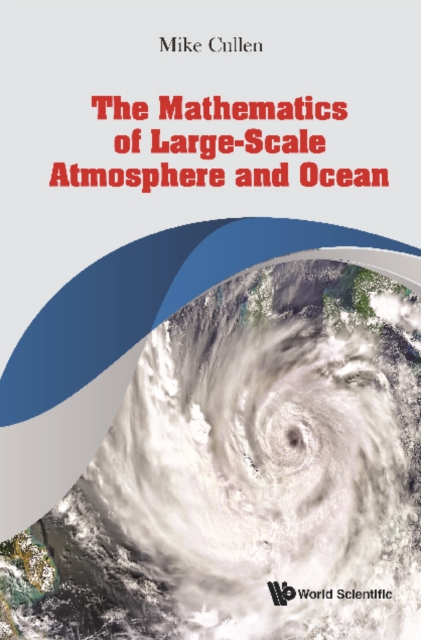
The high predictability of the atmosphere and ocean depends on the existence of a 'slow manifold', which contains the solutions of equations describing only large-scale motions.
The second volume of this book is a compilation of the high-quality papers from the International Conference on Emerging Trends in Water Resources and Environmental Engineering (ETWREE 2017).
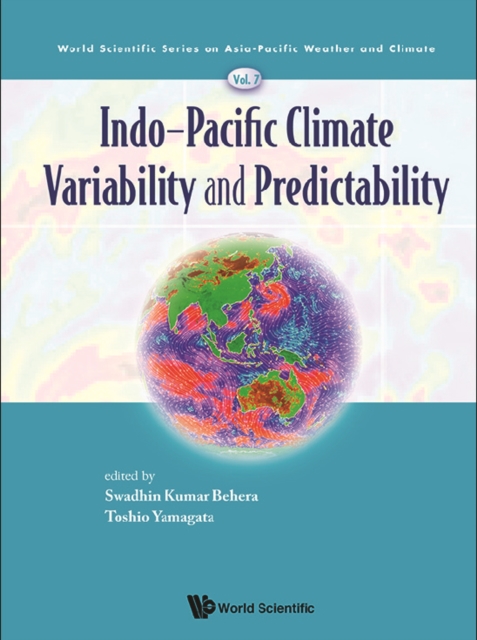
This book aims to compile some of the important results from the latest research in climate variation and prediction studies with a focus on the role of the ocean, particularly in the Indo-Pacific region.
The human race has altered the chemical composition of the atmosphere, as evidenced by the notorious London smog, photochemical air pollution, acid rain, stratospheric ozone depletion, and elevated greenhouse gas concentrations.
This book promotes a meaningful and appropriate dialogue and cross-disciplinary partnerships on Artificial Intelligence (AI) in governance and disaster management.
This book addresses climate change and sustainability management from a transdisciplinary perspective which encompasses within itself how different humanistic disciplines can culminate with each other to move ahead with the agenda.
This book identifies and provides reasoning for computed methods of local climate dynamics and the livelihood vulnerability indices assessment in the mountainous region of Himachal Pradesh, India.
This book focuses on the recent trends in carbon management and up-to-date information on different carbon management strategies that lead to manage increasing concentration of atmospheric carbon dioxide.
This book focuses on two major challenges in the climate sciences: 1) to describe the decadal-to-centennial variations in instrumental and proxy records; and 2) to distinguish between anthropogenic variations and natural variability.
This book provides a comprehensive overview of the different water-associated infectious diseases and their linked pathogens with plausible strategies for their mitigation.
This book highlights current research and development in the area of sustainable built environments, currently one of the most important disciplines in civil engineering.
Geospatial technology is a combination of state-of-the-art remote sensing and technology for geographic information systems (GIS) and global navigation satellite systems (GNSS) for the mapping and monitoring of landscapes and environment.
This book provides a synthesis of research findings, in terms of strategic knowledge outcomes regarding emergence of recent regional climate signals, implications for impacts assessment, and mitigation and adaptation response, relevant in the Indian context.
This book highlights state-of-the-art research and practices for adaptation to climate change in food production systems (agriculture in particular) as observed in Japan and neighboring Asian countries.
This book examines the current status of environmental human rights at the international, regional, and national levels and provides a critical analysis of possible future developments in this area, particularly in the context of a changing climate.
This book provides a unique blend of integrated disaster risk communication research conducted by authors with diverse backgrounds, including social psychology, sociology, civil engineering, informatics, and meteorology.
This book conducts a holistic analysis of climate change perceptions, vulnerabilities, impacts, and adaptation, based on the primary household-data collected from the Chepang community residing in the rural Mid-Hills of Nepal.
This book studies the pitfalls of regional climate models in simulating track and intensity of tropical cyclone over western North Pacific for the East Asian summer monsoon climate.
Globally, concerns for the environment and human well-being have increased as results of threats imposed by climate change and disasters, environmental degradation, pollution of natural resources, water scarcity and proliferation of slums.
This book provides viewpoints on a cross-sectoral, multiscale assessment of food and livelihood security in changing climate, the main global threats of the 21st century.