Global change due to natural processes and anthropogenic activity as well as the natural variability of the climate system will impact all areas of the globe.
Awareness that many key aspects of public health are strongly influenced by climate is growing dramatically, driven by new research and experience and fears of climate change and the research needed to underpin policy developments in area is growing rapidly.
A top priority in climate research is obtaining broad-extent and long-term data to support analyses of historical patterns and trends, and for model development and evaluation.
The great importance of detailed data and their use in generating interdisciplinary scientific knowledge on the development and utilisation of the water systems of the Arab region, with its widespread water stress and desert areas, is well established.
The NATO Advanced Study Institute "e;Flow and Transport Processes in Complex - structed Geometries: from cities and vegetative canopies to engineering problems"e; was held in Kyiv, Ukraine in the period of May 4 - 15, 2004.
In this volume, an improved Integrated Assessment methodology is used to analyze climate change impacts on agriculture, water resources, unmanaged ecosystems, irrigation, and land use in the United States and the economic implications of these impacts.
One of the major challenges facing humankind is to provide an equitable standard of living for this and future generations: adequate food, water and energy, safe shelter and a healthy environment.
Until the 1980s, a tacit agreement among many physical oceanographers was that nothing deserving attention could be found in the upper few meters of the ocean.
Previous volumes in this 'Developments in Paleoenvironmental Research' (DPER) series have focussed on providing in-depth descriptions of palaeoenvironmental techniques or have described the applications of these approaches on various regional bases.
In 1992 Australia's Commonwealth and State governments announced the introduction of a National Drought Policy adopting an innovative risk management approach, which received broad support from Australia's major political parties and the policy community.
Climate dynamicists generally characterize the Hadley circulation in terms of some derived meteorological parameters, such as the mass stream function (the nondivergent part of the flow) or the velocity potential (the divergent circulation), both of which are based on measurements of the three-dimensional wind field.
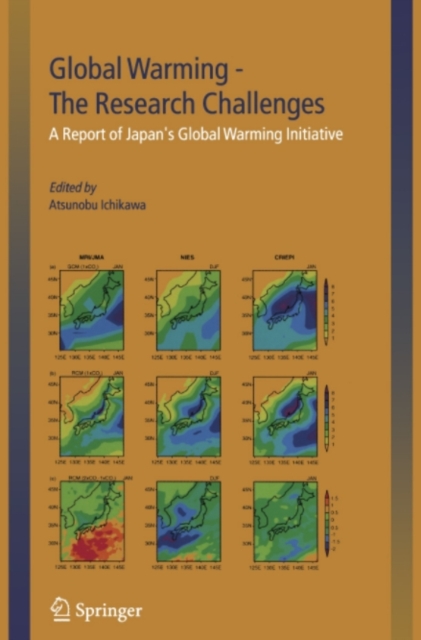
This monograph is the English version of "e;Chikyu Ondanka Kenkyu no Saizensen (The State of the Art of the Global Warming Research)"e; published as a report of Global Warming Research Initiative established by The Council for Science and Technology Policy (CSTP), the Cabinet Office, Japanese Government.
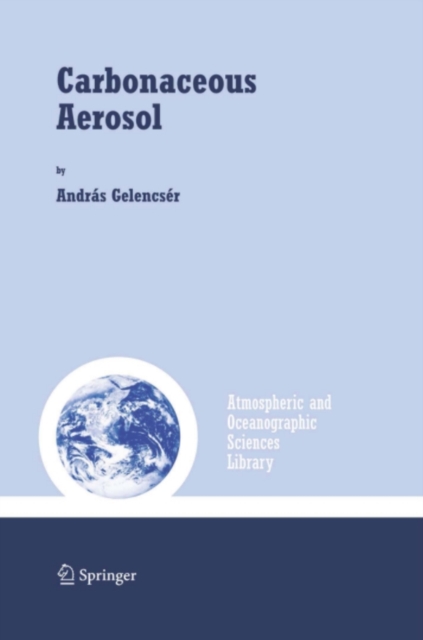
This monograph provides a unique and comprehensive coverage of the nature and atmospheric role of carbonaceous aerosol particles, these big unknowns of the global atmosphere.
Environmental isotope and nuclear techniques provide unmatched insights into the processes governing the water cycle and its variability under past and present climates.
Climatic Change is a rapidly evolving domain that has prompted the publication of numerous scientific works in recent years, reflecting both the public and scientific interest in the topic.
A global history of the climate catastrophe caused by the Tambora eruptionWhen Indonesia's Mount Tambora erupted in 1815, it unleashed the most destructive wave of extreme weather the world has witnessed in thousands of years.
This concise, sophisticated introduction to planetary climates explains the global physical and chemical processes that determine climate on any planet or major planetary satellite--from Mercury to Neptune and even large moons such as Saturn's Titan.
A critical examination of James Lovelock's controversial Gaia hypothesisOne of the enduring questions about our planet is how it has remained continuously habitable over vast stretches of geological time despite the fact that its atmosphere and climate are potentially unstable.
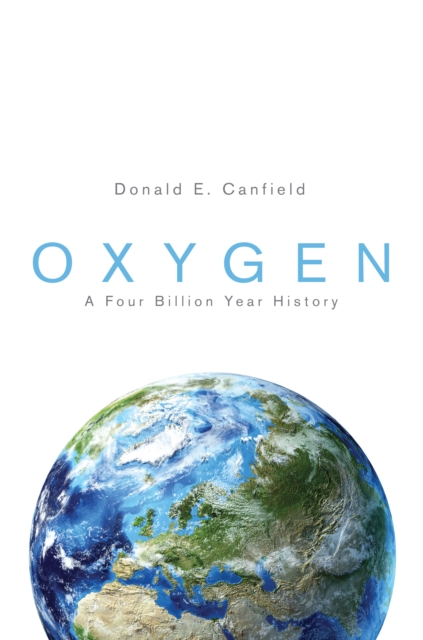
The remarkable scientific story of how Earth became an oxygenated planetThe air we breathe is twenty-one percent oxygen, an amount higher than on any other known world.
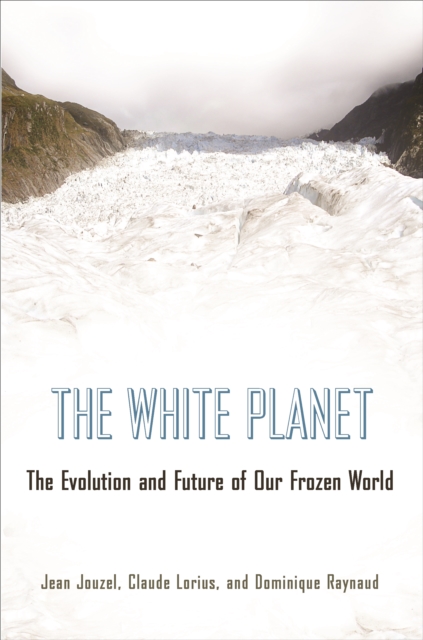
A gripping journey through the icy regions of our changing planetFrom the Arctic Ocean and ice sheets of Greenland, to the glaciers of the Andes and Himalayas, to the great frozen desert of Antarctica, The White Planet takes readers on a spellbinding scientific journey through the shrinking world of ice and snow to tell the story of the expeditions and discoveries that have transformed our understanding of global climate.
Introduction to Microwave Remote Sensing offers an extensive overview of this versatile and extremely precise technology for technically oriented undergraduates and graduate students.
Introduction to Microwave Remote Sensing offers an extensive overview of this versatile and extremely precise technology for technically oriented undergraduates and graduate students.