The evolution of the Argentina Continental Margin during the Quaternary and the stratigraphic and morphosedimentary configuration responded to climatic variability, oceanographic changes, glacioeustatic fluctuations and tectono-isostatic processes, which began to impact on the margin during previous geological periods.
In view of the wide range of disciplines involved in Quaternary research, this book offers a one-stop resource for the Quaternary research community, since it reviews the latest techniques and provides an approach to how mollusk shell remains are used in the reconstruction of marine environments in southern South America.
Fossil species appear to persist morphologically unchanged for long intervals of geologic time, punctuated by short bursts of rapid change as explained by the Ecological Evolutionary Units (EEUs).
This book discusses the controversial and conflicting hypotheses on the origin of angiosperms, which was generally assumed to be restricted to the Cretaceous and later ages.
Sauropodomorpha Huene 1932 is one of the most successful groups of dinosaurs, including the most abundant and diverse herbivorous forms with a worldwide record, extending from the late Triassic to the late Cretaceous.
The evolution of the Argentina Continental Margin during the Quaternary and the stratigraphic and morphosedimentary configuration responded to climatic variability, oceanographic changes, glacioeustatic fluctuations and tectono-isostatic processes, which began to impact on the margin during previous geological periods.
This book takes a non-technical approach in covering the evolution of South American mammalian fauna throughout geological history, and discusses how South America has changed due to mammalian invasions.
This groundbreaking volume presents, for the first time in English, a broad historical review of the researches carried out over 170 years in the region of Lagoa Santa, Brazil, one of the most important archaeological regions in the Americas.
This book provides an overview of lakes in Mongolia from scientific, economic and scenic points of view, presenting lake area changes, their sedimentological and geochemical characteristics, valuable economic and geoheritage resources and paleoclimate change reconstruction.
Light scattering from particles in the nanometric and micrometric size range is relevant in several research fields, such as aerosol science and nanotechnology.
Ichnology is the science of marks, tracks, trails, traces structures and other sources of evidence of biological activity, beyond the living beings themselves, when studied both in continents and oceans.
This handbook in two volumes offers a heretofore unavailable compilation of detailed information on foraminifera of the Caspian-Black Sea-Mediterranean Corridors ("e;CORRIDORS"e;), including their taxonomy, ecology, and applications in the study of Quaternary stratigraphy, paleogeographic reconstruction, and environmental stress.
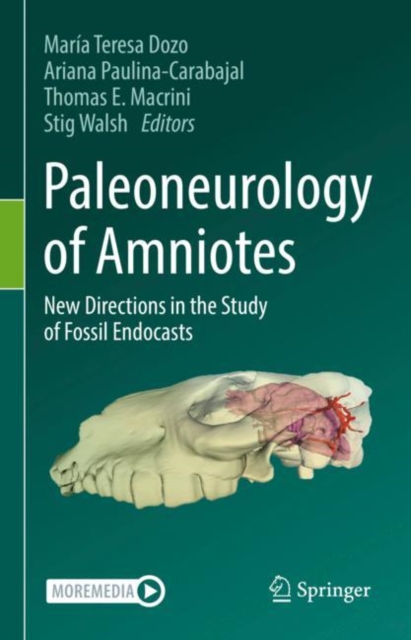
This book presents a detailed examination of the current state of knowledge in the field of paleoneurology in the main amniote groups (reptiles, birds and mammals), and advances resulting from new non-invasive technologies.
This handbook in two volumes offers a heretofore unavailable compilation of detailed information on foraminifera of the Caspian-Black Sea-Mediterranean Corridors ("e;CORRIDORS"e;), including their taxonomy, ecology, and applications in the study of Quaternary stratigraphy, paleogeographic reconstruction, and environmental stress.
While much attention has been given to animal life in amber, the remains of a variety of plants, including angiosperm flowers, also exist in fossilized resin.
This volume details the function of hydrocarbon seeps, their evolution over time, the most important seep occurrences and the fauna present in ancient hydrocarbon seeps.
This book explores the nature of cultural and culturally structured social and behavioral entities, their evolutionary interactions, and the central role purposive behaviors play in those interactions.
This book discusses the history of invertebrate fossil understanding and classification by exploring fossil studies between the 15th and 18th centuries.
This book provides an overview of lakes in Mongolia from scientific, economic and scenic points of view, presenting lake area changes, their sedimentological and geochemical characteristics, valuable economic and geoheritage resources and paleoclimate change reconstruction.
Sauropodomorpha Huene 1932 is one of the most successful groups of dinosaurs, including the most abundant and diverse herbivorous forms with a worldwide record, extending from the late Triassic to the late Cretaceous.
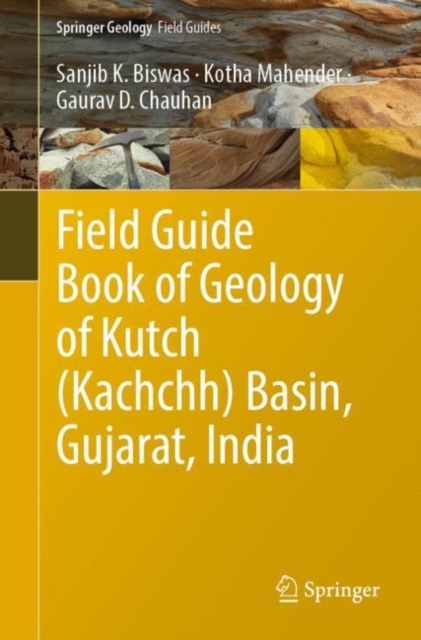
This book represents a detailed introduction to the geology, structure, and stratigraphy of Kutch Basin, known for its rich fossilized megafauna and the wide range of condensed sections exposing Bathonian to Pleistocene.
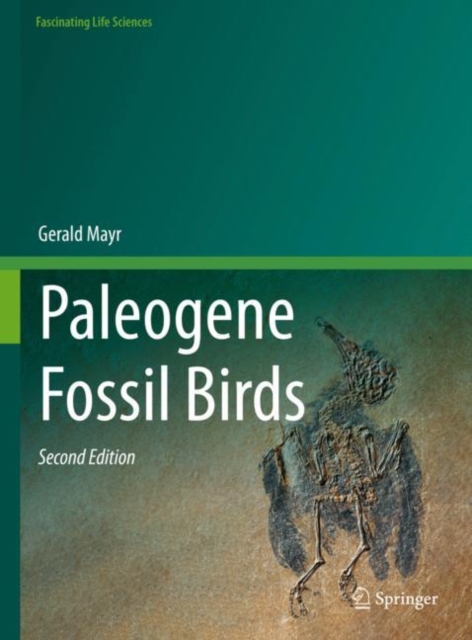
This second, completely revised edition of "e;Paleogene fossil birds"e; gives a comprehensive, updated overview of the avian fossil record from a geological period that lasted from the end-Cretaceous mass extinction event (66 million years ago) to the end of the Oligocene epoch (23 mya).
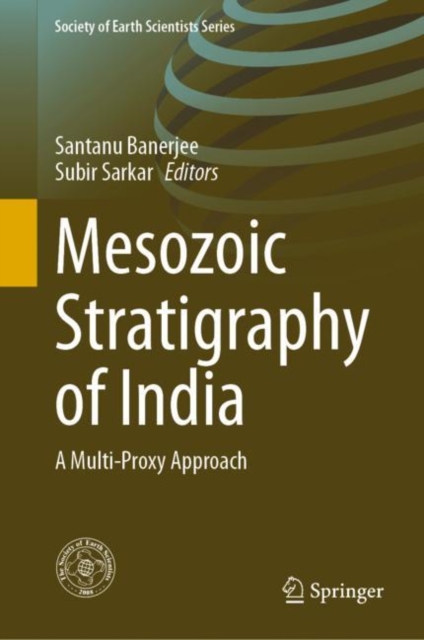
This book envisages a multi-proxy approach using stable isotopes, geochemical proxies, magnetic susceptibility and associated biotic events for paleoclimatic and paleoenvironmental interpretations of the Mesozoic sedimentary record of India.
This book broadens the reader's knowledge base on lithofacies distribution, facies succession and association, and interpretation of paleo-depositional environments using outcrop-based and measured se dimentologic section data integrated with facies and petrographic analyses.
This book summarizes the most relevant published paleontological information, supplemented by our own original work, on the record of Mesozoic mammals' evolution, their close ancestors and their immediate descendants.
Ichnology is the science of marks, tracks, trails, traces structures and other sources of evidence of biological activity, beyond the living beings themselves, when studied both in continents and oceans.