This book documents timely and systematically marvelous fossils (plants and sporopollen) related to the biggest mass extinction of the Permian-Triassic transition.
On the basis of thermodynamic considerations and the Earth's historical processes, this book argues the physical inevitability of life's generation and evolution, i.
This is the first academic book about the dinosaurs, birds and pterosaurs of Korea, one of the richest and most exciting regions on earth for the study of vertebrate ichnology.
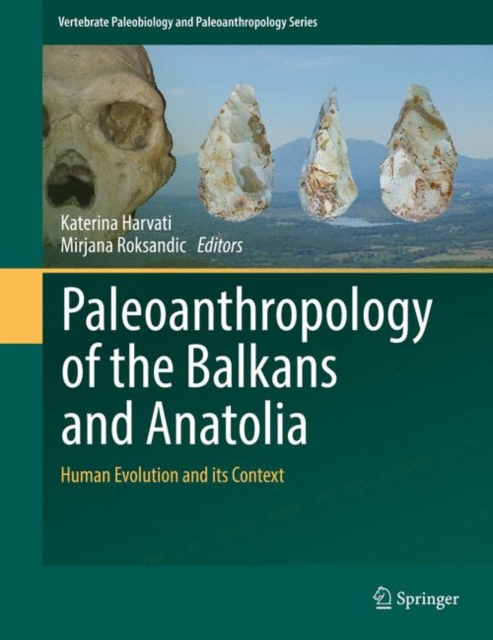
This edited volume systematically reviews the evidence for early human presence in one of the most relevant geographic regions of Europe - the Balkans and Anatolia, an area that has been crucial in shaping the course of human evolution in Europe, but whose paleoanthropological record is poorly known.
South American ecosystems suffered one of the greatest biogeographical events, after the establishment of the Panamian land bridge, called the "e;Great American Biotic Interchange"e; (GABI).
This volume presents a suite of detailed stratigraphic and sedimentologic investigations of the Eocene Green River Formation of Wyoming, Colorado and Utah, one of the world's foremost terrestrial archives of lacustrine and alluvial deposition during the warmest portion of the early Cenozoic.
Paleontologists and geologists struggle with research questions often complicated by the loss or even absence of key paleobiological and paleoenvironmental information.
The objective of this volume is to showcase the contemporary state of research on recognizing and evaluating the performance of stone age weapons from a variety of viewpoints, including investigating their cognitive and evolutionary significance.
Bringing together archaeological, paleoenvironmental, paleontological and genetic data, this book makes a first attempt to reconstruct African population histories from out species' evolution to the Holocene.
This Atlas attempts to dispel some of the mystery surrounding stomatocysts, to facilitate the accurate identification of individual cyst morphotypes, and to encourage other workers to begin using these important indicators of environmental change.
Ostracoda (Crustacea) are potentially excellent model organisms for evolutionary studies, because they combine an extensive fossil record with a wide recent distribution and therefore allow studies on both patterns and processes leading to extant diversity.
Seven original case-studies are presented in this volume, each describing the application of micropaleontology and palynology in applied geology: (1) a study of the modern distribution of coccolith sedimentation in the North Sea and its potential for future application in basin analysis; (2) ostracods are shown to be good paleoenvironmental indicators in the early Cretaceous and Tertiary; (3) a biogenic gas seep in the North Sea is shown to be marked by diagnostic benthonic foraminifera; (4) in the North Sea hydrocarbon exploration, integrated studies of micropaleontology have provided invaluable data; (5) palynofacies analysis are shown to be vital in determining depositional events and hydrocarbon source rock potential; (6) the application of paleontology and sedimentology to sequence stratigraphy is demonstrated in the early Cretaceous; and (7) the application of micropaleontology is shown to be an essential tool in both engineering and economic geology.
The user This manual is designed for the use of geo-scientists with an interest and need in developing palaeobiological materials as a potential source of data.
The history of scientific research and technological development is replete with examples of breakthroughs that have advanced the frontiers of knowledge, but seldom does it record events that constitute paradigm shifts in broad areas of intellectual pursuit.
This volume is a collection of papers presented to Professor Tom Barnard by former students, colleagues and friends to mark thirty-two years of teaching and research in micropalaeontology at University College London.
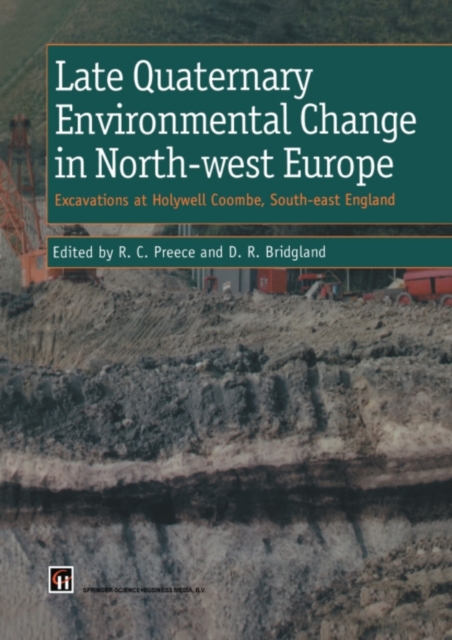
Holywell Coombe, an embayment in the chalk scarp overlooking Folkestone, Kent, was designated a geological Site of Special Scientific Interest in 1985 because it contains richly fossiliferous Late Quaternary sediments providing a unique archive of the last 13,000 years.
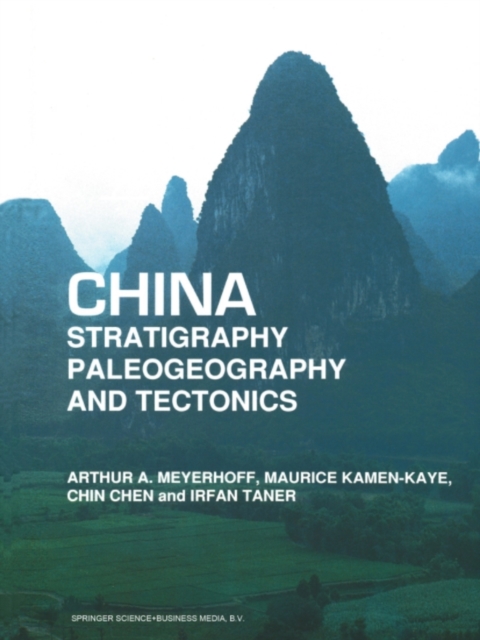
all such systems are important, the Proterozoic column This volume concerns the geology of China, and it examinesthat concern by expositionsofthe stratigraphy, possibly is unique in its continuous sedimentary devel- the paleogeography,and the tectonics ofthat remarkable opment and in its reference section of global rank.
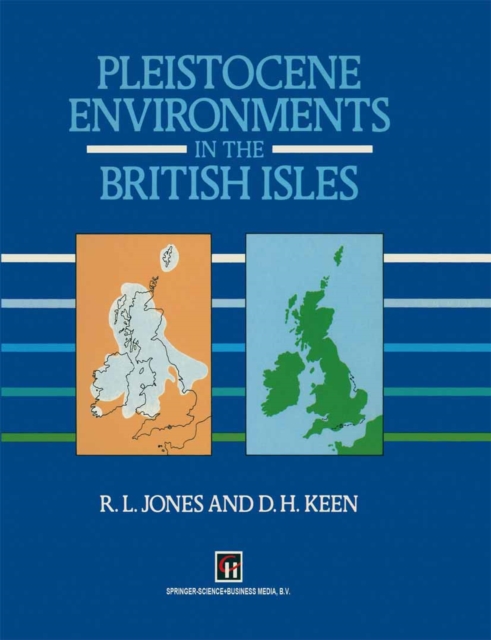
Recent developments in Pleistocene research have prompted the authors to produce this up-to-date, concise account of environmental changes during the past two million years.
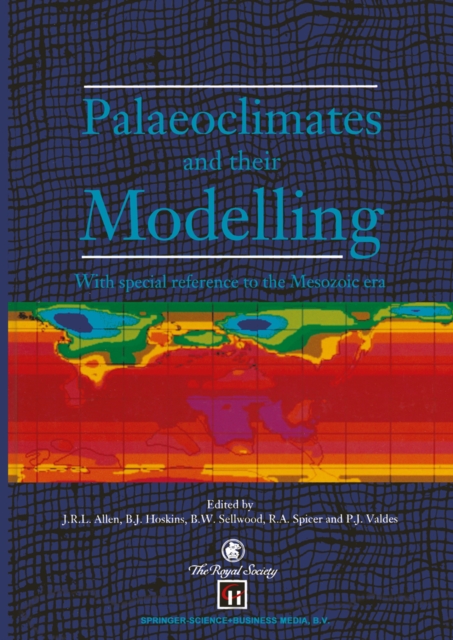
The climate of the Earth has undergone many changes and for those times when geologic data are widespread and abundant the Mesozoic appears to have been one of the warmest intervals.
Precambrian stromatolites have received in depth, consideration from geologists and paleontologists; they were indeed searching for biosedimentary structures that were sufficiently characteristic and widely distributed to be considered as useful tools for stratigraphic correlation.
Remains of fossil frogs, elsewhere scarce, have been found abundantly for more than one hundred and twenty five years in the Tertiary deposits in northern and western Bohemia.
This volume arises from the NATO Advanced Research Workshop (ARW) on 'North African Cretaceous rudist and coral formations and their contributions to carbonate platform development , which was held in Tunisia, on 13-18 May, 2002.
The return of Halley's Cornet in 1986 has generated much ex- citement in the scientific community with preparations already afoot for an International Cornet Watch and a cornet launch by the European Space Community, the Japanese and Soviet Space Scientists.
This volume is a record of the 6th International Conference on the Origins of Life and the 3rd Meeting of the International Society for the Study of the Origins of Life.
Although the name Pithecanthropus is now seldom used, there are few who study the origin of our species who will fail to recognise the historical place of the usage and its association with Eugene Dubois.
This book provides an overview, research compendium and an introduction to the science of molecular paleontology, including literature overview for non-geochemists.
Three major aspects that distinguish this book are that (1) it contains the most detailed analysis of the sexual reproduction (oogenesis, fertilization and embryonic incubation) in a particular phylum of the aquatic invertebrates (Bryozoa) ever made; this analysis is based on an exhaustive review of the literature on that topic published over the last 260 years, as well as extensive original histological, anatomical and morphological data obtained during studies of both extant and extinct species; (2) this broad analysis has made it possible to reconstruct the major patterns, stages and trends in the evolution of sexual reproduction in various bryozoan clades, showing numerous examples of parallelisms during transitions from broadcasting to embryonic incubation, from planktotrophic to non-feeding larvae and from lecithotrophy to placentation; corresponding shifts in oogenesis, fertilization and embryonic development are discussed in detail; and (3) the key evolutionary novelties acquired by Bryozoa are compared with similar innovations that have evolved in other groups of marine invertebrates, showing the general trends in the evolution of their sexual reproduction.
Bryophytes, which are important constituents of ecosystems globally and often dominate carbon and water dynamics at high latitudes and elevations, were also among the pioneers of terrestrial photosynthesis.
Non-mammalian synapsids were the dominant terrestrial vertebrates from the Late Carboniferous to the Middle Triassic and play a key role in understanding the origin and evolution of mammals.
Recent genetic data showing that Neanderthals interbred with modern humans have made it clear that deeper insight into the behavioral differences between these populations will be critical to understanding the rapid spread of modern humans and the demise of the Neanderthals.