New York Times bestselling author Susan Donovan welcomes you to Bayberry Island, a special place where a bronze mermaid statue promises to grant true love to anyone with an open heart.
New York Times bestselling author Susan Donovan returns to Bayberry Island, where a bronze mermaid statue could be the cause of heartbreak or everlasting romance for a practical-minded police chief and his first love.
New York Times bestselling author Susan Donovan welcomes you to Bayberry Island, a special place where a bronze mermaid statue promises to grant true love to anyone who asks with an open heart.
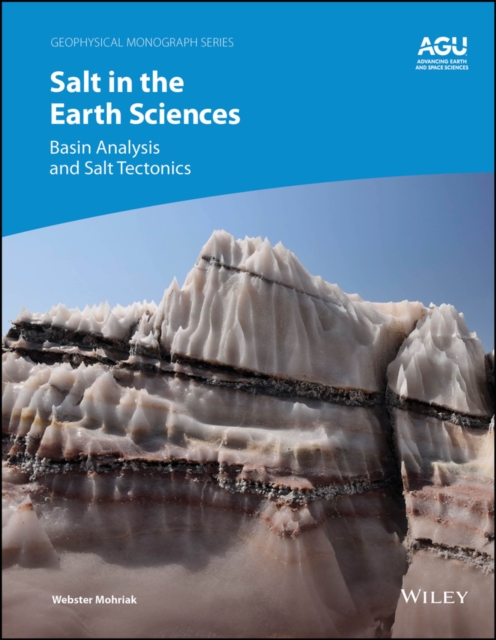
A comprehensive review of giant salt basins, salt tectonic events, and their global implications Salt is formed when water rich in evaporite minerals accumulates on the Earth s surface and then evaporates.
It has become increasingly apparent that in Britain the relationship between town and country is breaking down and that both are in crisis: policies concerning urbanisation, industry, housing and transport are in disarray, while new issues have arisen concerning the environment, farming, the rural economy, food quality.
This book is intended as an introductory text for students studying a wide range of courses concerned with animal management, zoo biology and wildlife conservation, and should also be useful to zookeepers and other zoo professionals.
This book is intended as an introductory text for students studying a wide range of courses concerned with animal management, zoo biology and wildlife conservation, and should also be useful to zookeepers and other zoo professionals.
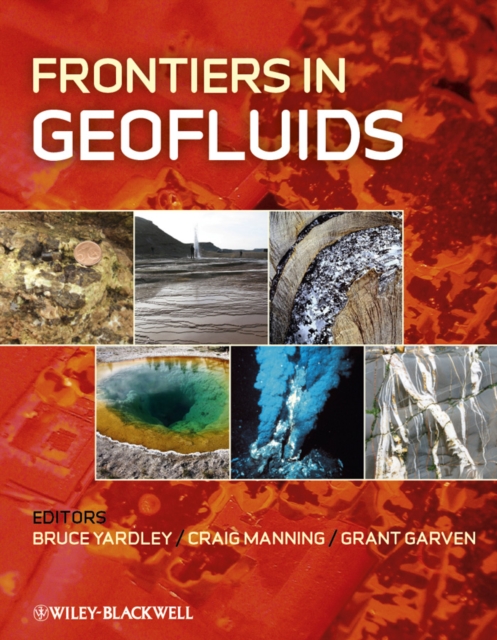
Frontiers in Geofluids is a collection of invited papers chosen to highlight recent developments in our understanding of geological fluids in different parts of the Earth, and published to mark the first ten years of publication of the journal Geofluids.
Frontiers in Geofluids is a collection of invited papers chosen to highlight recent developments in our understanding of geological fluids in different parts of the Earth, and published to mark the first ten years of publication of the journal Geofluids.
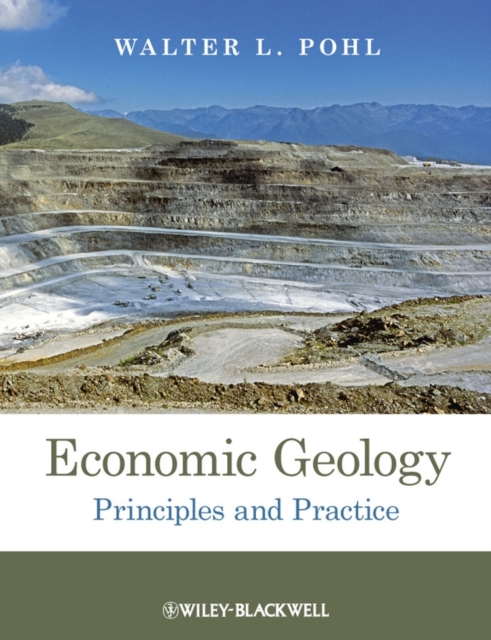
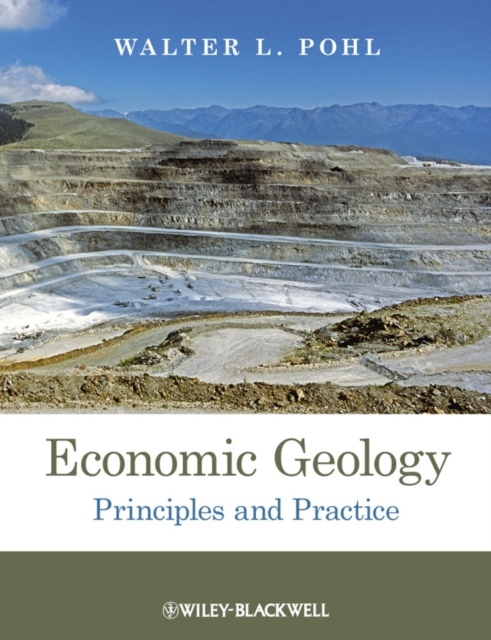
Humanity s ever-increasing hunger for mineral raw materials, caused by a growing global population and ever increasing standards of living, has resulted in economic geology becoming a subject of urgent importance.
Humanity s ever-increasing hunger for mineral raw materials, caused by a growing global population and ever increasing standards of living, has resulted in economic geology becoming a subject of urgent importance.
The expert contributors to this cutting edge volume provide an overview of geomorphological process activity and landscape change in Britain over the past 1000 years.
This book is for geoscience students taking introductory or intermediate-level courses in igneous petrology, to help develop key skills (and confidence) in identifying igneous minerals, interpreting and allocating appropriate names to unknown rocks presented to them.
Speleothems (mineral deposits that formed in caves) are currently giving us some of the most exciting insights into environments and climates during the Pleistocene ice ages and the subsequent Holocene rise of civilizations.
Speleothems (mineral deposits that formed in caves) are currently giving us some of the most exciting insights into environments and climates during the Pleistocene ice ages and the subsequent Holocene rise of civilizations.
This book provides a hands-on introduction to the construction and application of models to studies of vertebrate distribution, abundance, and habitat.
This book aims to further advance the field of reintroduction biology beyond the considerable progress made since the formation of the IUCN/SSC Re-introduction Specialist Group.
This book aims to further advance the field of reintroduction biology beyond the considerable progress made since the formation of the IUCN/SSC Re-introduction Specialist Group.
This set of exercises has been created expressly for students and teachers of conservation biology and wildlife management who want to have an impact beyond the classroom.
Since the advent of the mantle plume hypothesis in 1971, scientists have been faced with the problem that its predictions are not confirmed by observation.