This book addresses the fundamental requirement for an interdisciplinary catchment based approach to managing and protecting water resources that crucially includes an understanding of land use and its management.
Now in its second edition, Pollution of Lakes and Rivers provides essential insights into present-day water quality problems from an international perspective.
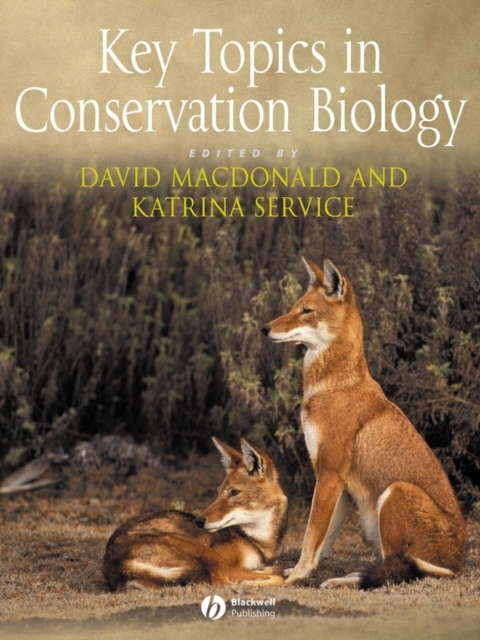
This set of exercises has been created expressly for students and teachers of conservation biology and wildlife management who want to have an impact beyond the classroom.
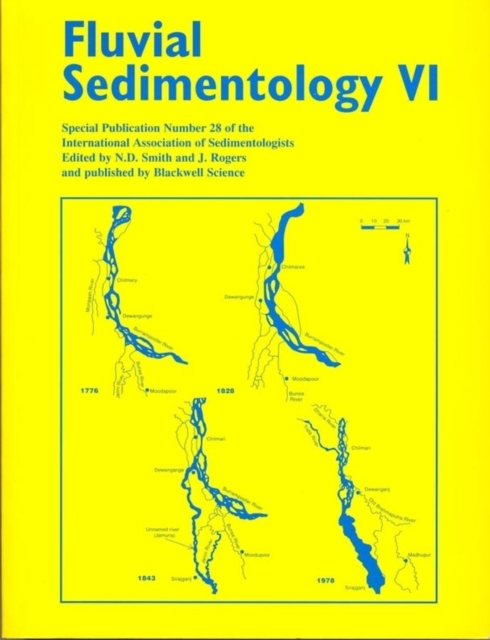
A book of research articles focused on fluvial processesThe book is divided into a several main sections for ease of reference: Hydrodynamics and Bedforms; Present?
A special publication of the International Association of SedimentologistsThis comprehensive scientific book of more than 500 pages features chapters by various authors.
A special publication of the International Association of Sedimentologists The ebook entitled Modern and Ancient Lake Sediments provides the proceedings of a symposium held at the H.
The Almer a Province of SE Spain, a semi-arid, tectonically active region, is the focus of a wide range of scientific teaching and research in the earth sciences by universities and associated bodies from around the world.
The third edition of this widely acclaimed textbook provides a comprehensive introduction to all aspects of global tectonics, and includes major revisions to reflect the most significant recent advances in the field.
This book provides a hands-on introduction to the construction and application of models to studies of vertebrate distribution, abundance, and habitat.
Understanding basin-fill evolution and the origin of stratal architectures has traditionally been based on studies of outcrops, well and seismic data, studies of and inferences on qualitative geological processes, and to a lesser extent based on quantitative observations of modern and ancient sedimentary environments.
Whilst there is now overwhelming evidence that greenhouse-gas pollution is becoming the dominant process responsible for global warming, it is also clear that the climate system varies quite naturally on different time-scales.
The recent increase in the search for coal has initiated a dramatic growth in sedimentological research on the origin, formation and environment of coal deposition.
This Special Publication contains most of the contributions presented at the 1st International Workshop on Fan Deltas (1988) but also contains additional papers which make this particular volume a very well-rounded reference source for the advanced undergraduate/graduate student and the professional earth scientist concerned with sedimentology and petroleum geology.
This publication consists of papers delivered at an International Symposium of the International Association of Sedimentologists held at Beijing, Peoples' Republic of China in August, 1988.
Over the last ten years, seismic and sequence stratigraphic studies have emphasized the role of worldwide fluctuations in sea level in controlling patterns of sedimentation.
This book considers the deposition of sediments in different types of lakes and shows how changes in the lake environment can be interpreted from the sediment facies at the lake floor.
The Geological Modelling of Hydrocarbon Reservoirs and Outcrop Analogues is a collection of 15 selected papers taken from the Symposium of the same name which formed part of the IAS Congress of 1990 held in Nottingham, UK.
Most of the thirty-four papers contained in this Special Publication arise from the Fourth International Conference on Fluvial Sedimentology held in Spain in 1989.
Stratigraphers and sedimentologists who are presently describing and interpreting the infill of sedimentary basins are generally agreed that it is difficult to disentangle the signatures of tectonic processes from those of climate and eustatic sea level change in the resultant rock succession.
This volume contains 23 state-of-the-art papers presented at the Dolomieu Conference on Carbonate Platforms and Dolomitization held in September 1991 in Ortisei, Italy.
This book celebrates the professional career of Harold Reading, who has played a leading role in the development of the IAS, and has been at the roots of the development of 'facies sedimentology' as an art in itself and as a major tool in the broader field of geology.
The study of palaeoweathering provides vital clues about past continental environments, the correlation of sedimentary deposits and processes such as the rate and timing of uplift and erosion.
Understanding of rivers and their sediments, both as modern systems and as ancient counterparts in the geological record, has progressed steadily but markedly over the past several decades, with contributions by practitioners in diverse fields of geosciences and engineering.
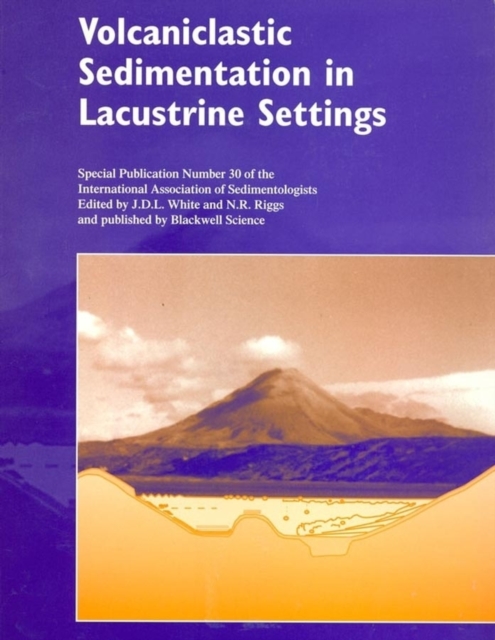
This volume presents a unique compendium of papers assessing the effects of volcanism on lakes, as recorded by the volcaniclastic sediments deposited within them.
IAS Special Publication 35, Fluvial Sedimentology VII, comprises of a series of peer-reviewed papers that were initially presented at the 7th International Conference on Fluvial Sedimentology, held in Lincoln, Nebraska on August 6-10, 2001.
The last decade of study of the shallow-marine boundary layer has arrived at a synthesis of sediment dynamic principles that can begin to be transferred from the time scales of the rock record (years to millenia).
For several decades Peter Friend has been one of the leading figures in sedimentary geology and throughout that time he has helped scores of other people by supervising doctoral students, collaborating with colleagues, especially in developing countries, and selflessly sharing ideas with fellow geologists.