This Special Publication contains most of the contributions presented at the 1st International Workshop on Fan Deltas (1988) but also contains additional papers which make this particular volume a very well-rounded reference source for the advanced undergraduate/graduate student and the professional earth scientist concerned with sedimentology and petroleum geology.
This publication consists of papers delivered at an International Symposium of the International Association of Sedimentologists held at Beijing, Peoples' Republic of China in August, 1988.
Over the last ten years, seismic and sequence stratigraphic studies have emphasized the role of worldwide fluctuations in sea level in controlling patterns of sedimentation.
This book considers the deposition of sediments in different types of lakes and shows how changes in the lake environment can be interpreted from the sediment facies at the lake floor.
The Geological Modelling of Hydrocarbon Reservoirs and Outcrop Analogues is a collection of 15 selected papers taken from the Symposium of the same name which formed part of the IAS Congress of 1990 held in Nottingham, UK.
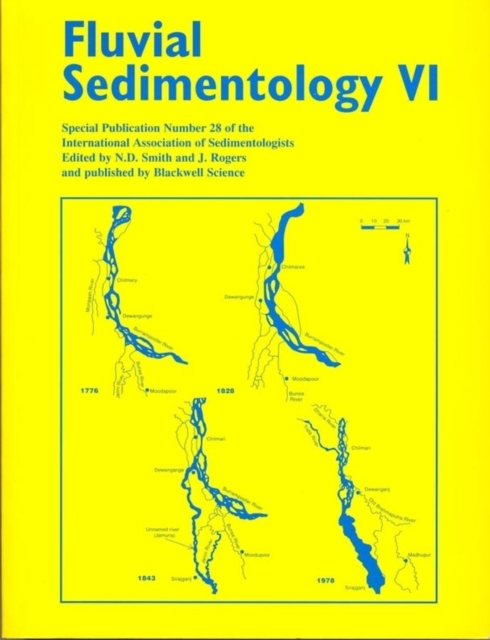
Most of the thirty-four papers contained in this Special Publication arise from the Fourth International Conference on Fluvial Sedimentology held in Spain in 1989.
Stratigraphers and sedimentologists who are presently describing and interpreting the infill of sedimentary basins are generally agreed that it is difficult to disentangle the signatures of tectonic processes from those of climate and eustatic sea level change in the resultant rock succession.
This volume contains 23 state-of-the-art papers presented at the Dolomieu Conference on Carbonate Platforms and Dolomitization held in September 1991 in Ortisei, Italy.
This book celebrates the professional career of Harold Reading, who has played a leading role in the development of the IAS, and has been at the roots of the development of 'facies sedimentology' as an art in itself and as a major tool in the broader field of geology.
The study of palaeoweathering provides vital clues about past continental environments, the correlation of sedimentary deposits and processes such as the rate and timing of uplift and erosion.
Understanding of rivers and their sediments, both as modern systems and as ancient counterparts in the geological record, has progressed steadily but markedly over the past several decades, with contributions by practitioners in diverse fields of geosciences and engineering.
This volume presents a unique compendium of papers assessing the effects of volcanism on lakes, as recorded by the volcaniclastic sediments deposited within them.
IAS Special Publication 35, Fluvial Sedimentology VII, comprises of a series of peer-reviewed papers that were initially presented at the 7th International Conference on Fluvial Sedimentology, held in Lincoln, Nebraska on August 6-10, 2001.
The last decade of study of the shallow-marine boundary layer has arrived at a synthesis of sediment dynamic principles that can begin to be transferred from the time scales of the rock record (years to millenia).
For several decades Peter Friend has been one of the leading figures in sedimentary geology and throughout that time he has helped scores of other people by supervising doctoral students, collaborating with colleagues, especially in developing countries, and selflessly sharing ideas with fellow geologists.
The motivation for this volume came from the idea that the Precambrian is the key, both to the present, and to the understanding of the Earth as a whole.
Diagenesis affects all sediments after their deposition and includes a fundamental suite of physical, chemical and biological processes that control the texture, mineralogy and fluid-flow properties of sedimentary rocks.
This third volume in the IAS Reprint Series reviews some of the major contributions that have been made over the last twenty years to our understanding of deep water environments.
Calcretes are an important component of many ancient fluvial, lacustrine and shallow-marine carbonate sequences, and they are widely developed in many parts of the world at the present time.
Over the years, many papers on carbonate diagenesis have been published in Sedimentology, the journal of the International Association of Sedimentologists.
Sedimentology Review is a new series of books edited by the Postgraduate Research Institute of Sedimentology (PRIS) and published by Blackwell Scientific Publications.
This IAS Special Publication #27 contains 17 of the papers presented at the IAS International Workshop on Reefs and Carbonate platforms in the Pacific and Indian oceans held in Sydney (July 1995).
Participatory Research in Conservation and Rural Livelihoods: Doing Science Together starts from the understanding that all people create knowledge and that the creation of sustainable livelihoods and of conditions that protect and sustain rural ecosystems are interrelated.
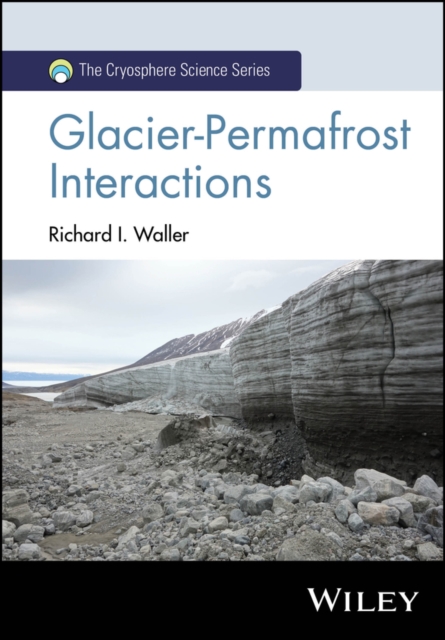
Glacier-Permafrost Interactions A systematic exploration of the interactions between glaciers and permafrost In Glacier-Permafrost Interactions, experienced glaciologist Richard I.
A biologist's firsthand account of encounters with the planet's most bizarre organismsand how these discoveries are challenging our most basic assumptions about life on EarthLife thrives in the deepest, darkest recesses of Earth's crustfrom methane seeps in the ocean floor to the highest reaches of Arctic permafrostand it is unlike anything seen on the surface.
This book combines the results of current research with essential background material to provide complete, in-depth coverage of every aspect of in situ and ex situ bioremediation, as well as an extensive overview of the physical and chemical processes currently available for treating petroleum-contaminated soils.
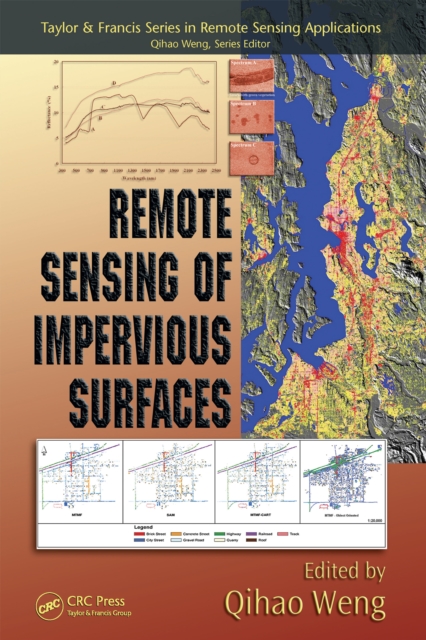
Remote sensing of impervious surfaces has matured using advances in geospatial technology so recent that its applications have received only sporadic coverage in remote sensing literature.